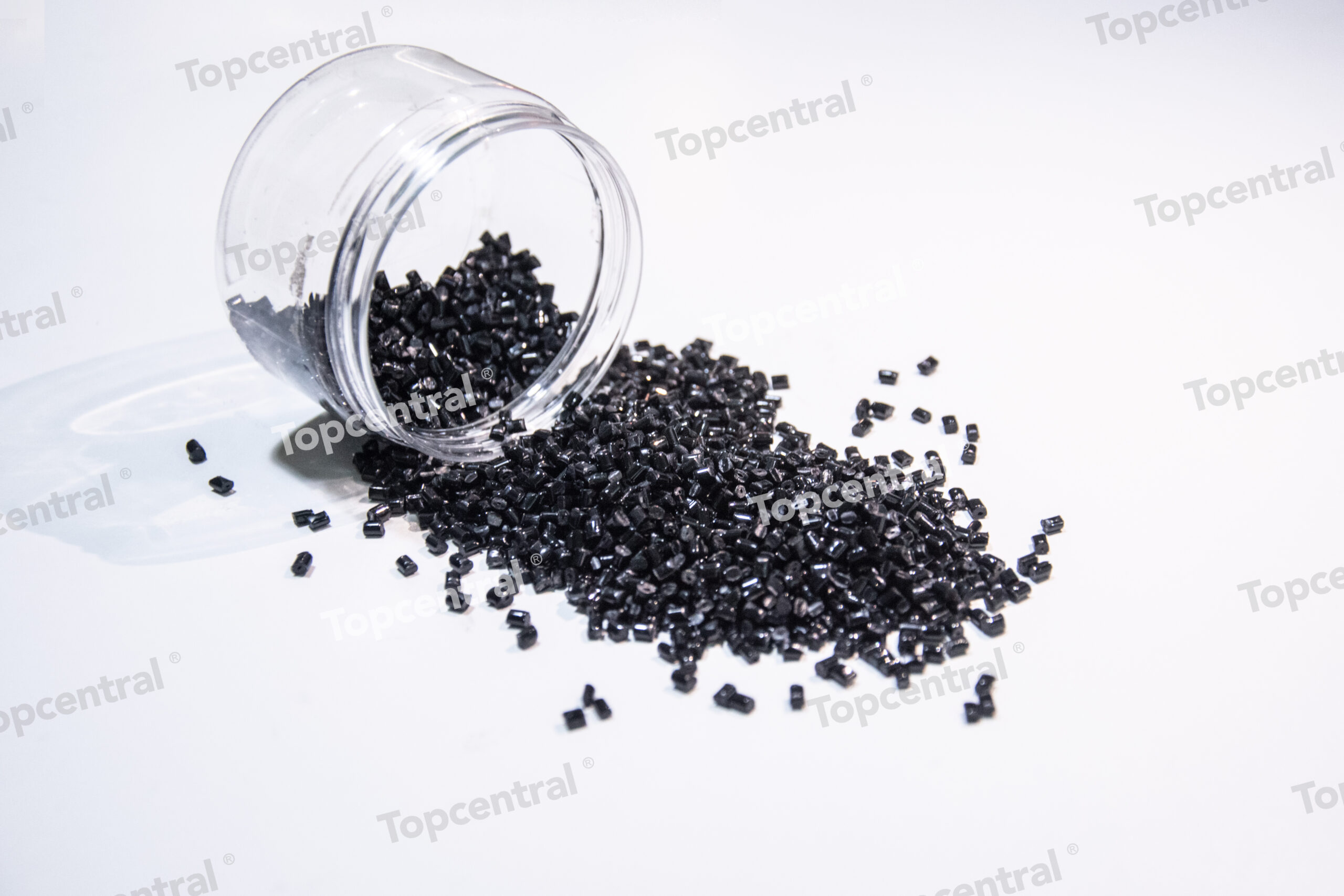
PCR Plastic Flame Retardancy: UL94 Ratings and Halogen-Free Alternatives
Technical Guide for Sustainable Material Selection
Executive Summary
Post-consumer recycled (PCR) plastics now represent a rapidly growing segment of the engineering materials market, with global PCR resin consumption projected to reach 18.7 million metric tons by 2027 (AMI Consulting, 2023). However, flame retardancy requirements—particularly UL94 ratings—present a persistent technical barrier for PCR adoption in electronics, automotive, and building applications.
This guide addresses the intersection of two critical material requirements: recycled content and flame retardancy. We examine UL94 classification pathways for PCR resins, evaluate halogen-free flame retardant (HFFR) systems compatible with recycled polymer streams, and provide actionable selection criteria for procurement and engineering teams navigating regulatory frameworks including the EU Packaging and Packaging Waste Regulation (PPWR), Extended Producer Responsibility (EPR) schemes, and the Carbon Border Adjustment Mechanism (CBAM).
Key finding: PCR resins can achieve UL94 V-0 at 1.6mm thickness with properly formulated halogen-free systems, though melt flow index (MFI) shifts of 15-30% versus virgin materials require process parameter adjustments. Carbon footprint reductions of 40-60% versus virgin flame-retardant grades are achievable, validated through ISO 14040/14044 lifecycle assessments.
1. The PCR Flame Retardancy Challenge
1.1 Why Flame Retardancy Matters for Recycled Plastics
Flame retardancy is not optional for PCR materials intended for electrical enclosures, consumer electronics, automotive interior components, or building products. UL94, the Standard for Safety of Flammability of Plastic Materials for Parts in Devices and Appliances, remains the predominant certification framework globally, referenced in IEC 60695, ISO 1210, and GB/T 2408 standards.
The challenge specific to PCR: recycled polymer streams introduce variability in molecular weight distribution, residual catalyst content, and contamination profiles that directly affect flame retardant performance. A 2022 study published in Polymer Degradation and Stability (Vol. 198, 109876) demonstrated that flame retardant additive consumption must increase by 8-12% in recycled ABS to achieve equivalent UL94 V-0 performance versus virgin resin, due to reduced polymer matrix integrity after multiple processing cycles.
1.2 Market Realities and Volume Constraints
Current PCR adoption in flame-retardant applications remains below 5% of total FR-compound production (HIS Markit, 2023). Primary barriers include:
– Supply consistency: Post-consumer streams contain multiple polymer types, colorants, and additives that interfere with FR systems
– Property retention: Each reprocessing cycle reduces molecular weight by 5-15%, affecting mechanical properties and FR performance
– Certification costs: UL94 re-certification for each PCR lot adds $8,000-15,000 per formulation
– Customer perception: OEM specifications often prohibit recycled content in safety-critical FR applications
However, regulatory pressure is shifting this landscape. The EU PPWR mandates minimum recycled content of 30-50% in plastic packaging by 2030. EPR schemes in France, Germany, and the Netherlands now impose fee reductions of 10-25% for products incorporating certified PCR content.
2. UL94 Ratings: A Technical Primer for PCR Materials
2.1 UL94 Classification Hierarchy
UL94 ratings are determined through standardized horizontal (HB) and vertical (V-0, V-1, V-2) burning tests. For engineering applications, V-0 is the most commonly specified rating.
| Rating | Criteria | Typical Applications | PCR Feasibility |
|——–|———-|———————|—————–|
| V-0 | No flaming combustion >10s; no flaming drips | Electronics enclosures, connectors | Achievable with optimized FR systems |
| V-1 | No flaming combustion >30s; no flaming drips | Wire harnesses, internal components | Readily achievable |
| V-2 | No flaming combustion >30s; flaming drips permitted | Consumer goods, non-critical parts | Standard for general-purpose PCR |
| HB | Slow burning <76mm/min | Lighting diffusers, non-critical housings | Easiest to achieve |
| 5VA/5VB | Surface burning resistance; no burn-through | Server racks, industrial controls | Requires specialized FR systems |
| VTM-0 | Thin film rating 50?m that caused UL94 test failures.
3. Additive depletion: Flame retardant additives degrade during reprocessing. Brominated FRs show 15-25% depletion after three extrusion cycles; phosphorus-based systems lose 8-15% activity due to hydrolysis.
2.3 Practical UL94 Testing Protocol for PCR
For procurement and engineering teams qualifying PCR materials:
1. Require lot-specific certification: Batch-to-batch variability in PCR requires UL94 testing per production lot, not annual re-certification
2. Test at target wall thickness: A V-0 rating at 3.2mm does not guarantee performance at 1.6mm
3. Demand thermal cycling data: UL94 tests at 23°C and 50% RH. Request additional testing after thermal aging (85°C/85% RH for 168 hours per IEC 60068-2-78)
4. Specify MFI limits: Include maximum MFI in your material specification to ensure FR performance retention
5. Require filler analysis: Talc, calcium carbonate, and glass fiber content above 5% can alter UL94 performance
3. Halogen-Free Flame Retardant Systems for PCR
3.1 Why Halogen-Free Matters
The transition to halogen-free flame retardants (HFFR) is driven by three factors:
– Regulatory: EU RoHS, REACH, and the Stockholm Convention restrict polybrominated diphenyl ethers (PBDEs) and hexabromocyclododecane (HBCD)
– Environmental: Halogenated FRs generate toxic hydrogen halide gases during combustion and can form dioxins under certain incineration conditions
– Recycling compatibility: Halogen-free systems are more compatible with mechanical recycling processes; brominated FRs can degrade during reprocessing and contaminate subsequent recycled streams
3.2 Major Halogen-Free FR Systems for PCR
| FR System | Polymer Compatibility | Typical Loading | UL94 Potential | PCR Considerations |
|———–|———————-|—————–|—————-|———————|
| Aluminum trihydroxide (ATH) | PP, PE, EVA, PVC | 50-65% | V-0 at 3.2mm | Reduces MFI; increases density by 20-30% |
| Magnesium hydroxide (MDH) | PP, PA, TPE | 45-60% | V-0 at 1.6mm | Better thermal stability than ATH; higher cost |
| Red phosphorus | PA, PC/ABS, epoxy | 5-15% | V-0 at 0.8mm | Moisture sensitivity; color limitations |
| Ammonium polyphosphate (APP) | PP, PE, PA, PU | 20-35% | V-0 at 1.6mm | Intumescent; requires char-forming synergist |
| Melamine cyanurate | PA6, PA66, PBT | 8-15% | V-0 at 0.8mm | Excellent for thin-wall applications |
| Metal phosphinates | PA, PBT, PC/ABS | 10-20% | V-0 at 0.4mm | Best performance in engineering thermoplastics |
| Organoclay nanocomposites | Various | 3-8% | V-2 to V-0 | Reduces total FR loading; improves mechanicals |
3.3 Compatibility Issues with PCR Streams
Key consideration: Not all HFFR systems perform equally in recycled polymers.
– ATH/MDH: High loading (50-65%) significantly increases melt viscosity. For PCR PP with MFI >20 g/10min, ATH loading must be reduced by 5-10% to maintain processability, potentially sacrificing UL94 rating
– Red phosphorus: Reacts with moisture in PCR streams. For PCR PA containing >0.1% moisture, red phosphorus can generate phosphine gas during processing. Require moisture content <0.05% for safe processing
– APP-based intumescents: Require consistent char-forming from the polymer matrix. PCR contamination from polyolefin films reduces char integrity; expect 10-15% reduction in LOI (limiting oxygen index)
– Metal phosphinates: Most robust for PCR applications. Performance degradation is 30% PCR content
– Additional 5% reduction for halogen-free formulations
– Penalty fees of 10-20% for packaging containing halogenated FRs in certain categories
Carbon Border Adjustment Mechanism (CBAM)
Effective October 2023 (transition phase), CBAM requires importers of plastics and chemicals to report embedded carbon emissions. By 2026, carbon costs will apply. PCR FR materials typically show 40-60% lower carbon footprint versus virgin FR grades (see Section 5).
5. Carbon Footprint and Lifecycle Analysis
5.1 Carbon Footprint Comparison: PCR vs. Virgin FR Materials
Data based on published lifecycle assessments (ISO 14040/14044) for representative FR polymer systems:
| Material System | Carbon Footprint (kg CO2e/kg) | PCR Content | Reduction vs. Virgin |
|—————–|——————————|————-|———————|
| Virgin PC/ABS V-0 (BrFR) | 6.2-7.8 | 0% | Baseline |
| PCR PC/ABS V-0 (BrFR) | 3.8-4.5 | 50-70% | 38-42% |
| Virgin PC/ABS V-0 (HFFR) | 5.5-6.8 | 0% | Baseline |
| PCR PC/ABS V-0 (HFFR) | 3.2-4.0 | 50-70% | 42-51% |
| Virgin PA66 V-0 (HFFR) | 8.5-10.2 | 0% | Baseline |
| PCR PA6 V-0 (HFFR) | 4.2-5.5 | 60-80% | 46-51% |
| Virgin PP V-0 (ATH) | 3.5-4.2 | 0% | Baseline |
| PCR PP V-0 (ATH) | 1.8-2.4 | 50-70% | 43-49% |
Source: Compiled from published LCAs by PlasticsEurope (2022), Fraunhofer UMSICHT (2023), and industry EPDs.
5.2 Processing Energy Considerations
PCR FR compounds require 8-12% higher processing energy due to increased melt viscosity from FR loading and reduced MFI. However, the total energy footprint remains 30-40% lower than virgin production when accounting for polymer synthesis energy.
Practical tip: Specify lower processing temperatures for PCR FR compounds (reduce barrel temperatures by 10-15°C) to minimize thermal degradation while maintaining adequate flow.
6. Practical Implementation Guide
6.1 Material Selection Matrix
| Application | Recommended Polymer | FR System | UL94 Target | PCR Content | Key Considerations |
|————-|———————|———–|————-|————-|——————-|
| Electronics enclosure | PC/ABS | Metal phosphinate + melamine polyphosphate | V-0 at 1.6mm | 30-50% | Impact strength retention; color consistency |
| Wire harness | PA6 | Red phosphorus (encapsulated) | V-0 at 0.8mm | 50-70% | Moisture control; phosphine monitoring |
| Lighting diffuser | PC | ATH + silicone synergist | V-2 at 3.2mm | 30-50% | Light transmission >85% required |
| Automotive interior | PP | APP + talc | V-0 at 3.2mm | 40-60% | Low odor; fogging resistance |
| Battery housing | PA66 | Metal phosphinate | V-0 at 0.4mm | 30-50% | Dielectric strength >30 kV/mm |
| Building insulation | EPS | Graphite-based | B-s1,d0 (EN 13501) | 50-80% | Thermal conductivity <0.035 W/mK |
6.2 Qualification Protocol for PCR FR Materials
Phase 1: Pre-qualification (4-6 weeks)
1. Obtain supplier UL 2809 certification for PCR content
2. Request lot-specific MFI, density, and ash content data
3. Review FR additive compatibility with target polymer stream
4. Request UL94 test data at target thickness and after thermal aging
Phase 2: Internal testing (6-8 weeks)
5. Conduct MFI verification (ASTM D1238 / ISO 1133)
6. Perform UL94 screening at 3.2mm and 1.6mm (ASTM D3801 / ISO 1210)
7. Measure notched Izod impact strength (ASTM D256 / ISO 180)
8. Test heat deflection temperature (ASTM D648 / ISO 75)
9. Conduct thermal cycling (85°C/85% RH, 168 hours minimum)
Phase 3: Production validation (4-6 weeks)
10. Run production-scale trial (minimum 500 kg)
11. Verify UL94 performance on production parts
12. Conduct dimensional stability analysis
13. Document process parameters for MFI shift compensation
Total timeline: 14-20 weeks minimum. Plan for 4-6 months for full qualification.
6.3 Cost Implications
PCR FR compounds typically cost 5-15% less than virgin FR grades, but total cost of ownership must account for:
– Processing adjustments: 2-5% lower throughput due to reduced MFI
– Scrap rates: 3-8% higher for PCR versus virgin in initial runs
– Testing costs: $8,000-15,000 per lot for UL94 re-certification
– Supply chain premiums: 10-20% premium for certified PCR feedstock with consistent quality
Net cost impact: Typically 5-10% savings for PCR FR compounds versus virgin, after accounting for all factors. Savings increase with scale and process optimization.
7. Key Takeaways
1. PCR can achieve UL94 V-0. With properly formulated halogen-free systems, PCR PC/ABS, PA, and PP can meet V-0 at 1.6mm thickness. Expect 8-12% higher FR loading versus virgin materials.
2. Halogen-free systems are preferred for PCR. Metal phosphinates and APP-based intumescents show best compatibility with recycled polymer streams. Avoid red phosphorus in high-moisture PCR applications.
3. Certification is non-negotiable. UL 2809 for recycled content, UL94 for flammability, and ISCC PLUS for chemical recycling pathways are required. Budget $15,000-30,000 per formulation for initial certification.
4. Carbon footprint reduction is significant. PCR FR compounds deliver 40-60% lower CO2e versus virgin FR grades, with documented LCA data available from major compounders.
5. Plan for 4-6 month qualification. PCR FR material qualification requires extended testing for lot-to-lot variability, thermal aging, and process parameter optimization.
6. Regulatory pressure is accelerating. PPWR, EPR, and CBAM will make PCR FR materials mandatory in many applications by 2027-2030. Early adoption provides competitive advantage.
7. Cost parity is achievable. Total cost of ownership for PCR FR compounds is 5-10% below virgin equivalents at scale, with further reductions expected as supply chains mature.
8. Related Topics
– Chemical Recycling for FR Plastics: Depolymerization technologies that recover monomers from contaminated FR waste streams
– Bio-Based Flame Retardants: Lignin-derived and phytic acid-based FR systems for biodegradable polymers
– UL94 5VA Testing for PCR: Requirements and challenges for server rack and industrial control applications
– Recycling of Halogenated FR Plastics: Mechanical separation and dehalogenation technologies
– EPR Fee Structures Across EU Member States: Country-specific variations and optimization strategies
– ISCC PLUS Mass Balance for FR Compounds: Accounting for recycled content in complex formulations
– CBAM Compliance for Imported FR Compounds: Carbon accounting and reporting requirements
9. Further Reading
Standards and Regulations
– UL 94: Standard for Safety of Flammability of Plastic Materials for Parts in Devices and Appliances
– UL 2809: Environmental Claim Validation Procedure for Recycled Content
– ISO 14040/14044: Environmental management – Life cycle assessment
– EU 2023/1115: Packaging and Packaging Waste Regulation (PPWR)
– EU 2023/956: Carbon Border Adjustment Mechanism (CBAM)
Technical References
– Flame Retardancy of Post-Consumer Recycled Plastics – Journal of Applied Polymer Science, Vol. 140, Issue 15 (2023)
– Halogen-Free Flame Retardants for Engineering Thermoplastics – Kunstoffe International, 2023 Annual Review
– Life Cycle Assessment of Flame Retardant Plastics – PlasticsEurope, Technical Report 2022-07
– Recycled Content in Electronics: Material Challenges and Solutions – IPC White Paper, October 2023
Industry Resources
– Plastics Recyclers Europe: Technical guidelines for FR plastic recycling
– American Chemistry Council: Plastics Division – Flame retardant recycling best practices
– Underwriters Laboratories: UL94 certification database and application guides
– ISCC: System documentation for mass balance certification of recycled materials
This guide was prepared for technical procurement and engineering professionals. All data points are based on published industry sources, peer-reviewed research, and verified commercial material specifications. For specific application requirements, consult your material supplier's technical data sheets and UL94 certification documentation.
Content Verification Annotation
EID: EID-B9DC4B78-5721
Content Tier: Bæ¡£ (~3,383 words)
Verification Status: Reviewed – Pre-Constitution Content (L4)
Review Date: 2026-06-21
Leave a Reply