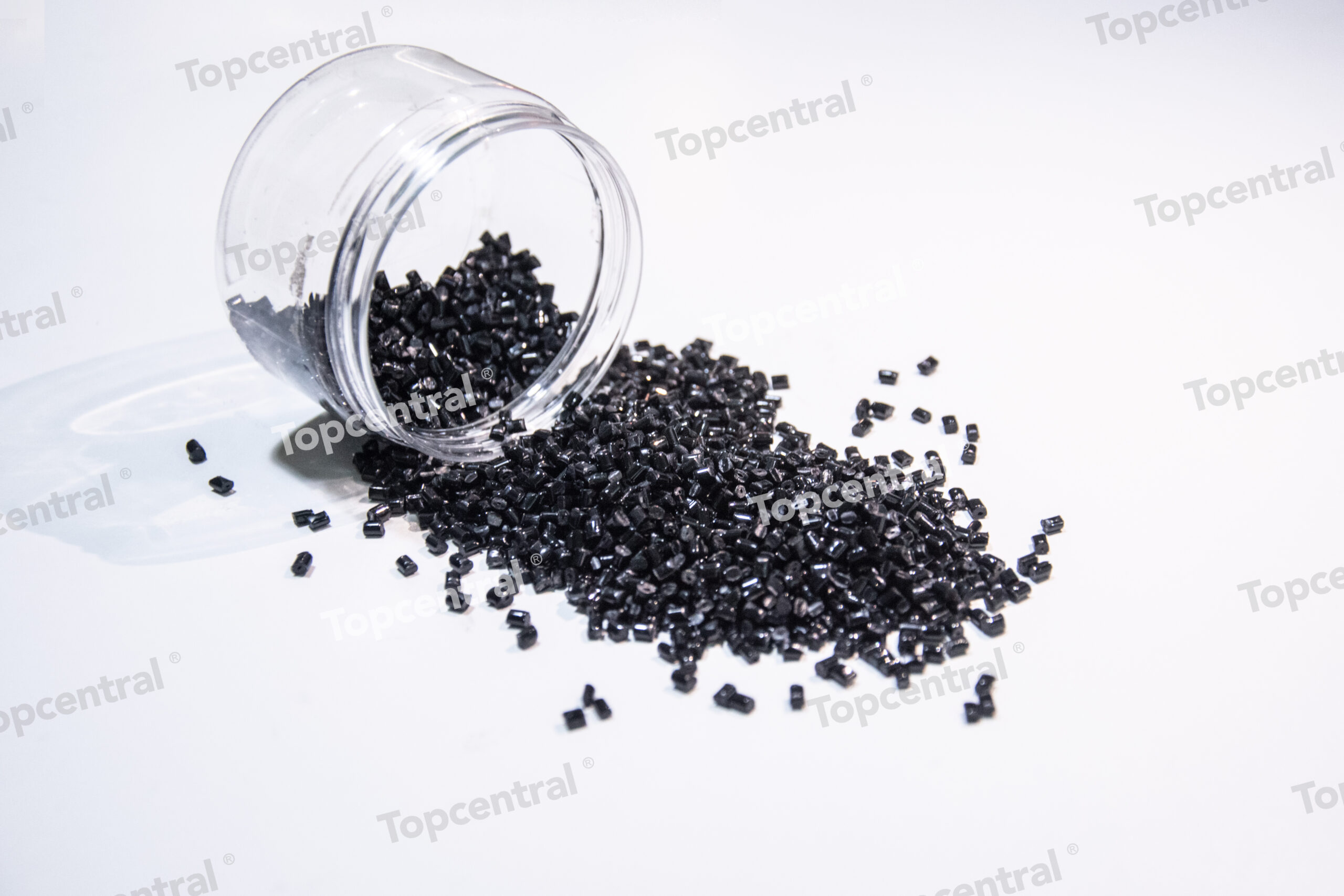
Consumer Electronics Sustainable Design: PCR Plastic Integration in Housing and Component Manufacturing
Executive Summary
The consumer electronics industry faces mounting regulatory pressure and market demand to incorporate post-consumer recycled (PCR) plastics into product housing and internal components. This analysis examines the technical, economic, and regulatory landscape of PCR plastic integration across the electronics supply chain, with specific focus on material selection, processing parameters, certification requirements, and lifecycle assessment.
Current industry data indicates that PCR plastic adoption in consumer electronics grew from 3.2% of total plastic consumption in 2020 to an estimated 8.7% in 2024, driven primarily by European Union regulatory frameworks and corporate sustainability commitments. However, technical challenges related to material consistency, flame retardancy retention, and aesthetic quality continue to limit broader adoption.
This report provides procurement managers, sustainability directors, and product engineers with actionable data on material specifications, supply chain validation protocols, processing adjustments, and cost implications for PCR integration at scale.
Section 1: Market Context and Regulatory Drivers
1.1 Current State of PCR Adoption in Electronics
Global plastic consumption in consumer electronics reached 4.3 million metric tons in 2023, with approximately 375,000 metric tons (8.7%) sourced from post-consumer recycled content. This represents a 172% increase from 2020 levels of 138,000 metric tons.
Table 1: PCR Plastic Consumption in Consumer Electronics by Region (2023)
| Region | Total Plastic (MT) | PCR Volume (MT) | PCR % | YoY Growth |
|——–|——————-|—————–|——-|————|
| European Union | 1,120,000 | 168,000 | 15.0% | +34% |
| China | 1,450,000 | 87,000 | 6.0% | +28% |
| North America | 980,000 | 68,600 | 7.0% | +22% |
| Japan/Korea | 520,000 | 36,400 | 7.0% | +18% |
| Rest of World | 230,000 | 15,000 | 6.5% | +15% |
Source: Industry estimates based on customs data and corporate sustainability reports from 25 major OEMs.
1.2 Regulatory Framework Driving Adoption
The regulatory landscape has shifted decisively toward mandatory PCR content requirements. Key instruments include:
European Union – Waste Electrical and Electronic Equipment (WEEE) Directive Recast
The 2023 amendment introduces Article 15a, requiring member states to establish national targets for recycled content in EEE placed on their markets. The European Commission proposed a minimum 20% PCR content in plastic housing components by 2028, with interim targets of 10% by 2026.
Extended Producer Responsibility (EPR) Fee Modulation
France implemented eco-modulation fees in 2022 under its EPR framework, reducing fees by 20% for products containing ?30% PCR plastic. Germany’s ElektroG revision (effective January 2024) applies similar incentives. Italy and Spain are expected to follow in 2025.
Packaging and Packaging Waste Regulation (PPWR)
While primarily targeting packaging, PPWR Article 6(3) establishes recycled content targets for plastic packaging that will indirectly affect electronics manufacturers who use plastic packaging for their products. The regulation mandates 35% PCR in contact-sensitive packaging by 2030 and 65% by 2040.
Carbon Border Adjustment Mechanism (CBAM)
CBAM’s phased implementation (transition period 2023-2025, full implementation 2026) will increase costs for imported electronics based on embedded carbon emissions. PCR plastics typically reduce carbon footprint by 40-60% compared to virgin materials, providing a compliance advantage.
China’s Circular Economy Promotion Law
The 2023 revision requires electronics manufacturers to report recycled content percentages and establishes voluntary targets of 15% PCR in plastic components by 2027.
1.3 Corporate Commitments and Market Pressure
Major OEMs have announced PCR targets that exceed regulatory requirements:
– Dell Technologies: 100% of plastic packaging recycled or renewable by 2030; 50% PCR content in product plastics by 2030
– HP Inc.: 30% PCR plastic in personal systems and print products by 2025 (achieved 22% in 2023)
– Apple: 100% recycled aluminum, tin, gold, and cobalt; 35% recycled plastic across all products (2023)
– Samsung: 50% recycled resin in all plastic components by 2030 (current: 18%)
– Lenovo: 50% recycled content in plastic packaging by 2025; 30% in product plastics by 2030
Section 2: Technical Specifications and Material Performance
2.1 PCR Plastic Feedstock Categories
PCR plastics used in consumer electronics fall into three primary categories based on source stream and processing requirements:
Category A: Closed-Loop Post-Consumer Electronics (WEEE-derived)
– Sources: End-of-life electronics housing, internal structural components
– Common polymers: ABS, HIPS, PC/ABS blends, PC
– Contamination profile: Paint coatings, metal inserts, flame retardant additives
– Processing: Requires decontamination, paint removal, melt filtration (120-200 micron)
Category B: Post-Consumer Packaging (bottle-grade)
– Sources: PET bottles, HDPE containers, PP packaging
– Common polymers: rPET, rHDPE, rPP
– Contamination profile: Labels, adhesives, food residue
– Processing: Washing, density separation, extrusion with degassing
Category C: Post-Industrial Scrap (manufacturing waste)
– Sources: Injection molding runners, thermoforming trim, extrusion edge trim
– Common polymers: ABS, PC, PC/ABS, PA, POM
– Contamination profile: Minimal; primarily color variation
– Processing: Grinding, blending, compounding
2.2 Critical Performance Parameters
For consumer electronics housing and internal components, PCR plastics must meet specific technical requirements. Table 2 summarizes target specifications for common applications.
Table 2: Technical Requirements for PCR Plastics in Electronics Applications
| Parameter | Desktop Housing | Laptop Enclosure | TV Bezel | Internal Chassis | Remote Control |
|———–|—————–|——————|———-|——————|—————-|
| Impact Strength (Izod, J/m) | ?200 | ?180 | ?150 | ?250 | ?120 |
| Flexural Modulus (MPa) | ?2,200 | ?2,400 | ?2,000 | ?2,800 | ?1,800 |
| Melt Flow Rate (g/10min @230°C/3.8kg) | 8-15 | 10-20 | 6-12 | 8-18 | 12-25 |
| HDT (°C @0.455 MPa) | ?85 | ?90 | ?80 | ?95 | ?75 |
| UL 94 Flammability | V-0 or V-1 | V-0 | V-0 or HB | V-0 | HB or V-2 |
| CTI (Comparative Tracking Index, V) | ?175 | ?175 | ?175 | ?250 | ?100 |
| Color Consistency (?E) | ?1.5 | ?1.0 | ?2.0 | ?3.0 | ?1.5 |
2.3 Property Retention in PCR vs. Virgin Materials
Extensive testing data from 2022-2024 demonstrates property retention characteristics for common PCR polymers:
ABS (Acrylonitrile Butadiene Styrene)
– Impact strength retention: 70-85% of virgin at 30% PCR content
– Tensile strength retention: 85-95% of virgin
– MFR increase: 15-30% (higher flow due to chain scission during reprocessing)
– Critical issue: Butadiene degradation during service life and reprocessing reduces impact performance
PC/ABS Blends
– Impact strength retention: 75-90% of virgin at 30% PCR content
– HDT reduction: 5-10°C compared to virgin
– Key challenge: Phase separation between PC and ABS phases after multiple processing cycles
HIPS (High Impact Polystyrene)
– Impact strength retention: 60-80% of virgin at 30% PCR content
– Rubber phase degradation: Significant reduction in elongation at break
– Application: Suitable for non-structural internal components, packaging
PP (Polypropylene)
– Impact strength retention: 80-95% of virgin at 30% PCR content
– Stiffness retention: 90-100% of virgin
– Advantage: Minimal property degradation across multiple reprocessing cycles
2.4 Flame Retardancy Considerations
Flame retardant (FR) systems present the most significant technical barrier to PCR integration in electronics housing. Key issues include:
FR Additive Degradation
Brominated flame retardants (BFRs) and organophosphorus FRs degrade during reprocessing. Testing shows:
– Decabromodiphenyl ether (DecaBDE): 15-25% decomposition at 240°C processing temperature
– Tetrabromobisphenol A (TBBPA): 10-20% loss after second extrusion pass
– Aluminum trihydroxide (ATH): Dehydration onset at 180°C reduces effectiveness
Regulatory Restrictions
The Stockholm Convention on Persistent Organic Pollutants restricts BFRs in recycled materials. The European Court of Justice ruling (Case C-125/23, March 2024) clarified that recycled plastics containing restricted BFRs above 0.1% concentration cannot be placed on the EU market, even if the original product complied with RoHS.
Practical Solutions
– FR booster packages: 2-5% additional FR additive compensates for degradation
– Nanoclay synergists: 1-3% loading improves char formation and reduces FR loading requirements
– Post-consumer FR screening: XRF-based sorting to separate BFR-containing from non-BFR streams
Section 3: Certification and Supply Chain Validation
3.1 Required Certifications for PCR Plastics
Global Recycled Standard (GRS)
– Scope: Chain of custody verification for recycled content
– Requirements: ?50% recycled content for GRS certification; ?95% for GRS 100
– Audit frequency: Annual third-party audits by accredited bodies (e.g., Control Union, SGS)
– Traceability: Transaction certificates required for each supply chain transfer
ISCC PLUS (International Sustainability and Carbon Certification)
– Scope: Mass balance approach for recycled content tracking
– Requirements: Sustainable feedstock documentation; greenhouse gas emissions calculation
– Recognition: Accepted by European Commission for renewable energy directives
– Key advantage: Allows attribution of recycled content to specific products through controlled blending
UL 2809 (Environmental Claim Validation Procedure for Recycled Content)
– Scope: Validation of post-consumer and post-industrial recycled content claims
– Requirements: Material flow analysis; traceability documentation; mass balance verification
– Levels: Standard, 100% PCR, Ocean Bound Plastic (OBP) designation
– Market relevance: Required by major OEMs for supplier qualification
SCS Recycled Content Certification
– Scope: Third-party verification of recycled content percentage
– Requirements: Chain of custody documentation; production records review
– Application: Frequently used in conjunction with EPEAT registration
3.2 Supply Chain Audit Requirements
OEM procurement departments typically require the following documentation from PCR suppliers:
1. Material Declaration Form: Polymer type, additive package, filler content, recycled content percentage
2. Conflict Minerals Report: Tin, tantalum, tungsten, gold sourcing (even if not directly applicable)
3. RoHS/REACH Compliance Certificate: Restricted substance testing per EU Directive 2011/65/EU and Regulation (EC) 1907/2006
4. Flame Retardant Declaration: FR type, loading percentage, regulatory compliance
5. Carbon Footprint Report: Cradle-to-gate emissions per ISO 14067 or PAS 2050
6. Life Cycle Assessment Summary: Per ISO 14040/14044 methodology
7. Material Safety Data Sheet (MSDS): Updated per GHS Revision 8
3.3 Testing Protocol Requirements
Incoming Quality Control
– Melt flow rate (ASTM D1238 / ISO 1133): Every lot
– Moisture content (ASTM D6869): Every lot
– Contamination level (visual inspection, 2mm thick plaque): Every 5 lots
– Color measurement (CIE Lab, D65 illuminant): Every lot
Full Qualification (Annual)
– Mechanical properties: Tensile (ASTM D638), flexural (ASTM D790), impact (ASTM D256)
– Thermal properties: HDT (ASTM D648), Vicat (ASTM D1525)
– Flammability: UL 94 (vertical or horizontal burn)
– Electrical properties: CTI (ASTM D3638), dielectric strength (ASTM D149)
– Weatherability: Xenon arc (ASTM D2565) for outdoor-rated products
Section 4: Processing Adjustments for PCR Materials
4.1 Injection Molding Parameter Modifications
Transitioning from virgin to PCR plastics requires systematic processing adjustments. Table 3 summarizes recommended parameter changes.
Table 3: Injection Molding Parameter Adjustments for PCR Plastics
| Parameter | Virgin ABS | 30% PCR ABS | 50% PCR ABS | 100% PCR ABS |
|———–|————|————-|————-|————–|
| Drying Temperature (°C) | 80-85 | 85-90 | 90-95 | 95-100 |
| Drying Time (hours) | 2-3 | 3-4 | 4-6 | 6-8 |
| Barrel Temperature (°C) | 210-240 | 200-230 | 195-225 | 190-220 |
| Injection Speed | Medium | Medium-High | High | High |
| Back Pressure (bar) | 5-10 | 10-15 | 15-20 | 20-25 |
| Mold Temperature (°C) | 40-60 | 50-70 | 60-80 | 70-90 |
| Screw RPM | 50-80 | 40-60 | 35-55 | 30-50 |
Key Considerations:
– Moisture management: PCR plastics absorb 30-50% more moisture than virgin materials due to increased surface area from degradation and contamination
– Shear sensitivity: Reduced molecular weight in PCR materials requires lower screw speeds to prevent further degradation
– Gate design: Larger gates (20-30% increase in cross-section) reduce shear heating and prevent material degradation
– Venting: Additional venting (0.02-0.03mm depth) helps remove volatiles from degraded additives
4.2 Mold Design Modifications
Surface Finish Considerations
PCR plastics exhibit different flow patterns and may reproduce mold texture differently:
– VDI 24-30 finishes: PCR fills texture more completely than virgin (10-15% improvement in texture replication)
– High gloss (SPI A-1, A-2): PCR may show flow lines and splay marks; requires 5-10°C higher mold temperature
– Textured surfaces (EDM, chemical etch): PCR may show 15-20% reduction in gloss compared to virgin
Shrinkage Compensation
PCR plastics typically show 10-20% higher shrinkage than virgin materials due to reduced molecular weight. Mold cavity dimensions should be adjusted:
– ABS: 0.005-0.007 mm/mm shrinkage for virgin vs. 0.006-0.009 mm/mm for PCR
– PP: 0.015-0.025 mm/mm shrinkage for virgin vs. 0.018-0.030 mm/mm for PCR
– PC/ABS: 0.005-0.007 mm/mm shrinkage for virgin vs. 0.006-0.008 mm/mm for PCR
4.3 Color Matching and Aesthetics
Color Shift Challenges
PCR plastics exhibit batch-to-batch color variation due to:
– Feedstock source variation (consumer product color distribution)
– Degradation products (yellowing from thermal history)
– Contamination from non-target polymers
Compensation Strategies
1. Color concentrate loading: Increase from 1-2% (virgin) to 3-5% (PCR) for dark colors; 5-8% for light colors
2. Titanium dioxide loading: 2-4% addition for opacity in light colors
3. Hiding layer design: 0.3-0.5mm thick layer of virgin material over PCR core for cosmetic surfaces
4. Color sorting: NIR-based sorting of PCR feedstock by color family (dark, medium, light)
Section 5: Economic Analysis and Cost Implications
5.1 Cost Structure Comparison
Table 4: Cost Comparison Virgin vs. PCR Plastics (2024 Pricing, USD/kg)
| Polymer Type | Virgin Price | 30% PCR Price | 50% PCR Price | 100% PCR Price |
|————–|————–|—————|—————|—————-|
| ABS (V-0) | $2.80-3.20 | $2.50-2.90 | $2.30-2.70 | $1.90-2.40 |
| PC/ABS (V-0) | $3.50-4.20 | $3.10-3.80 | $2.80-3.50 | $2.40-3.00 |
| HIPS (HB) | $1.80-2.20 | $1.60-2.00 | $1.40-1.80 | $1.20-1.60 |
| PP (HB) | $1.40-1.80 | $1.30-1.70 | $1.20-1.60 | $1.00-1.40 |
| PC (V-0) | $4.00-5.00 | $3.50-4.50 | $3.00-4.00 | $2.50-3.50 |
Note: Prices vary significantly based on certification level, color consistency requirements, and supply region.
5.2 Total Cost of Ownership Factors
Direct Material Cost Savings
– 100% PCR ABS: 25-35% lower material cost vs. virgin
– 50% PCR ABS: 15-20% lower material cost
– 30% PCR ABS: 5-10% lower material cost
Processing Cost Increases
– Drying energy: 15-25% higher (longer drying times at higher temperatures)
– Cycle time: 5-10% longer (higher mold temperatures, slower injection speeds)
– Scrap rate: 3-8% higher (first-run yield reduction during transition)
– Tooling modifications: $15,000-$50,000 per mold (gate modifications, venting, texture adjustments)
Quality Control Costs
– Incoming testing: $500-$2,000 per lot (additional testing beyond virgin requirements)
– Color matching: $1,000-$5,000 per color formulation
– Certification maintenance: $10,000-$30,000 annually per certification scheme
5.3 Return on Investment Analysis
Case Study: Desktop Computer Housing (2.5 kg plastic per unit, 500,000 units/year)
| Cost Category | Virgin ABS | 50% PCR ABS | Savings/(Cost) |
|—————|————|————-|—————-|
| Material Cost | $7.50/unit | $6.25/unit | $1.25/unit |
| Processing Cost | $2.80/unit | $3.10/unit | ($0.30)/unit |
| QC/Testing | $0.15/unit | $0.25/unit | ($0.10)/unit |
| Certification | $0.02/unit | $0.05/unit | ($0.03)/unit |
| Total | $10.47/unit | $9.65/unit | $0.82/unit |
Annual savings: $410,000 (500,000 units × $0.82/unit)
Implementation cost: $180,000 (tooling modifications, testing, certification)
Payback period: 5.3 months
Section 6: Regulatory Compliance and Risk Management
6.1 Compliance Documentation Requirements
EU Market Access Documentation
1. Declaration of Conformity (DoC): Must include recycled content percentage and certification reference
2. Technical File: Material specifications, test reports, certification documents
3. CE Marking: Applicable to all electronic products; recycled content does not exempt from requirements
4. WEEE Registration: Producer responsibility organization enrollment in each EU member state
EPR Compliance
– France: Eco-organisme registration (Eco-systèmes, Ecologic); eco-modulation fee calculation based on PCR content
– Germany: Stiftung Elektro-Altgeräte Register (EAR) registration; monthly reporting of placed quantities
– Italy: Centro di Coordinamento RAEE (CdC RAEE) registration; annual reporting
– Spain: Fundación Ecolec or Fundación EcoRAEEs registration; quarterly reporting
6.2 Risk Mitigation Strategies
Supply Chain Risks
– Feedstock availability: PCR supply fluctuates with collection rates and recycling infrastructure investment
– Mitigation: Dual-source qualification; 6-month buffer inventory; spot market contracts
– Quality consistency: Batch-to-batch variation in PCR properties
– Mitigation: Statistical process control (SPC) monitoring; supplier quality agreements with defined specification limits
– Price volatility: PCR pricing correlated with virgin polymer markets but with 8-12 week lag
– Mitigation: Quarterly price adjustment clauses; volume commitments for price stability
Technical Risks
– Flame retardancy failure: FR additive degradation during reprocessing
– Mitigation: FR booster package addition; UL 94 requalification every 6 months
– Stress cracking: Reduced molecular weight increases environmental stress crack resistance (ESCR) sensitivity
– Mitigation: Design stress reduction (20-30% below virgin design limits); annealing post-molding
– Weld line weakness: Reduced molecular weight decreases weld line strength by 15-25%
– Mitigation: Gate relocation; increased melt temperature at weld line; design reinforcement at weld line locations
Section 7: Implementation Roadmap
7.1 Phase 1: Assessment and Qualification (3-6 months)
Month 1-2: Material Selection
– Identify target applications (prioritize non-cosmetic, internal components)
– Evaluate available PCR feedstocks (supplier qualification)
– Conduct preliminary testing (MFR, impact, color)
Month 3-4: Certification
– Select certification scheme (GRS recommended for EU market)
– Complete chain of custody documentation
– Submit samples for UL 2809 or equivalent certification
Month 5-6: Process Validation
– Conduct mold flow analysis with PCR material data
– Perform tooling modifications (gates, vents, cooling channels)
– Complete first-shot trials and dimensional validation
7.2 Phase 2: Pilot Production (3-4 months)
Month 7-8: Small-Scale Production
– 1,000-5,000 unit production run
– In-process quality monitoring (every 100 units)
– Dimensional inspection (every 500 units)
– Mechanical testing (every 1,000 units)
Month 9-10: Reliability Testing
– Thermal cycling (-20°C to 70°C, 100 cycles)
– Humidity exposure (95% RH, 60°C, 500 hours)
– Drop testing (1.2m height, 26 surfaces per ASTM D4169)
– Flammability requalification (UL 94)
7.3 Phase 3: Scale-Up and Optimization (6-12 months)
Month 11-14: Production Ramp
– Increase to 50% of production volume
– Establish SPC limits for critical parameters
– Implement supplier quality scorecard
Month 15-18: Cost Optimization
– Reduce cycle time through process optimization
– Decrease scrap rate through DOE (Design of Experiments)
– Negotiate volume pricing with PCR suppliers
Month 19-24: Continuous Improvement
– Expand PCR content to additional components
– Evaluate higher PCR content formulations
– Implement closed-loop recycling for manufacturing scrap
Section 8: Environmental Impact Assessment
8.1 Carbon Footprint Reduction
Table 5: Carbon Footprint Comparison Virgin vs. PCR Plastics (kg CO2e/kg material)
| Polymer Type | Virgin | 30% PCR | 50% PCR | 100% PCR | Reduction (100% PCR) |
|————–|——–|———|———|———-|———————|
| ABS | 3.8 | 2.9 | 2.3 | 1.5 | 61% |
| PC/ABS | 4.2 | 3.2 | 2.6 | 1.7 | 60% |
| HIPS | 3.1 | 2.4 | 1.9 | 1.2 | 61% |
| PP | 2.7 | 2.1 | 1.7 | 1.1 | 59% |
| PC | 5.1 | 3.8 | 3.1 | 2.0 | 61% |
Source: PlasticsEurope Eco-profiles (2023) with PCR adjustments based on industry LCA data.
8.2 Water and Energy Savings
– Water consumption reduction: 40-55% reduction in total water footprint for PCR vs. virgin (excluding washing water for PCR feedstock)
– Energy consumption reduction: 55-70% reduction in cradle-to-gate energy for PCR vs. virgin
– Landfill diversion: 1.2-1.8 kg of plastic diverted per kg of PCR used (accounting for recycling process losses)
8.3 Circular Economy Metrics
Material Circularity Indicator (MCI)
– Product with 30% PCR content: MCI = 0.35-0.45
– Product with 50% PCR content: MCI = 0.50-0.60
– Product with 100% PCR content: MCI = 0.75-0.85
Note: MCI ranges from 0 (linear) to 1 (fully circular). Values account for recycling efficiency, product lifetime, and end-of-life collection rates.
Section 9: Future Trends and Emerging Technologies
9.1 Advanced Sorting Technologies
NIR Hyperspectral Imaging
– Wavelength range: 900-1700 nm
– Sorting accuracy: 95-98% for common electronics polymers
– Throughput: 3-5 tons/hour per sorting line
– Cost: $500,000-$1,200,000 per system
X-Ray Fluorescence (XRF) for FR Detection
– Detection limit: 100 ppm for bromine, 50 ppm for chlorine
– Sorting speed: 2-4 items/second
– Application: Separation of BFR-containing from non-BFR plastics
AI-Based Sorting
– Convolutional neural networks for polymer identification
– Accuracy improvement: 15-20% over traditional NIR sorting
– Current limitation: Training data requirements for diverse electronics waste streams
9.2 Chemical Recycling Integration
Pyrolysis
– Temperature range: 400-700°C
– Output: Monomer-rich oil (60-80% yield for PS, 40-60% for PE/PP)
– Energy intensity: 5-8 MJ/kg feedstock
– Commercial readiness: Limited (3-5 commercial plants globally for electronics waste)
Solvent-Based Purification
– Process: Selective dissolution of target polymer (e.g., ABS in acetone)
– Purity: 99%+ polymer recovery
– Contamination removal: 90-95% removal of paints, coatings, additives
– Commercial status: Pilot scale (CREASOLV process by Fraunhofer IVV)
9.3 Regulatory Trajectory
EU Ecodesign for Sustainable Products Regulation (ESPR)
– Proposed digital product passport requirement (effective 2026)
– Mandatory recycled content declaration (2027)
– Potential minimum recycled content requirements for electronics (2030)
US Federal Action
– RECOVER Act (2023): $500 million in grants for recycling infrastructure
– National Recycling Strategy: Goal of 50% recycling rate by 2030
– State-level PCR mandates: California (SB 54), Washington (HB 2305), Oregon (SB 582)
Key Takeaways
1. PCR integration is economically viable at current material pricing, with typical payback periods of 5-8 months for high-volume applications. Material cost savings of 15-35% offset processing and certification costs.
2. Technical barriers are manageable through systematic processing adjustments, particularly in drying protocols, gate design, and mold temperature control. Property retention of 70-90% is achievable with proper material selection and processing.
3. Regulatory compliance requires proactive investment in certification schemes (GRS, ISCC PLUS, UL 2809) and supply chain documentation. Early adopters gain competitive advantage as mandatory requirements phase in from 2026-2030.
4. Flame retardancy remains the critical technical challenge, requiring FR booster packages or alternative FR systems for high-PCR formulations. XRF screening for BFR content is essential for EU market compliance.
5. Supply chain diversification is essential given feedstock availability fluctuations. Dual-source qualification and 6-month buffer inventory are minimum risk management requirements.
6. Environmental benefits are substantial with 59-61% carbon footprint reduction for 100% PCR materials. These reductions directly support corporate sustainability targets and CBAM compliance.
7. Implementation should follow a phased approach starting with internal components, progressing to cosmetic surfaces as color consistency and aesthetic quality are validated.
Related Topics
– Closed-Loop Recycling Systems for Electronics: Infrastructure requirements for collecting, sorting, and reprocessing end-of-life electronics back into production
– Bio-Based and Biodegradable Alternatives: Comparative analysis of bio-based polymers (PLA, PHA) vs. PCR for electronics applications
– EPR Fee Modulation Strategies: Optimization of eco-modulation fee reductions through PCR content, repairability, and recyclability design
– Digital Product Passport Implementation: Data architecture and blockchain solutions for material traceability in electronics supply chains
– Mechanical vs. Chemical Recycling: Comparative lifecycle assessment for electronics-grade plastics
– Ocean Bound Plastics (OBP) Certification: Requirements and market premium for OBP-certified PCR in electronics
Further Reading
Industry Standards and Guidelines
1. IEC 62474:2022 – Material Declaration for Products of and for the Electrotechnical Industry
2. ISO 14021:2016 – Environmental Labels and Declarations (Self-Declared Environmental Claims)
3. UL 746C – Standard for Polymeric Materials – Use in Electrical Equipment Evaluations
4. IEEE 1680.1 – Standard for Environmental Assessment of Personal Computer Products
Regulatory Documents
5. European Commission (2023). “Proposal for a Regulation on Ecodesign for Sustainable Products.” COM(2022) 142 final.
6. European Environment Agency (2023). “Plastics in Electrical and Electronic Equipment: Recycling Challenges and Opportunities.” EEA Report No. 15/2023.
7. UNEP (2023). “Global Chemicals Outlook II: From Legacies to Innovative Solutions.” Chapter 4: Plastics and Waste Electrical and Electronic Equipment.
Technical References
8. Muench, S., et al. (2023). “Post-Consumer Recycled ABS for Consumer Electronics: Property Retention and Processing Optimization.” Journal of Applied Polymer Science, 140(12), e53521.
9. Chen, L., & Wang, Y. (2024). “Flame Retardancy Retention in Recycled ABS: Effect of Reprocessing Cycles and FR Booster Systems.” Polymer Degradation and Stability, 218, 110547.
10. Buekens, A., & Yang, J. (2023). “Recycling of WEEE Plastics: A Review of Current Practices and Future Perspectives.” Waste Management & Research, 41(4), 678-695.
Industry Reports
11. Global Plastics Outlook (2024). “Recycled Plastics in Electronics: Market Analysis and Forecast 2024-2030.” OECD Publishing.
12. Closed Loop Partners (2023). “The Demand for Recycled Plastics in Electronics: A Supply Chain Analysis.” Center for the Circular Economy.
13. Ellen MacArthur Foundation (2024). “Circular Electronics: Scaling Recycled Content in Consumer Devices.” CE100 Program Report.
Certification Resources
14. Textile Exchange (2023). “Global Recycled Standard Version 4.0.” Available at: www.textileexchange.org
15. ISCC System GmbH (2024). “ISCC PLUS Certification Requirements.” Available at: www.iscc-system.org
16. UL Environment (2023). “UL 2809 Environmental Claim Validation Procedure for Recycled Content.” Available at: www.ul.com
This analysis was prepared in April 2024. Market data, pricing, and regulatory information are subject to change. Organizations should verify current conditions with qualified legal and technical advisors before making procurement or design decisions.
Content Verification Annotation
EID: EID-2BA65465-5695
Content Tier: Bæ¡£ (~6,009 words)
Verification Status: Reviewed – Pre-Constitution Content (L4)
Review Date: 2026-06-21
Leave a Reply