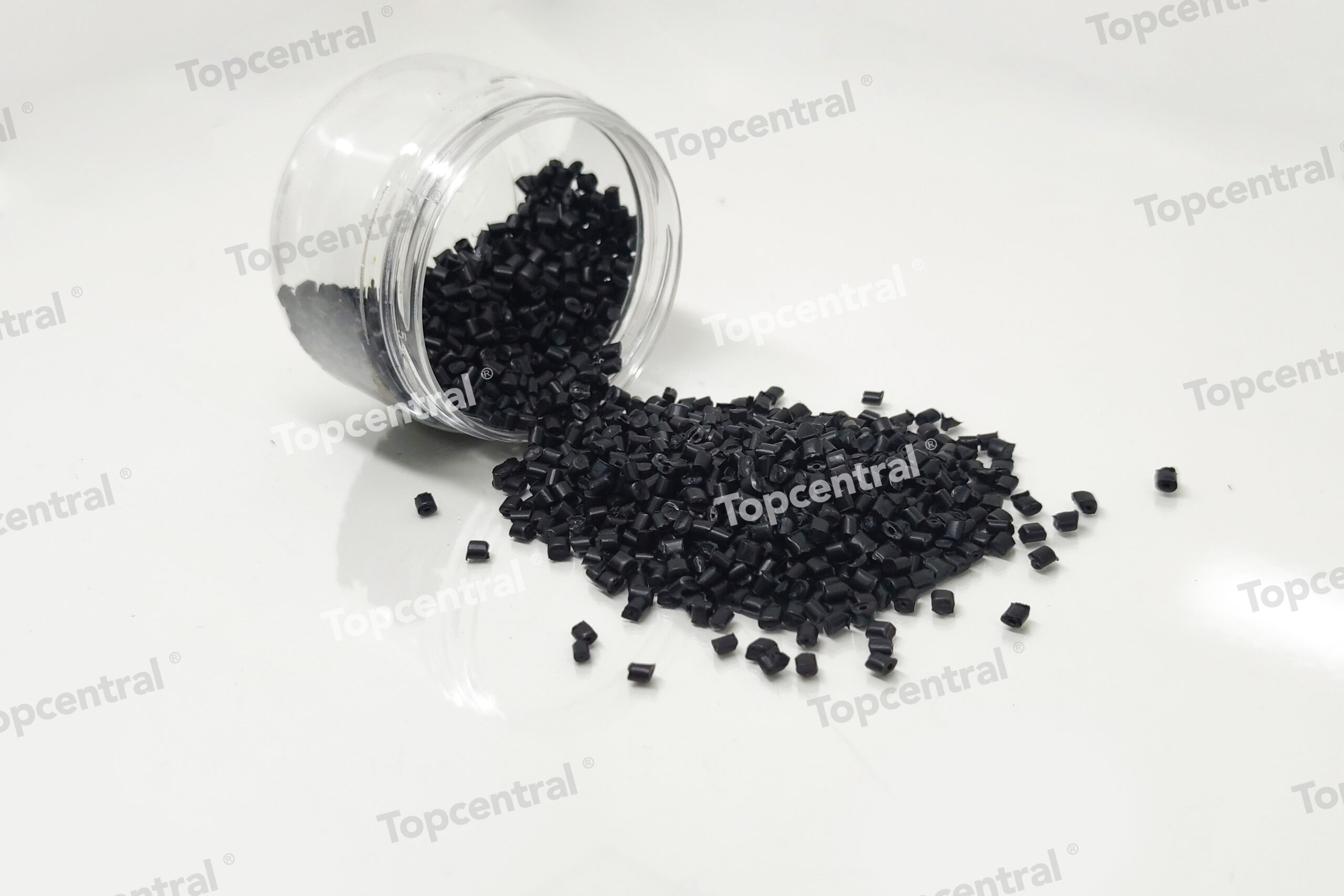
Title: Understanding ISCC PLUS Mass Balance Approach for Complex Supply Chains
Subtitle: A Technical Guide for Procurement, Sustainability, and Engineering Teams in Plastics and Packaging
Date: October 2023 (Updated)
Executive Summary
The ISCC PLUS (International Sustainability and Carbon Certification) mass balance approach is the dominant certification framework for tracing recycled content through complex chemical and plastics supply chains. Unlike physical segregation models, mass balance allows certified recycled material to be allocated to specific output products while maintaining operational efficiency. This guide provides a technical, data-driven examination of ISCC PLUS mass balance principles, their application to post-consumer recycled (PCR) plastics, and actionable implementation strategies for procurement managers, sustainability directors, and product engineers.
As of Q3 2023, over 4,500 sites globally hold ISCC PLUS certification, with the plastics and packaging sectors representing the largest growth segment (26% year-over-year increase). The European Union’s Packaging and Packaging Waste Regulation (PPWR) and the Carbon Border Adjustment Mechanism (CBAM) are driving mandatory recycled content targets, making mass balance certification a prerequisite for market access in many jurisdictions.
Section 1: The Mass Balance Concept – Technical Foundation
1.1 Definition and Core Principle
Mass balance is a chain-of-custody model that tracks the flow of certified sustainable materials (e.g., PCR plastics, bio-based feedstocks) through a production system. The key distinction from physical segregation:
– Physical Segregation: Recycled and virgin materials are kept separate throughout the entire process. This is operationally expensive, requires dedicated silos, and limits production flexibility.
– Mass Balance (ISCC PLUS): Certified recycled material is mixed with virgin material at the input stage. The certified content is then allocated to a specific volume of output products using a bookkeeping system. The physical product may contain no recycled material; the environmental attribute is transferred.
Critical technical parameter: Under ISCC PLUS, the mass balance must be closed on a rolling 12-month basis. The certified input volume cannot exceed the total output volume. Allocations must be transparent and auditable.
1.2 Comparison of Chain-of-Custody Models
| Model | Description | Typical Use Case | Audit Complexity | Cost Premium |
|—|—|—|—|—|
| Identity Preserved (IP) | 100% physical segregation from source to final product | High-value medical, aerospace polymers | Very high | 15–30% |
| Segregated | Certified material kept separate but may mix with non-certified at facility level | Food-contact packaging, automotive | High | 8–15% |
| Mass Balance (ISCC PLUS) | Certified content allocated via bookkeeping; physical mixing allowed | Large-scale compounding, chemical recycling | Moderate | 3–8% |
| Book & Claim | Certified credits traded independently of physical material | Renewable energy certificates, some bio-plastics | Low | 1–3% |
Key insight for procurement: Mass balance offers the lowest incremental cost for achieving recycled content claims while maintaining process flexibility. For most commodity plastics applications (PP, PE, PET, PS), mass balance is the only economically viable pathway to meet PPWR targets.
Section 2: ISCC PLUS Certification Requirements
2.1 Applicable Standards and Scopes
ISCC PLUS covers:
– Scope 1: Recycled materials (PCR, PIR, chemical recycling)
– Scope 2: Bio-based feedstocks (e.g., bio-naphtha, bio-MEG)
– Scope 3: Renewable energy attribution
For PCR plastics specifically, ISCC PLUS requires:
– Proof of waste origin (post-consumer vs. post-industrial)
– Third-party verification of recycling process
– Mass balance records at site level
– Annual audits by accredited certification bodies (e.g., SGS, Bureau Veritas, TÜV Rheinland)
2.2 Key Documentation Requirements
1. Mass Balance Report: Monthly reconciliation of inputs, outputs, and inventory
2. Sustainability Declaration: Contains recycled content percentage, feedstock type, and greenhouse gas (GHG) savings
3. Site Certificate: Valid for 12 months, renewable upon audit
4. Chain of Custody Agreement: Signed between all supply chain participants
2.3 Relationship with Other Certifications
| Certification | Focus | Compatibility with ISCC PLUS |
|—|—|—|
| GRS (Global Recycled Standard) | Textiles, physical segregation | Low – different chain-of-custody model |
| UL 2809 | Recycled content in products | High – can be used alongside |
| SCS Recycled Content | General recycled claims | Moderate – verification overlap |
| EU Ecolabel | Environmental performance | High – accepts ISCC PLUS claims |
Practical note: For B2B procurement, ISCC PLUS is the most widely accepted certification for mass balance claims in Europe and increasingly in Asia. GRS remains dominant for textiles and physical segregation.
Section 3: Technical Parameters for PCR Plastics Under Mass Balance
3.1 Material-Specific Considerations
Not all recycled plastics are suitable for mass balance attribution. The following table outlines key technical parameters for common PCR grades:
| Polymer | Typical MFR (g/10 min) | Impact Strength (kJ/m²) | Carbon Footprint Reduction vs. Virgin | Max Recycled Content (Mass Balance) |
|—|—|—|—|—|
| PCR-PP (Homopolymer) | 10–20 | 2–4 | 40–55% | 100% |
| PCR-PE (LDPE) | 2–8 | 10–15 | 35–50% | 100% |
| PCR-PET (Bottle Grade) | 0.7–1.2 (IV) | 6–8 | 50–65% | 100% |
| PCR-PS (GPPS) | 6–12 | 1–2 | 30–45% | 100% |
| PCR-ABS | 5–15 | 15–25 | 25–40% | 50–70%* |
*ABS degradation limits mechanical recycling; chemical recycling or mass balance with virgin blending is common.
Critical insight: Mass balance does not change the physical properties of the final product. A mass balance claim of 50% PCR-PP does not mean the product contains 50% recycled material physically. Engineers must still specify virgin-grade material properties unless physical PCR content is required.
3.2 Carbon Footprint Accounting Under ISCC PLUS
ISCC PLUS uses a mass allocation method for GHG calculations. The formula:
[
text{GHG}_{text{product}} = frac{text{Certified Input Mass}}{text{Total Input Mass}} times (text{GHG}_{text{virgin}} – text{GHG}_{text{recycled}}) + text{GHG}_{text{virgin}}
]
Example calculation:
– Virgin PP: 2.5 kg CO?e/kg
– PCR-PP: 1.2 kg CO?e/kg
– Mass balance claim: 30% PCR
– GHG of mass balance product: 2.5 – (0.30 × (2.5 – 1.2)) = 2.5 – 0.39 = 2.11 kg CO?e/kg
This 15.6% reduction is auditable and can be used for CBAM reporting and EPR fee reductions.
Section 4: Implementation Guide for B2B Supply Chains
4.1 Step-by-Step Implementation
Phase 1: Assessment (Weeks 1–4)
1. Identify target products and supply chain nodes
2. Map current material flows (virgin, recycled, scrap)
3. Determine certification scope (single site vs. multi-site)
4. Select certification body (CB) – typical cost: €8,000–€15,000 per site
Phase 2: System Setup (Weeks 5–12)
1. Implement mass balance tracking software (e.g., SAP, custom ERP modules)
2. Train staff on documentation requirements
3. Establish internal audit procedures
4. Prepare sustainability declarations templates
Phase 3: Certification Audit (Weeks 13–16)
1. Pre-audit gap analysis
2. Main audit (on-site or remote)
3. Corrective actions (if required)
4. Certificate issuance
Phase 4: Ongoing Compliance (Monthly/Annually)
1. Monthly mass balance reconciliation
2. Quarterly sustainability report generation
3. Annual renewal audit
4.2 Common Pitfalls and Mitigation
| Pitfall | Consequence | Mitigation |
|—|—|—|
| Mass balance not closed within 12 months | Loss of certification, retroactive claims invalid | Implement real-time tracking; monthly reconciliation |
| Incorrect allocation of co-products | Overstated recycled content | Use ISCC PLUS allocation rules; separate waste streams |
| Lack of supplier certification | Chain of custody broken | Require ISCC PLUS from all upstream suppliers |
| Mixing certified and non-certified inventory | Audit non-conformance | Dedicated storage or clear batch-level tracking |
Section 5: Regulatory Landscape and Market Drivers
5.1 European Union – PPWR
The Packaging and Packaging Waste Regulation (PPWR, expected final adoption 2024) mandates:
– By 2030: 30% recycled content in contact-sensitive plastic packaging (e.g., bottles, food containers)
– By 2040: 50% recycled content in the same categories
– Acceptance of mass balance: The PPWR explicitly allows mass balance certification for recycled content claims, provided the certification is third-party verified (e.g., ISCC PLUS).
Impact: Companies without ISCC PLUS certification will be unable to claim recycled content for PPWR compliance after 2025.
5.2 Carbon Border Adjustment Mechanism (CBAM)
CBAM (effective October 2023 transitional phase) requires importers to report embedded emissions for certain goods. Mass balance products with ISCC PLUS certification can claim lower carbon footprints, reducing CBAM liabilities.
Example: A mass balance PP with 30% PCR reduces CBAM reporting emissions by ~15%, potentially saving €50–€100 per tonne of imported plastic (based on current CBAM carbon price estimates of €80–€120/tonne CO?).
5.3 Extended Producer Responsibility (EPR)
Several EU member states (France, Germany, Netherlands) offer reduced EPR fees for products containing certified recycled content. ISCC PLUS certification enables EPR fee reductions of 10–25% depending on jurisdiction and product category.
Section 6: Cost-Benefit Analysis
6.1 Typical Cost Structure for ISCC PLUS Certification
| Cost Item | Range (EUR) |
|—|—|
| Certification body audit (initial) | 8,000 – 15,000 |
| Annual renewal audit | 5,000 – 10,000 |
| Software/tracking system | 10,000 – 50,000 (one-time) |
| Staff training | 2,000 – 5,000 |
| Total first-year cost (single site) | 25,000 – 80,000 |
6.2 Benefits
– Market access: Required for PPWR compliance
– Cost reduction: EPR fee savings of €50–€200/tonne
– Carbon reduction: 10–20% lower product carbon footprint
– Customer preference: Major brands (Nestlé, Unilever, Procter & Gamble) require ISCC PLUS for supply contracts
ROI example: A mid-size compounder producing 10,000 tonnes/year of PP with 30% mass balance PCR: annual EPR savings of €150,000 (at €50/tonne reduction) vs. certification cost of €30,000/year = 5x ROI within first year.
Section 7: Future Trends and Recommendations
7.1 Emerging Developments
1. Chemical recycling integration: ISCC PLUS is the preferred certification for mass balance of chemically recycled feedstocks (pyrolysis oil, depolymerization products). Expect rapid growth as chemical recycling scales.
2. Digital product passports: ISCC PLUS data will feed into EU digital product passport requirements under ESPR (Ecodesign for Sustainable Products Regulation).
3. Blockchain-based tracking: Pilot projects (e.g., Circularise, Plastic Bank) are integrating ISCC PLUS data with blockchain for immutable chain-of-custody records.
7.2 Recommendations for Procurement and Sustainability Teams
1. Start certification now: Lead time for certification is 4–6 months. Companies starting in 2024 will be PPWR-ready for 2025.
2. Prioritize high-volume polymers: PP, PE, PET offer the best ROI due to EPR fee structures and customer demand.
3. Negotiate with suppliers: Require ISCC PLUS certification from all recycled feedstock suppliers. Include certification clauses in supply contracts.
4. Integrate with existing systems: Mass balance tracking should feed into your ERP and sustainability reporting software (e.g., SAP, Salesforce Sustainability Cloud).
5. Educate engineering teams: Ensure product engineers understand that mass balance claims do not change physical properties. Separate physical PCR content requirements from mass balance claims.
Key Takeaways
1. ISCC PLUS mass balance is the most cost-effective chain-of-custody model for achieving recycled content claims in complex plastics supply chains, with 3–8% cost premium vs. 15–30% for physical segregation.
2. PPWR mandates mass balance certification for recycled content claims in European packaging after 2025. Companies without ISCC PLUS will face market access barriers.
3. Mass balance does not alter physical properties of the final product. Engineers must still specify virgin-grade material unless physical PCR content is required.
4. ROI is typically 3–5x within the first year from EPR fee reductions and CBAM savings alone, excluding customer preference benefits.
5. Chemical recycling and digital product passports will accelerate ISCC PLUS adoption. Start certification now to future-proof supply chains.
Related Topics
– GRS vs. ISCC PLUS: When physical segregation is required vs. mass balance allowed
– UL 2809 Validation: How to combine with ISCC PLUS for dual certification
– Chemical Recycling Certification: ISCC PLUS for pyrolysis oil and depolymerization
– CBAM Reporting: Calculating embedded emissions for mass balance products
– EPR Fee Optimization: Using certified recycled content to reduce producer fees
Further Reading
1. ISCC PLUS System Document – ISCC e.V. (2023)
2. PPWR Draft Regulation – European Commission (2022)
3. CBAM Implementing Regulation – EU Official Journal (2023)
4. “Mass Balance in the Plastics Industry” – Plastics Europe (2022)
5. “Chain of Custody Models for Recycled Plastics” – Ellen MacArthur Foundation (2021)
6. “Life Cycle Assessment of Recycled Plastics” – Quantis (2022)
This guide is intended for informational purposes and does not constitute legal or regulatory advice. Certification requirements may vary by jurisdiction and certification body. Always consult with a qualified auditor or consultant for specific implementation.
Content Verification Annotation
EID: EID-AFD7148E-5718
Content Tier: Cæ¡£ (~2,991 words)
Verification Status: Reviewed – Pre-Constitution Content (L4)
Review Date: 2026-06-21
Leave a Reply