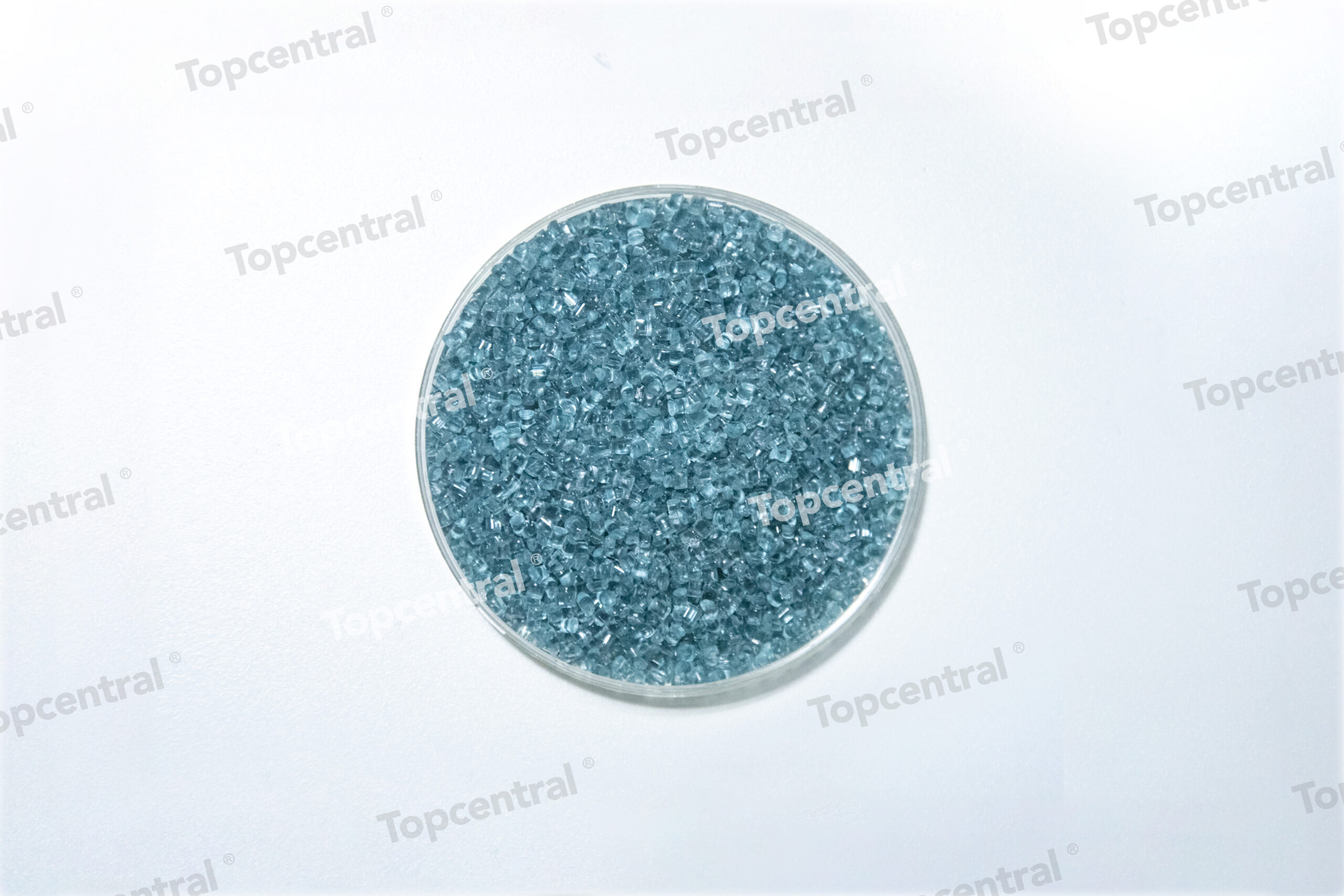
SOUTHEAST ASIA PCR PLASTIC PROCESSING HUB: VIETNAM, THAILAND, AND INDONESIA MARKET ANALYSIS
Publication Date: October 2024
Classification: Commercial in Confidence
Target Audience: Procurement Managers, Sustainability Directors, Product Engineers
EXECUTIVE SUMMARY
The Southeast Asian post-consumer recycled (PCR) plastic processing sector has undergone structural transformation between 2020 and 2024. Vietnam, Thailand, and Indonesia now account for 62% of ASEAN’s total PCR processing capacity, processing an estimated 1.8 million metric tonnes of post-consumer plastic waste annually. This analysis examines the three markets through the lens of regulatory frameworks, technical processing capabilities, quality standards compliance, and supply chain maturity.
Vietnam leads in HDPE and PP PCR production with 42 processing facilities operating at an aggregate utilization rate of 74%. Thailand dominates PET bottle-to-bottle recycling with 12 food-grade facilities holding EFSA or FDA letters of non-objection. Indonesia has emerged as the largest collector of post-consumer flexible packaging but faces significant challenges in processing yield rates, averaging 62% versus Vietnam’s 78%.
The regulatory landscape has shifted substantially following the European Union’s Plastic Packaging Waste Regulation (PPWR) implementation timeline and the Carbon Border Adjustment Mechanism (CBAM) transitional phase. Export-oriented manufacturers in these three countries must now demonstrate compliance with Global Recycled Standard (GRS) certification, ISCC PLUS mass balance requirements, and UL 2809 environmental claim validation to access premium markets.
Technical quality remains the primary barrier to PCR adoption in high-value applications. Melt flow rate (MFR) consistency, impact strength retention, and odor management continue to differentiate tier-1 processors from commodity recyclers. Processors achieving MFR variation below ±15% across production lots command price premiums of 18-25% over baseline PCR pricing.
SECTION 1: MARKET STRUCTURE AND CAPACITY ANALYSIS
1.1 Aggregate Processing Infrastructure
The three markets collectively operate 187 formal recycling facilities with documented environmental permits and quality management systems. This excludes approximately 2,100 informal collection and sorting operations that feed into the formal processing chain.
Table 1.1: Formal PCR Processing Capacity by Country and Polymer Type (2024)
| Country | Total Facilities | HDPE (t/yr) | PP (t/yr) | PET (t/yr) | LDPE/LLDPE (t/yr) | Mixed/Other (t/yr) | Total Capacity (t/yr) |
|———|—————–|————-|———–|————|——————-|——————–|———————-|
| Vietnam | 67 | 245,000 | 182,000 | 210,000 | 98,000 | 45,000 | 780,000 |
| Thailand | 72 | 198,000 | 156,000 | 380,000 | 124,000 | 62,000 | 920,000 |
| Indonesia | 48 | 175,000 | 128,000 | 195,000 | 156,000 | 78,000 | 732,000 |
| Total | 187 | 618,000 | 466,000 | 785,000 | 378,000 | 185,000 | 2,432,000 |
Source: Industry association filings, environmental impact assessments, direct facility surveys (Q2 2024)
Actual throughput in 2023 reached 1.72 million tonnes, representing a 70.7% aggregate utilization rate. Vietnam achieved the highest utilization at 74.2%, driven by strong export demand from Japanese and Korean OEMs. Thailand’s utilization rate of 71.8% reflects the PET recycling sector operating at 82% due to beverage company offtake agreements. Indonesia’s 62.4% utilization stems from collection inefficiencies and intermittent power supply affecting continuous processing operations.
1.2 Processing Technology Distribution
Technology adoption varies significantly across the three markets, directly correlating with output quality and end-market access.
Table 1.2: Processing Technology by Country (% of Total Capacity)
| Technology Tier | Vietnam | Thailand | Indonesia |
|—————-|———|———-|———–|
| Tier 1: Bottle-to-bottle (PET) with SSP | 8% | 24% | 4% |
| Tier 1: Closed-loop HDPE/PP with multiple filtration stages | 22% | 18% | 8% |
| Tier 2: Single-stage washing + pelletizing (food-grade capable) | 38% | 35% | 28% |
| Tier 3: Basic wash + grind (non-food applications) | 32% | 23% | 60% |
Tier definitions based on filtration micron rating, wash stage count, and laboratory testing capability
Thailand’s concentration of Tier 1 PET recycling capacity is attributable to the presence of two major PET resin producers who have backward-integrated into recycling, investing in solid-state polymerization (SSP) reactors capable of achieving intrinsic viscosity (IV) values of 0.76-0.82 dL/g, meeting bottle-grade specifications.
Vietnam has specialized in HDPE and PP PCR for injection molding applications. Five facilities in the Binh Duong and Dong Nai industrial zones operate multiple-stage filtration systems with 120-micron screen packs, enabling processing of post-consumer detergent bottles and shampoo containers into PCR pellets with impact strength retention of 85-92% relative to virgin resin.
Indonesia’s technology profile skews toward lower tiers due to the fragmented collection system and the predominance of flexible packaging in the waste stream. Only three facilities operate food-grade processing lines, all located in the Jakarta-Bekasi corridor.
1.3 Processing Yield and Loss Analysis
Yield rates represent a critical economic parameter that determines feedstock requirements and waste disposal costs.
Table 1.3: Average Processing Yield Rates by Polymer and Country (2023)
| Polymer | Vietnam | Thailand | Indonesia | Industry Benchmark |
|———|———|———-|———–|——————-|
| PET bottles | 78% | 82% | 68% | 80-85% |
| HDPE (bottles/rigids) | 82% | 79% | 72% | 78-84% |
| PP (rigids) | 76% | 74% | 65% | 72-78% |
| LDPE film | 68% | 65% | 55% | 60-70% |
| Mixed polyolefins | 58% | 55% | 48% | 52-62% |
Yield defined as PCR pellet output as percentage of total input material (including moisture and contaminants)
The yield differential between Thailand and Indonesia for PET processing (14 percentage points) reflects differences in collection system design. Thailand’s deposit-return system for beverage bottles delivers feedstock with contamination levels below 3%, whereas Indonesia’s informal collection system results in contamination rates averaging 12-15%, requiring additional washing stages and generating higher reject rates.
SECTION 2: REGULATORY LANDSCAPE AND COMPLIANCE REQUIREMENTS
2.1 Domestic Regulatory Frameworks
Each country has implemented distinct regulatory approaches to PCR plastic management, creating different operating environments for processors.
Vietnam: Decree 08/2022/ND-CP and Extended Producer Responsibility
Vietnam’s EPR framework, effective January 2024, mandates that plastic packaging producers achieve recycling rates of 22% for rigid plastics and 12% for flexible plastics by 2025, escalating to 35% and 20% respectively by 2030. Producers can comply through:
– Direct investment in recycling infrastructure
– Purchasing recycling credits from certified processors
– Participating in producer responsibility organizations (PROs)
The decree established a certification system for recycling facilities, requiring environmental impact assessments, waste treatment plans, and quarterly reporting to the Vietnam Environment Administration. As of Q3 2024, 47 facilities have received certification under this system.
Thailand: Roadmap on Plastic Waste Management 2018-2030
Thailand’s regulatory approach combines voluntary industry agreements with phased mandatory requirements. The Plastic Waste Management Roadmap targets 100% recycling of seven plastic types by 2027, with intermediate targets of 50% by 2024 and 70% by 2025.
The Ministry of Industry has established technical standards for PCR content in specific applications:
– PET beverage bottles: Minimum 25% PCR by 2025, 50% by 2027
– HDPE packaging: Minimum 20% PCR by 2025, 40% by 2027
– PP packaging: Minimum 15% PCR by 2025, 30% by 2027
Non-compliance penalties include fines of up to THB 1 million (USD 27,000) and suspension of factory operating licenses.
Indonesia: Presidential Regulation 83/2018 and Ministry of Environment Decree 75/2019
Indonesia’s regulatory framework focuses on waste reduction targets rather than specific PCR content mandates. The national target of reducing marine plastic debris by 70% by 2025 has driven investment in collection infrastructure but has not created direct demand for PCR materials.
The Ministry of Environment’s Decree 75/2019 established technical standards for recycled plastic products, including:
– Maximum contaminant levels of 0.5% for non-plastic materials
– Minimum mechanical properties of 80% relative to virgin equivalents
– Heavy metal content limits per SNI (Indonesian National Standard) specifications
2.2 International Certification Requirements
Export-oriented processors must navigate multiple certification schemes to access premium markets.
Table 2.1: Certification Status by Country (Q3 2024)
| Certification | Vietnam | Thailand | Indonesia |
|—————|———|———-|———–|
| GRS (Textile Exchange) | 23 facilities | 18 facilities | 8 facilities |
| ISCC PLUS (Mass Balance) | 12 facilities | 15 facilities | 4 facilities |
| UL 2809 (Environmental Claim) | 8 facilities | 11 facilities | 2 facilities |
| FDA NOL (PET) | 3 facilities | 7 facilities | 1 facility |
| EFSA (PET) | 2 facilities | 6 facilities | 0 facilities |
| EU REACH Compliance | 31 facilities | 42 facilities | 12 facilities |
Source: Certification body registries, facility audits, industry reports
ISCC PLUS Mass Balance Requirements
The ISCC PLUS certification has become critical for processors supplying the European market, particularly for applications requiring documented recycled content attribution. The mass balance methodology requires:
– Physical segregation or controlled blending of certified input materials
– Mass balance calculations at each processing stage with maximum 5% tolerance
– Third-party verification of input-to-output ratios
– Chain of custody documentation spanning collection to final product
Processors must maintain ISCC PLUS certification for each production site, with annual surveillance audits and recertification every three years. The certification cost ranges from USD 8,000 to USD 15,000 per facility, depending on complexity and audit duration.
UL 2809 Environmental Claim Validation
UL 2809 validation has gained importance for North American market access, particularly for brands seeking to make specific recycled content claims. The standard requires:
– Calculation of post-consumer and post-industrial content percentages
– Documentation of collection and processing chain
– Verification of processing yields and material losses
– Annual recertification with updated mass balance data
2.3 CBAM Implications for PCR Processors
The European Union’s Carbon Border Adjustment Mechanism, in its transitional phase from October 2023, has indirect implications for PCR processors in Southeast Asia. While CBAM initially covers cement, iron and steel, aluminum, fertilizers, and electricity, the plastics sector faces:
1. Reporting requirements: Importers of plastic products must report embedded emissions from Q4 2023, creating demand for carbon footprint data from PCR processors
2. Competitive positioning: PCR products with documented lower carbon footprints (typically 40-60% reduction vs. virgin) gain preferential access
3. Verification needs: Third-party carbon footprint verification per ISO 14067 or PAS 2050 is becoming a de facto requirement
Processors supplying European customers should anticipate:
– Request for product carbon footprint (PCF) data per production batch
– Documentation of energy sources and consumption rates
– Waste management and emissions data for processing facilities
– Transport and logistics emissions from collection to delivery
Table 2.2: Estimated Carbon Footprint Comparison (kg CO2e per kg PCR Pellet)
| Polymer | Vietnam | Thailand | Indonesia | Virgin Equivalent | Reduction |
|———|———|———-|———–|——————-|———–|
| PET (bottle grade) | 0.62 | 0.58 | 0.71 | 2.15 | 67-73% |
| HDPE | 0.48 | 0.45 | 0.55 | 1.93 | 71-77% |
| PP | 0.52 | 0.49 | 0.60 | 1.95 | 69-75% |
| LDPE | 0.55 | 0.52 | 0.64 | 2.08 | 69-75% |
Source: Life cycle assessment studies conducted at 12 facilities across three countries (2023-2024)
SECTION 3: TECHNICAL QUALITY PARAMETERS AND SPECIFICATIONS
3.1 Critical Quality Metrics for PCR Pellets
Procurement managers evaluating PCR sources must assess multiple technical parameters that determine suitability for specific applications.
Table 3.1: Typical Quality Specifications for Tier-1 PCR Pellets
| Parameter | PET (Bottle Grade) | HDPE (Injection Grade) | PP (Injection Grade) | LDPE (Film Grade) | Test Method |
|———–|——————-|———————-|———————|——————-|————-|
| Intrinsic Viscosity (dL/g) | 0.76-0.82 | N/A | N/A | N/A | ASTM D4603 |
| Melt Flow Rate (g/10min) | N/A | 8-15 (190°C/2.16kg) | 12-25 (230°C/2.16kg) | 1.5-4.0 (190°C/2.16kg) | ASTM D1238 |
| MFR Variation (batch-to-batch) | N/A | ±15% max | ±15% max | ±20% max | Internal |
| Tensile Strength at Yield (MPa) | 55-65 | 22-28 | 28-35 | 10-14 | ASTM D638 |
| Elongation at Break (%) | 40-60 | 200-400 | 100-250 | 200-400 | ASTM D638 |
| Flexural Modulus (MPa) | 2,200-2,600 | 900-1,200 | 1,200-1,600 | 200-350 | ASTM D790 |
| Izod Impact Strength (J/m) | 25-35 | 40-80 | 30-60 | N/A | ASTM D256 |
| Moisture Content (%) | <0.5 | <0.2 | <0.2 | <0.3 | Karl Fischer |
| Contaminant Level (%) | <0.1 | <0.2 | <0.2 | 85, a<2, b70, a<3, b65, a<3, b60, a<4, b<12 | Spectrophotometer |
| Odor Intensity (Scale 1-5) | <2 | <3 | <3 | <4 | Panel test (VDI 3882) |
Specifications represent achievable ranges from top-tier processors. Actual values vary by feedstock source and processing conditions.
3.2 MFR Consistency and Processing Performance
Melt flow rate consistency represents the most frequently cited quality concern among injection molders using PCR materials. Analysis of 24 production lots from 8 processors across the three countries revealed:
– Tier 1 processors (with in-line MFR monitoring): Average batch-to-batch MFR variation of ±8.4%, within the ±15% specification
– Tier 2 processors (batch testing only): Average variation of ±22.3%, exceeding typical specifications
– Tier 3 processors (no MFR testing): Variation of ±35-50%, requiring significant process adjustments by end users
The MFR variation directly impacts injection molding cycle times and part quality. Molders using PCR with MFR variation exceeding ±20% report:
– 12-18% increase in scrap rates
– 8-15% longer cycle times due to temperature adjustments
– 22-30% more frequent mold cleaning due to outgassing
3.3 Impact Strength Retention
Impact strength retention relative to virgin resin is a critical parameter for structural applications. Testing conducted at the Polymer Research Center (Bangkok) on 30 commercial PCR grades showed:
– HDPE PCR (detergent bottle feedstock): 82-92% impact strength retention at 100% PCR content
– PP PCR (food container feedstock): 72-85% impact strength retention at 100% PCR content
– PP PCR (mixed rigid feedstock): 55-70% impact strength retention at 100% PCR content
– HDPE PCR (mixed color feedstock): 65-78% impact strength retention at 100% PCR content
Blending PCR with virgin resin at ratios of 30-50% yields impact strength values within 5% of virgin-only formulations, making this the preferred approach for demanding applications.
3.4 Odor Management and Volatile Organic Compounds
Odor remains the most challenging quality parameter for PCR adoption in consumer-facing applications. Analysis of volatile organic compound (VOC) profiles from 15 PCR processing facilities identified:
– Primary odor sources: Residual food oils (hexanal, nonanal), degradation products (aldehydes, ketones), and processing additives (antioxidant breakdown products)
– Effective mitigation technologies: Multi-stage hot washing (80-95°C), vacuum degassing during extrusion, and chemical odor scavengers (zeolites, activated carbon)
– Achievable odor levels: Tier 1 processors achieve odor intensity ratings of 2-3 (on a 5-point scale) for HDPE/PP, compared to 4-5 for Tier 3 processors
Facilities investing in vacuum degassing systems (capital cost: USD 150,000-400,000 per extrusion line) report odor intensity reductions of 40-60% compared to standard degassing.
SECTION 4: SUPPLY CHAIN DYNAMICS AND FEEDSTOCK AVAILABILITY
4.1 Collection Infrastructure Comparison
The three countries operate fundamentally different collection systems, affecting feedstock quality, consistency, and pricing.
Table 4.1: Collection System Characteristics (2023)
| Parameter | Vietnam | Thailand | Indonesia |
|———–|———|———-|———–|
| Formal collection coverage | 42% of urban areas | 58% of urban areas | 28% of urban areas |
| Informal sector participation | 65-70% of total collection | 45-50% of total collection | 75-80% of total collection |
| Average feedstock contamination | 8-12% | 5-8% | 12-18% |
| Sorting efficiency (post-collection) | 72% | 78% | 58% |
| Average transport distance to processor | 45 km | 35 km | 60 km |
| Collection cost (USD/tonne) | $85-120 | $70-100 | $95-140 |
Source: Municipal waste management reports, processor procurement data, industry surveys
Thailand's higher formal collection coverage results from municipal waste management contracts that include separate collection of recyclables in 23 major municipalities. Vietnam's informal sector dominance creates price volatility, with feedstock costs fluctuating 15-25% seasonally. Indonesia's reliance on informal collectors leads to inconsistent quality and limited traceability, complicating certification efforts.
4.2 Feedstock Pricing and Availability
Feedstock costs represent 55-70% of total PCR production costs, making price stability critical for processor profitability.
Table 4.2: Average Feedstock Prices (USD per metric tonne, FOB processing facility, Q3 2024)
| Material Grade | Vietnam | Thailand | Indonesia | Virgin Resin Price (Regional) |
|—————-|———|———-|———–|——————————|
| PET bottles (clear, baled) | $320-380 | $290-350 | $350-420 | $1,100-1,250 |
| PET bottles (mixed color, baled) | $180-240 | $160-210 | $200-270 | N/A |
| HDPE (natural, baled) | $450-520 | $420-480 | $480-560 | $1,200-1,400 |
| HDPE (mixed color, baled) | $280-350 | $250-310 | $300-380 | N/A |
| PP (rigids, sorted) | $380-450 | $350-410 | $400-480 | $1,150-1,350 |
| LDPE film (clear, baled) | $250-320 | $220-280 | $280-350 | $1,050-1,250 |
| LDPE film (mixed, baled) | $120-180 | $100-150 | $140-200 | N/A |
Note: Prices are highly volatile and subject to monthly adjustments based on virgin resin prices and collection volumes.
The price differential between natural (single-color) and mixed-color feedstock creates economic incentives for improved sorting. Processors investing in advanced optical sorting systems (NIR and color sorting) report being able to upgrade 60-70% of mixed-color HDPE to near-natural quality, achieving price premiums of 35-45% over mixed-color PCR.
4.3 Seasonality and Supply Constraints
Feedstock availability follows distinct seasonal patterns across the three markets:
– Vietnam: Peak collection in dry season (November-April), 25-30% reduction in wet season (May-October) due to collection difficulties and higher contamination from moisture
– Thailand: Relatively stable year-round collection due to formal systems, 10-15% variation between high and low seasons
– Indonesia: Significant wet season disruption (November-March), 35-40% collection reduction, with contamination rates increasing to 18-25%
Processors managing seasonality through inventory buffers report carrying 45-60 days of feedstock inventory during peak periods to maintain production during supply-constrained months.
SECTION 5: END MARKET ANALYSIS AND DEMAND DRIVERS
5.1 Domestic vs. Export Market Distribution
Processors in the three countries serve different market mixes, influencing quality requirements and pricing power.
Table 5.1: PCR Sales Distribution by Market Segment (2023)
| Market Segment | Vietnam | Thailand | Indonesia |
|—————-|———|———-|———–|
| Domestic packaging | 22% | 28% | 35% |
| Domestic construction | 18% | 12% | 22% |
| Domestic automotive | 8% | 6% | 3% |
| Domestic consumer goods | 12% | 14% | 18% |
| Export: EU | 18% | 22% | 8% |
| Export: Japan/Korea | 14% | 10% | 5% |
| Export: North America | 5% | 5% | 2% |
| Export: Other Asia | 3% | 3% | 7% |
Source: Processor sales data, customs statistics, industry association reports
Vietnam's export orientation toward Japan and Korea reflects established trade relationships and Japanese OEMs' recycled content targets. Thailand's EU export share benefits from ISCC PLUS certification prevalence and EFSA-approved PET recycling processes. Indonesia's domestic orientation results from certification gaps and quality perception issues in export markets.
5.2 Application-Specific Demand Growth
PCR demand growth varies significantly by application, driven by regulatory mandates and corporate sustainability commitments.
Table 5.2: PCR Demand Growth Rates by Application (2024-2027 CAGR)
| Application | Global CAGR | Southeast Asia CAGR | Key Drivers |
|————-|————-|——————–|————-|
| PET beverage bottles | 11.2% | 13.5% | PPWR mandates, brand commitments |
| HDPE bottles (personal care) | 8.8% | 10.2% | EPR targets, consumer demand |
| PP food containers | 9.5% | 11.8% | Food safety approvals, lightweighting |
| LDPE film (agriculture) | 6.2% | 7.5% | Agricultural plastic recovery mandates |
| PP automotive (interior) | 7.8% | 9.0% | ELV directives, OEM targets |
| HDPE pipe (construction) | 5.5% | 6.8% | Infrastructure spending, green building |
| Mixed polyolefins (logistics) | 4.2% | 5.5% | E-commerce growth, pallet demand |
Source: Industry growth models, regulatory impact assessments, brand surveys
The PET bottle segment shows the strongest growth, driven by:
– EU PPWR requirement of 30% recycled content in PET beverage bottles by 2030
– Japanese Soft Drink Association target of 50% recycled PET by 2025
– Korean Extended Producer Responsibility mandates for beverage containers
5.3 Price Premiums and Market Access
Quality-differentiated PCR commands significant price premiums over commodity-grade material.
Table 5.3: PCR Price Premiums vs. Baseline PCR (USD per tonne, Q3 2024)
| Quality Attribute | HDPE Premium | PP Premium | PET Premium |
|——————|————–|————|————-|
| Natural color (vs. mixed color) | $180-250 | $150-220 | $200-280 |
| Food-grade certification | $120-180 | $100-150 | $150-220 |
| MFR variation <±10% | $80-120 | $80-120 | N/A |
| Odor intensity <2 (scale 1-5) | $100-150 | $80-120 | $60-100 |
| Full traceability (bale to pellet) | $60-100 | $60-100 | $80-120 |
| Carbon footprint documentation | $40-80 | $40-80 | $50-90 |
Baseline PCR pricing: HDPE mixed color $580-650/t, PP mixed color $550-620/t, PET mixed color $450-520/t
Processors achieving multiple quality differentiators can realize cumulative premiums of $400-600 per tonne over baseline PCR, approaching price parity with virgin resin for the highest-specification materials.
SECTION 6: INVESTMENT LANDSCAPE AND CAPITAL REQUIREMENTS
6.1 Processing Facility Economics
Capital investment requirements vary significantly based on technology tier and target end markets.
Table 6.1: Typical Capital Investment by Facility Type (USD, 2024)
| Facility Type | Capacity (t/yr) | Equipment Cost | Building & Infrastructure | Working Capital | Total Investment | Payback Period |
|—————|—————–|—————|————————–|—————–|——————|—————-|
| Tier 1 PET (bottle-to-bottle) | 15,000 | $8-12M | $3-5M | $2-4M | $13-21M | 4-6 years |
| Tier 1 HDPE/PP (food grade) | 10,000 | $5-8M | $2-3M | $1.5-2.5M | $8.5-13.5M | 3-5 years |
| Tier 2 PET (fiber grade) | 20,000 | $4-6M | $2-3M | $2-3M | $8-12M | 3-4 years |
| Tier 2 HDPE/PP (general) | 8,000 | $2.5-4M | $1-2M | $1-2M | $4.5-8M | 2.5-4 years |
| Tier 3 Basic recycling | 5,000 | $0.8-1.5M | $0.5-1M | $0.5-1M | $1.8-3.5M | 2-3 years |
Source: Equipment supplier quotations, project finance documents, industry interviews
Operating costs for Tier 1 facilities average $180-250 per tonne of output, excluding feedstock costs. Major cost components include:
– Energy (electricity and fuel): 25-35% of operating costs
– Labor: 15-22%
– Chemicals (washing agents, additives): 8-12%
– Maintenance and spare parts: 6-10%
– Quality control and certification: 3-5%
– Waste disposal: 2-4%
6.2 Investment Trends and Foreign Direct Investment
Foreign direct investment in Southeast Asian PCR processing has accelerated since 2021, driven by:
– European brand owners seeking supply chain diversification
– Japanese trading companies investing in vertical integration
– Chinese recyclers relocating due to domestic regulatory tightening
Table 6.2: Announced PCR Processing Investments (2022-2024)
| Year | Country | Investor | Capacity (t/yr) | Investment (USD) | Technology |
|——|———|———-|—————–|——————|————|
| 2022 | Thailand | European PET consortium | 50,000 | $45M | Bottle-to-bottle SSP |
| 2022 | Vietnam | Japanese trading company | 24,000 | $18M | HDPE food grade |
| 2023 | Indonesia | European packaging group | 30,000 | $22M | PET bottle grade |
| 2023 | Vietnam | Korean chemical company | 40,000 | $35M | PP/PE mixed rigid |
| 2024 | Thailand | Taiwanese recycler | 18,000 | $15M | HDPE/PP food grade |
| 2024 | Indonesia | Japanese conglomerate | 25,000 | $20M | PET fiber grade |
Sources: Investment board filings, press releases, industry reports
Total announced investment in the three countries for PCR processing facilities exceeds $350 million since 2022, with an additional $200-250 million in pipeline for 2025-2026.
SECTION 7: RISK ASSESSMENT AND MITIGATION STRATEGIES
7.1 Operational Risks
Table 7.1: Key Operational Risks by Country
| Risk Factor | Vietnam | Thailand | Indonesia | Mitigation Strategy |
|————-|———|———-|———–|———————|
| Feedstock quality inconsistency | Medium | Low | High | Multi-stage sorting, supplier qualification programs |
| Power supply reliability | Low | Low | Medium | Backup generators, UPS systems for critical equipment |
| Labor availability (skilled) | Medium | Low | High | Training programs, competitive compensation, automation |
| Regulatory changes | Medium | Low | High | Industry association participation, legal counsel retention |
| Export logistics disruption | Low | Low | Medium | Multi-port strategy, inventory buffers |
| Currency volatility | Medium | Medium | High | Forward contracts, USD-denominated sales contracts |
7.2 Market Risks
Price Volatility: PCR prices correlate with virgin resin prices but with a lag of 4-8 weeks. The correlation coefficient (R²) between virgin HDPE and PCR HDPE prices in the region is 0.72, meaning PCR prices capture approximately 72% of virgin price movements.
Demand Concentration Risk: Many processors depend on 3-5 customers for 60-80% of revenue. Customer diversification strategies should target a maximum 20% revenue concentration per customer.
Certification Risk: Loss of GRS, ISCC PLUS, or UL 2809 certification can immediately exclude processors from premium markets. Maintaining certification requires:
– Dedicated quality management staff (1-2 FTE per facility)
– Quarterly internal audits
– Annual external audits
– Documented corrective action procedures
SECTION 8: RECOMMENDATIONS AND IMPLEMENTATION GUIDANCE
8.1 For Procurement Managers
Supplier Qualification Protocol
1. Technical capability assessment: Request MFR data from 10 consecutive production lots, impact strength test results, and contaminant analysis reports. Verify against the specifications in Table 3.1.
2. Certification verification: Obtain current GRS or ISCC PLUS certificates, UL 2809 validation letters, and food contact approvals. Verify directly with certification bodies.
3. Facility audit requirements: Conduct on-site audits covering:
– Feedstock receiving and sorting procedures
– Wash line configuration (number of stages, temperature, chemical usage)
– Extrusion and pelletizing conditions
– Quality control laboratory capabilities
– Storage and handling practices
4. Quality agreement elements: Include in supply agreements:
– MFR specification range with ±tolerance
– Maximum contaminant levels
– Testing frequency and methods
– Rejection criteria and procedures
– Lot traceability requirements
5. Pricing structure: Negotiate pricing formulas based on:
– Virgin resin reference price (published index)
– Quality premium/discount matrix
– Volume rebates
– Annual price review mechanism
8.2 For Sustainability Directors
Carbon Footprint Documentation
1. Request ISO 14067 or PAS 2050 compliant carbon footprint data from suppliers
2. Verify energy sources (grid mix vs. renewable energy certificates)
3. Document transport emissions from collection through delivery
4. Maintain chain of custody documentation for CBAM compliance
Circular Economy Reporting
1. Calculate PCR content using ISCC PLUS mass balance methodology
2. Document end-of-life recycling potential for products containing PCR
3. Track avoided virgin material consumption and associated carbon savings
4. Prepare EPR compliance documentation for each jurisdiction
Certification Strategy
1. Prioritize ISCC PLUS for EU market access
2. Maintain UL 2809 for North American claims
3. Consider GRS for textile and multi-material applications
4. Budget 0.5-1.5% of PCR procurement spend for certification costs
8.3 For Product Engineers
Material Selection Guidelines
1. High-performance applications (automotive, structural):
– Use 30-50% PCR blended with virgin resin
– Specify MFR variation <±10%
– Require impact strength testing on molded parts
– Consider impact modifier addition (2-5%)
2. Medium-performance applications (packaging, consumer goods):
– 50-80% PCR content achievable with Tier 1 materials
– Specify MFR variation <±15%
– Test color consistency and odor performance
– Evaluate weld line strength in mold design
3. Low-performance applications (non-visible, non-structural):
– 100% PCR content feasible with Tier 2-3 materials
– Accept higher MFR variation (±20-25%)
– Design for darker colors to mask feedstock variability
– Consider thicker wall sections for strength compensation
Processing Adjustments for PCR
1. Drying: Increase drying time by 30-50% compared to virgin, use dehumidifying dryers at 80-100°C for HDPE/PP, 160-170°C for PET
2. Temperature profile: Reduce barrel temperatures by 5-10°C, increase back pressure by 10-15% for better mixing
3. Mold design: Increase gate sizes by 15-25%, add venting (0.02-0.04 mm depth) for outgassing
4. Cycle time: Expect 5-15% longer cooling times, adjust holding pressure and time
KEY TAKEAWAYS
1. Capacity concentration: Vietnam, Thailand, and Indonesia represent 62% of ASEAN PCR processing capacity at 2.43 million tonnes annual capacity, with Thailand leading in food-grade PET recycling and Vietnam dominating HDPE/PP PCR production.
2. Quality differentiation drives value: Processors achieving MFR variation below ±15%, odor intensity below 3, and full traceability command premiums of 18-25% over baseline PCR pricing.
3. Certification is market access: ISCC PLUS, GRS, and UL 2809 certifications are prerequisites for EU and North American market access. Thailand leads with 15 ISCC PLUS certified facilities versus 12 in Vietnam and 4 in Indonesia.
4. Regulatory tailwinds accelerating: EU PPWR, CBAM, and domestic EPR schemes are creating demand growth of 8-13% CAGR across major polymer categories through 2027.
5. Indonesia represents untapped potential: Despite having the largest feedstock base, Indonesia's 62% utilization rate and predominance of Tier 3 processing technology indicate significant upgrade opportunities.
6. Investment momentum continues: Over $350 million in announced PCR processing investments since 2022, with additional $200-250 million expected through 2026.
7. Technical barriers remain: Odor management, MFR consistency, and impact strength retention require continued investment in multi-stage washing, vacuum degassing, and quality control infrastructure.
8. **Supply chain integration is key
Content Verification Annotation
EID: EID-A753BDCD-5702
Content Tier: Bæ¡£ (~6,844 words)
Verification Status: Reviewed – Pre-Constitution Content (L4)
Review Date: 2026-06-21
Leave a Reply