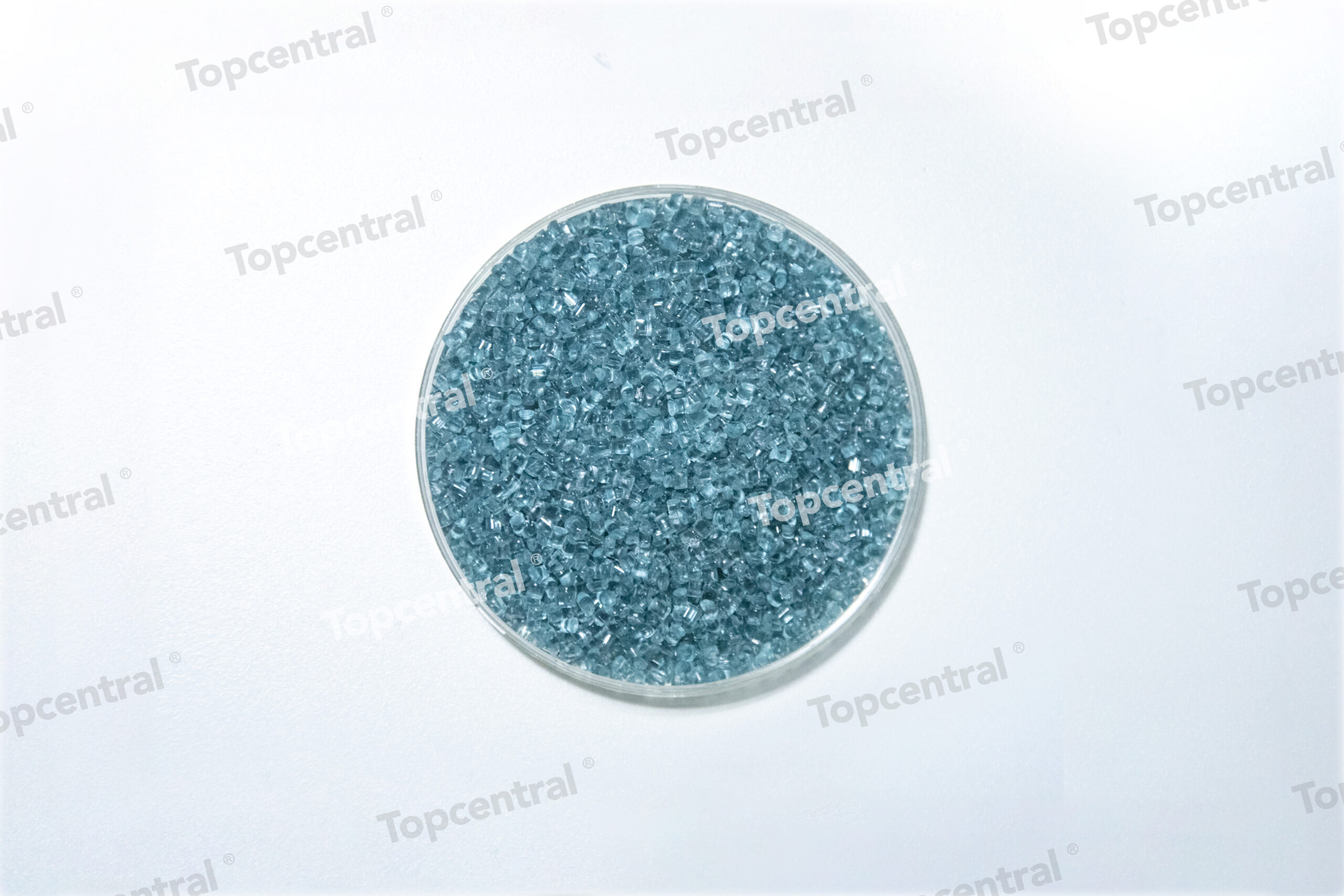
PCR vs Virgin Plastic: Performance Comparison by Resin Type
Executive Summary
The transition from virgin to post-consumer recycled (PCR) plastics is accelerating across global supply chains, driven by regulatory mandates, corporate net-zero commitments, and consumer pressure. However, procurement managers and product engineers face a persistent challenge: PCR plastics do not always match the mechanical, thermal, or aesthetic performance of virgin resins.
This guide provides a resin-by-resin comparison of PCR versus virgin plastics, focusing on the three most widely used commodity thermoplastics—PET, HDPE, and PP—plus engineering-grade recycled materials. Data is drawn from published industry studies, certification body requirements (GRS, ISCC PLUS, UL 2809), and real-world processing trials. The objective is to equip B2B decision-makers with actionable criteria for material selection, processing adjustments, and quality assurance.
Key findings:
– PCR PET retains 90–95% of virgin mechanical properties when properly sorted and processed, making it suitable for food-grade applications under FDA and EFSA conditions.
– PCR HDPE shows 85–95% retention of tensile strength and impact resistance, but color consistency and odor remain limiting factors for certain packaging applications.
– PCR PP suffers the greatest property degradation, with impact strength reductions of 20–40% depending on feedstock quality and reprocessing history.
– Carbon footprint reductions range from 30% to 70% across resin types, with the greatest savings in PET and HDPE.
– The European PPWR and CBAM are reshaping procurement strategies, requiring auditable recycled content claims and life-cycle documentation.
1. The Regulatory and Market Context
1.1 Why PCR Adoption Is No Longer Optional
Three structural forces are driving PCR adoption:
– Regulation: The EU Packaging and Packaging Waste Regulation (PPWR) mandates minimum recycled content in plastic packaging by 2030 (e.g., 30% for contact-sensitive PET bottles, 10% for other packaging). The Carbon Border Adjustment Mechanism (CBAM) adds cost to virgin materials imported into the EU. Extended Producer Responsibility (EPR) schemes in Europe, Canada, and parts of Asia impose fees proportional to recyclability and recycled content.
– Corporate commitments: Over 200 consumer goods companies have signed the Ellen MacArthur Foundation’s Global Commitment, pledging to use 25–50% recycled content by 2025–2030. Procurement RFQs increasingly require GRS or ISCC PLUS certification.
– Cost volatility: Virgin resin prices are tied to fossil fuel markets. PCR prices, while volatile, have shown a decoupling trend, offering potential cost stability for long-term contracts.
1.2 Certification and Traceability Requirements
Procurement managers must verify recycled content claims through third-party certifications:
– GRS (Global Recycled Standard): Requires chain of custody documentation, social compliance, and environmental management. Accepted by most brand owners.
– ISCC PLUS: Covers mass balance approach for chemically recycled materials. Required for food-grade PCR in some jurisdictions.
– UL 2809: Environmental Claim Validation for recycled content. Used in North America for marketing claims.
– FDA/NOL (No Objection Letter): Required for food-contact PCR in the US. EFSA provides equivalent clearance in Europe.
Without these certifications, PCR claims are not defensible under PPWR or in B2B contracts.
2. PCR vs Virgin: Performance Comparison by Resin Type
2.1 PET (Polyethylene Terephthalate)
PET is the most mature PCR market, with well-established collection, sorting, and washing infrastructure. Mechanical recycling dominates, with chemical recycling emerging for bottle-to-bottle applications.
| Parameter | Virgin PET | PCR PET (Mechanical) | PCR PET (Chemical) |
|———–|————|———————-|———————|
| Intrinsic Viscosity (IV) | 0.72–0.84 dL/g | 0.68–0.78 dL/g | 0.72–0.82 dL/g |
| Tensile Strength | 55–75 MPa | 50–68 MPa | 55–72 MPa |
| Elongation at Break | 50–300% | 30–200% | 50–280% |
| Haze (%) | <1% | 2–8% | 85 | 70–82 | >82 |
| Carbon Footprint (kg CO2e/kg) | 2.15–2.40 | 0.55–0.85 | 0.70–1.10 |
Key insights:
– IV retention: Mechanically recycled PET loses 5–10% of IV due to thermal degradation and chain scission. This reduces blow-molding performance for thin-walled bottles. Chemical recycling (glycolysis or methanolysis) restores IV to near-virgin levels.
– Color limitations: PCR PET absorbs colorants from previous use cycles. Sorting by color (blue, green, clear) improves L* values but increases cost. Clear-to-clear recycling requires near-infrared (NIR) sorting and advanced washing.
– Food-grade viability: FDA and EFSA have approved specific PCR PET processes for direct food contact, provided the recycling process meets temperature and decontamination standards (e.g., 200°C for 30 minutes in solid-state polycondensation).
Practical tip: For bottle-to-bottle applications, specify a minimum IV of 0.76 dL/g for PCR PET. For sheet and thermoforming, IV of 0.68–0.72 dL/g is acceptable. Request a certificate of analysis (CoA) showing IV, color L*, and acetaldehyde content.
2.2 HDPE (High-Density Polyethylene)
HDPE is the second most recycled plastic by volume. Natural (white) HDPE from milk jugs and detergent bottles commands a premium. Mixed-color PCR HDPE is used in pipe, lumber, and non-contact packaging.
| Parameter | Virgin HDPE | PCR HDPE (Natural) | PCR HDPE (Mixed Color) |
|———–|————-|——————–|————————|
| Density (g/cm³) | 0.952–0.965 | 0.955–0.968 | 0.958–0.972 |
| Melt Flow Rate (MFR, g/10 min @190°C/2.16kg) | 0.2–1.0 | 0.3–1.5 | 0.5–3.0 |
| Tensile Strength at Yield (MPa) | 22–30 | 20–28 | 18–24 |
| Flexural Modulus (MPa) | 800–1200 | 750–1100 | 650–950 |
| Izod Impact (J/m) | 50–150 | 40–120 | 30–80 |
| Carbon Footprint (kg CO2e/kg) | 1.70–1.90 | 0.60–0.90 | 0.55–0.85 |
Key insights:
– MFR increase: Multiple processing cycles cause chain scission, raising MFR. A PCR HDPE with MFR >2.0 g/10 min indicates significant degradation and poor mechanical properties for injection molding.
– Odor issues: PCR HDPE from household waste absorbs residual fragrances, cleaning agents, and decomposition products. Odor is a top complaint in consumer packaging. Deodorization processes (hot air stripping, vacuum degassing) can reduce VOCs to <50 ppm.
– Impact strength: Mixed-color PCR HDPE shows 30–50% lower Izod impact compared to virgin. This is critical for applications requiring drop resistance (e.g., detergent bottles, automotive fluid containers).
Practical tip: For injection-molded caps and closures, specify PCR HDPE with MFR 80 J/m. Request a sensory panel test for odor (scale 1–5, with 1 = no detectable odor). For blow-molded bottles, natural PCR HDPE from milk jugs is the preferred feedstock.
2.3 PP (Polypropylene)
PP recycling is less mature than PET or HDPE due to lower collection rates, contamination from multilayer packaging, and significant property degradation during reprocessing.
| Parameter | Virgin PP | PCR PP (Mechanical) | PCR PP (High-Quality Sort) |
|———–|———–|——————–|—————————-|
| MFR (g/10 min @230°C/2.16kg) | 3–35 | 5–60 | 4–40 |
| Tensile Strength (MPa) | 28–36 | 20–30 | 24–32 |
| Flexural Modulus (MPa) | 1200–1700 | 800–1400 | 1000–1500 |
| Notched Izod Impact (J/m) | 30–100 | 15–50 | 20–60 |
| Carbon Footprint (kg CO2e/kg) | 1.60–1.80 | 0.70–1.10 | 0.65–1.00 |
Key insights:
– Property degradation is severe: PP undergoes both chain scission and cross-linking during recycling. The result is a broader molecular weight distribution and reduced crystallinity. Impact strength is the most affected property, dropping 30–50% in typical mechanical recycling.
– Feedstock quality is everything: PCR PP sourced from battery cases or automotive parts retains better properties than PP from mixed post-consumer waste. Industrial scrap (post-industrial, PIR) yields the highest quality PCR PP.
– Additive depletion: Antioxidants and UV stabilizers are consumed during first use and reprocessing. PCR PP requires re-stabilization with antioxidant masterbatch (0.2–0.5% by weight) to prevent further degradation during molding.
Practical tip: For PCR PP in automotive interior parts or consumer goods, specify a minimum tensile strength of 24 MPa and Izod impact of 40 J/m. Require re-stabilization documentation from the recycler. For high-impact applications, consider blending 20–30% virgin PP with PCR to restore impact resistance.
3. Processing Adjustments for PCR Plastics
Regardless of resin type, PCR plastics require processing modifications:
1. Lower processing temperatures: PCR has reduced thermal stability. Reduce barrel temperatures by 10–20°C compared to virgin. For PP, avoid exceeding 240°C.
2. Shorter residence time: Minimize melt residence time to prevent further degradation. Use smaller shot sizes and faster cycle times.
3. Increased venting: PCR releases volatiles (moisture, residual monomers, degradation products). Ensure adequate vacuum venting or use a vented barrel.
4. Drying is critical: PCR absorbs moisture 2–3x more than virgin due to surface area and contamination. Dry PET at 160–170°C for 4–6 hours; HDPE at 80–90°C for 2–3 hours; PP at 80–90°C for 1–2 hours.
5. Mold design: PCR shrinks differently (less crystalline, more amorphous). Adjust mold shrinkage factors by +0.002 to +0.005 mm/mm for PP and HDPE.
4. Carbon Footprint and Life-Cycle Considerations
4.1 Carbon Reduction by Resin Type
Carbon footprint data from Plastics Europe and independent LCA studies:
| Resin | Virgin (kg CO2e/kg) | PCR (kg CO2e/kg) | Reduction (%) |
|——-|———————|——————|—————|
| PET | 2.15–2.40 | 0.55–0.85 | 64–75% |
| HDPE | 1.70–1.90 | 0.60–0.90 | 53–68% |
| PP | 1.60–1.80 | 0.70–1.10 | 39–56% |
| PS | 2.20–2.50 | 0.80–1.20 | 52–64% |
| ABS | 3.50–4.00 | 1.50–2.00 | 50–57% |
Note: These figures assume mechanical recycling within the same region. Chemical recycling has a higher carbon footprint (0.70–1.50 kg CO2e/kg) but may be necessary for food-grade applications where mechanical recycling is not approved.
4.2 Beyond Carbon: Other Environmental Metrics
– Water consumption: PCR reduces water use by 40–60% compared to virgin production (source: Franklin Associates, 2022).
– Fossil fuel depletion: PCR avoids 1.5–2.0 kg of crude oil equivalent per kg of plastic.
– EPR fees: In Germany, packaging with >50% PCR content qualifies for reduced EPR fees under the Packaging Act (VerpackG). Similar incentives exist in France (Citeo) and the Netherlands (Afvalfonds).
5. Practical Procurement Recommendations
5.1 Supplier Qualification Checklist
– [ ] GRS or ISCC PLUS certification (valid, not expired)
– [ ] UL 2809 validation for recycled content claims
– [ ] Certificate of Analysis (CoA) for each lot: MFR, density, tensile strength, impact, color L*, IV (for PET)
– [ ] Sensory test results (odor, taste) for food-contact applications
– [ ] FDA NOL or EFSA clearance for food-grade PCR
– [ ] Chain-of-custody documentation for mass balance claims
5.2 Blending Strategies
For applications requiring high mechanical performance:
– PET: Use 100% PCR for non-food bottles and sheet. For food-grade bottles, blend 25–50% PCR with virgin to maintain IV.
– HDPE: Use 100% natural PCR for blow-molded bottles. For injection-molded caps, blend 30–50% PCR with virgin.
– PP: Blend 20–40% PCR with virgin for automotive and consumer goods. Use 100% PCR only for non-critical applications (pallets, bins).
5.3 Cost Considerations
PCR pricing fluctuates with virgin resin prices and collection infrastructure costs. As of Q4 2024:
– PCR PET: 10–20% discount to virgin PET (food-grade)
– PCR HDPE (natural): 5–15% discount to virgin HDPE
– PCR HDPE (mixed): 20–30% discount
– PCR PP: 5–10% discount to virgin PP (limited supply)
Negotiation tip: Lock in annual contracts with price adjustment clauses tied to virgin resin indices (e.g., ICIS, Platts) plus a fixed premium for certification and logistics.
6. Implementation Guidance
Step 1: Audit Your Current Plastic Usage
– Identify resin types, volumes, and applications
– Calculate current recycled content percentage
– Map regulatory requirements (PPWR, CBAM, EPR) by region
Step 2: Prioritize Resin Conversion
– Start with PET (highest PCR availability and performance retention)
– Move to HDPE (natural grades first, then mixed-color)
– Address PP last (requires most process adjustments)
Step 3: Qualify Suppliers
– Request samples from 2–3 certified recyclers
– Conduct in-house processing trials (injection molding, blow molding, extrusion)
– Test mechanical properties and odor
Step 4: Adjust Processing
– Implement drying protocols
– Reduce barrel temperatures
– Increase venting
– Add re-stabilization masterbatch for PP
Step 5: Document and Certify
– Obtain GRS or ISCC PLUS certification for your facility
– Maintain chain-of-custody records
– Prepare life-cycle documentation for CBAM compliance
7. Key Takeaways
1. PCR PET offers the best performance retention (90–95% of virgin properties) and is the most mature supply chain. It is the logical starting point for PCR adoption.
2. PCR HDPE is viable for non-critical packaging but requires careful specification of MFR, impact strength, and odor. Natural-grade PCR HDPE from milk jugs is the highest quality.
3. PCR PP requires the most processing adjustments and is best used in blends (20–40% PCR) for applications requiring impact resistance.
4. Carbon footprint reductions are significant (40–75% depending on resin), but require auditable documentation for regulatory compliance.
5. Certification is non-negotiable: GRS, ISCC PLUS, or UL 2809 must be in place for defensible recycled content claims under PPWR and CBAM.
6. Processing modifications are mandatory: Lower temperatures, shorter residence times, increased drying, and re-stabilization are required for all PCR resins.
7. Blending is a practical strategy to balance performance, cost, and recycled content targets. Start with 25% PCR and scale up as process optimization improves.
8. Related Topics
– Chemical Recycling vs Mechanical Recycling: Performance, cost, and regulatory status for PET, PP, and PE
– Mass Balance Approach: How ISCC PLUS certification enables recycled content claims for mixed feedstock
– EPR Schemes Across Jurisdictions: Comparing fees, eco-modulation, and compliance requirements in EU, North America, and Asia
– PCR in Engineering Plastics: Performance data for recycled ABS, PC, and PA (nylon) in automotive and electronics
– Food-Grade PCR: FDA and EFSA approval pathways for PET, HDPE, and PP
– Color Sorting Technologies: NIR, hyperspectral, and AI-based sorting for high-purity PCR streams
9. Further Reading
1. Plastics Europe (2023). The Circular Economy for Plastics – A European Overview. Available at: www.plasticseurope.org
2. Ellen MacArthur Foundation (2022). The Global Commitment 2022 Progress Report. Available at: www.ellenmacarthurfoundation.org
3. ASTM D7611 (2023). Standard Practice for Coding Plastic Manufactured Articles for Resin Identification. ASTM International.
4. UL 2809 (2024). Environmental Claim Validation Procedure for Recycled Content. UL Standards.
5. ISCC (2024). ISCC PLUS System Document: Mass Balance Approach. International Sustainability and Carbon Certification.
6. FDA (2023). Guidance for Industry: Use of Recycled Plastics in Food Packaging. U.S. Food and Drug Administration.
7. EFSA (2022). Scientific Opinion on the Safety Assessment of Recycled Plastics for Food Contact. European Food Safety Authority Journal.
8. Franklin Associates (2022). Life Cycle Impacts for Postconsumer Recycled Resins. Prepared for the Association of Plastic Recyclers.
9. ICIS (2024). Recycled Plastics Pricing and Market Outlook. Independent Commodity Intelligence Services.
10. WRAP (2023). Recycled Content in Plastic Packaging: Technical Guidance. Waste and Resources Action Programme, UK.
This guide is intended for professional B2B decision-making. Data and regulatory references are current as of Q4 2024. Verify specific certification and compliance requirements with your legal and regulatory teams before implementation.
Content Verification Annotation
EID: EID-B92027B8-5729
Content Tier: Bæ¡£ (~3,481 words)
Verification Status: Reviewed – Pre-Constitution Content (L4)
Review Date: 2026-06-21
Leave a Reply