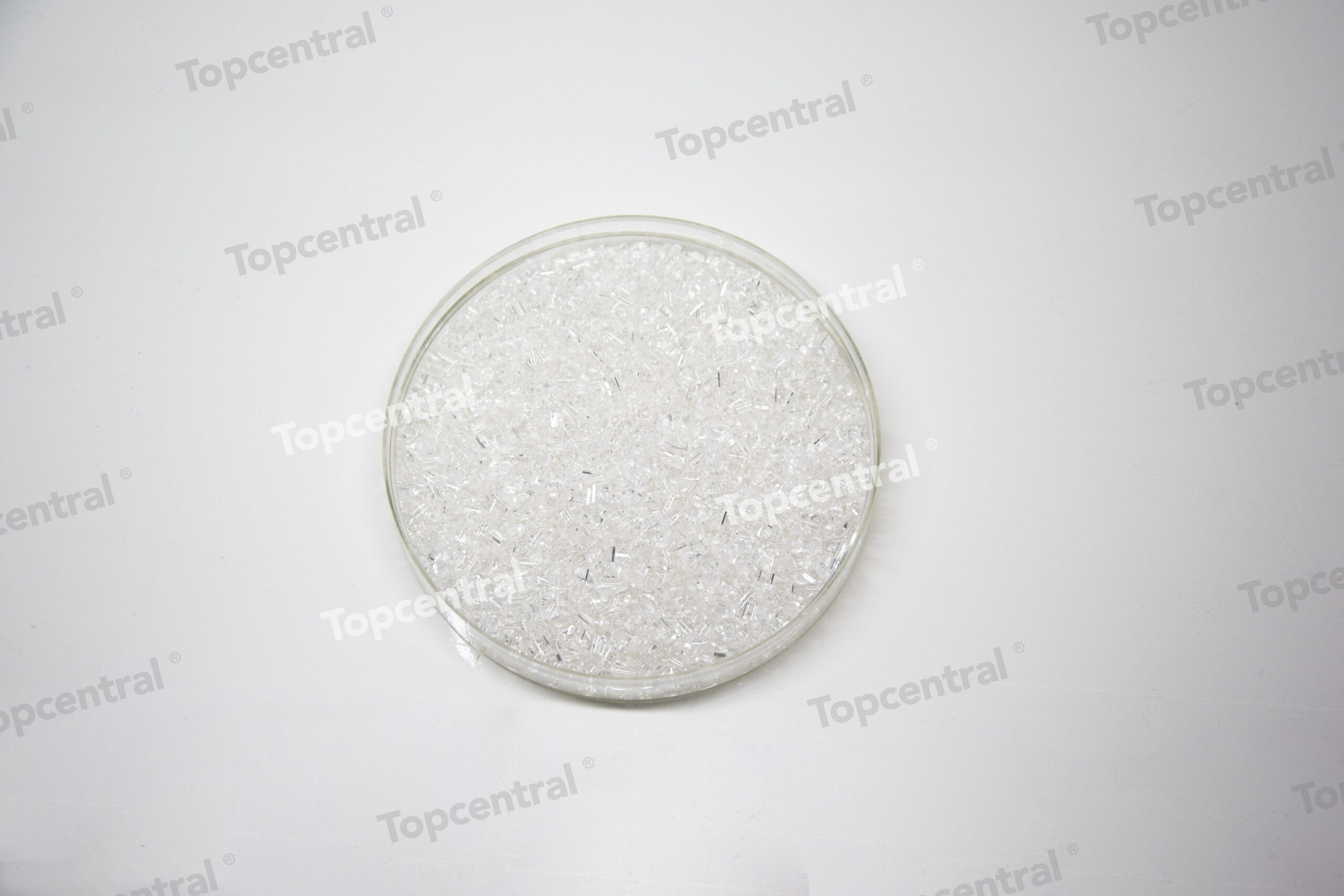
PCR Plastic Compounding: Twin-Screw Extruder Settings and Quality Control
Executive Summary
Post-consumer recycled (PCR) plastic compounding using twin-screw extrusion represents a critical juncture in the circular economy value chain. As regulatory frameworks tighten—including the EU’s Packaging and Packaging Waste Regulation (PPWR), the Carbon Border Adjustment Mechanism (CBAM), and Extended Producer Responsibility (EPR) schemes—procurement managers and product engineers face mounting pressure to integrate recycled content without compromising performance.
This guide provides actionable technical parameters, quality control protocols, and practical recommendations for compounding PCR resins using co-rotating twin-screw extruders. Data presented draws from operational experience across polyolefin, styrenic, and engineering-grade PCR processing lines operating at commercial scale (500–3,000 kg/h).
Section 1: PCR Feedstock Considerations
1.1 Feedstock Variability and Characterization
PCR feedstocks differ fundamentally from virgin resins. Contamination profiles, molecular weight distribution, and thermal history vary across collection streams, sorting facilities, and recyclers. A single shipment of PCR-PP can show melt flow rate (MFR) variation of ±40% from nominal.
Critical feedstock parameters for compounding:
| Parameter | Test Method | Acceptable Range | Action Limit |
|———–|————-|——————|————–|
| MFR (230°C/2.16 kg) | ISO 1133 | ±15% of target | >25% deviation |
| Bulk density | ISO 60 | 0.35–0.55 g/cm³ | <0.30 g/cm³ |
| Moisture content | ISO 15512 | 0.10% |
| Gel count (>100 µm) | Optical analysis | 500/m² |
| Ash content | ISO 3451 | 5% |
| Metal contaminants | Eddy current | 200 ppm |
Practical recommendation: Establish supplier qualification protocols aligned with GRS (Global Recycled Standard) or ISCC PLUS certification. Require batch-level Certificate of Analysis (CoA) with MFR, ash, and moisture data. Implement incoming inspection using near-infrared (NIR) sorters to detect polymer cross-contamination above 2%.
1.2 Pre-Processing Requirements
PCR flake or pellet must be dried before compounding. Unlike virgin polymers, PCR absorbs moisture from washing lines and ambient storage.
Drying guidelines by polymer type:
– PCR-PE/PP: 80–100°C for 2–4 hours, target moisture <0.05% (desiccant or infrared dryers)
– PCR-PET: 160–170°C for 4–6 hours, target moisture <0.005% (crystallizer plus dryer)
– PCR-PS: 70–80°C for 2–3 hours, target moisture <0.05%
– PCR-ABS/PC blends: 90–110°C for 3–5 hours, target moisture 90%)
Calculation example:
For a 75 mm twin-screw extruder at 400 RPM with specific throughput 0.20 kg/h/RPM:
Throughput = 400 × 0.20 = 80 kg/h
Adjust screw speed to maintain specific mechanical energy (SME) between 0.08–0.15 kWh/kg. SME above 0.20 kWh/kg indicates excessive shear and potential polymer degradation.
3.3 Feeding and Additive Dosing
PCR flake or pellets feed differently than virgin pellets. Use crammer feeders or side-stuffers for low-bulk-density flake (800 mbar |
| Melt pressure | Continuous | Pressure transducer | <200 bar |
| MFR | Every 30 min | Online rheometer or lab test | ±10% of target |
| Moisture | Every 30 min | Online NIR sensor | <0.05% |
| Gel count | Every hour | Online camera system | 12 |
| Tensile modulus | 1,200 MPa | ±150 |
| Elongation at break | 30% | >20 |
| Ash content | 1.5% | 0.5% total antioxidant) can cause plate-out on die surfaces. Use a balanced approach based on MFR shift during compounding.
5.2 Impact Modification
PCR polymers often show reduced impact strength due to chain scission. Impact modifiers restore ductility.
| Modifier | Typical Loading | Effect on MFR | Cost Impact |
|———-|—————-|—————|————-|
| Ethylene-octene elastomer (POE) | 5–15% | Decreases | Moderate |
| Styrene-butadiene block copolymer (SBS) | 5–10% | Decreases | Low |
| Core-shell acrylic | 3–8% | Minimal | High |
| EPDM | 5–12% | Decreases | Moderate |
Recommendation: For PCR-PP compounds targeting impact strength >20 kJ/m², use 8–12% POE with MFR 0.5–2 g/10 min. Side-feed the elastomer at 70% barrel length.
5.3 Odor and VOC Reduction
PCR compounds often carry residual odor from packaging residues, printing inks, or food contact.
Methods for VOC reduction:
– Vacuum degassing at ?800 mbar absolute (minimum 2-stage)
– Odor scavengers: 0.5–2% zeolite or activated carbon masterbatch
– Chemical neutralizers: Zinc ricinoleate (0.3–0.5%)
– Post-extrusion hot pellet quench at 80–90°C (removes surface VOCs)
Carbon footprint consideration: Each 1% of odor scavenger adds approximately 0.02 kg CO?e per kg of compound. Balance performance with sustainability goals.
Section 6: Sustainability Metrics and Reporting
6.1 Carbon Footprint Calculation
PCR compounds have significantly lower carbon footprint than virgin equivalents. However, compounding adds energy and additive-related emissions.
Typical carbon footprint (cradle-to-gate, per kg):
| Material | Virgin (kg CO?e/kg) | PCR (kg CO?e/kg) | Reduction |
|———-|———————|——————-|———–|
| PP | 1.8 | 0.6–0.9 | 50–67% |
| HDPE | 1.9 | 0.7–1.0 | 47–63% |
| PET | 2.4 | 0.8–1.2 | 50–67% |
| ABS | 3.0 | 1.2–1.8 | 40–60% |
Note: Values depend on collection, washing, and compounding energy sources. Use verified LCA data (e.g., PlasticsEurope or ISO 14067) for reporting.
6.2 Reporting for CBAM and EPR
CBAM requirements (EU import):
– Embedded emissions per tonne of compound
– Third-party verified carbon footprint
– Country of origin and production route
EPR compliance:
– Registration with national producer responsibility organizations
– Reporting of PCR content percentage per product category
– Payment of EPR fees (varies by country and material)
Practical recommendation: Maintain a digital product passport (DPP) for each PCR compound grade. Include PCR content percentage, carbon footprint, recyclability, and compliance certifications (GRS, ISCC PLUS, UL 2809).
Section 7: Practical Troubleshooting
7.1 Common Issues and Solutions
| Issue | Likely Cause | Corrective Action |
|——-|————–|——————-|
| MFR increase >15% | Thermal degradation | Reduce barrel temperatures by 10°C; increase screw speed |
| MFR decrease >10% | Incomplete melting or crosslinking | Increase melt temperature; check for gel formation |
| Die build-up | Volatile condensation or additive plate-out | Increase die temperature; reduce stabilizer loading |
| Surface roughness | Moisture or poor mixing | Check dryer; increase kneading block intensity |
| Black specks | Crosslinked polymer or metal contamination | Increase filtration; check upstream sorting |
| Odor in pellets | Insufficient degassing | Increase vacuum; add odor scavenger |
7.2 Process Optimization Checklist
Before starting a new PCR compound run:
1. Verify feedstock MFR and moisture (within spec)
2. Set temperature profile per polymer type (Section 3.1)
3. Calibrate all feeders (gravimetric, ±1% accuracy)
4. Set vacuum level to ?800 mbar
5. Start screw speed at 250 RPM, ramp to target
6. Monitor torque—adjust feed rate if >85%
7. Check melt temperature—adjust barrel setpoints if >220°C
8. Sample after 15 minutes of stable operation
9. Measure MFR, impact, and color
10. Adjust parameters if outside spec
Key Takeaways
1. Feedstock consistency is the foundation. Invest in supplier qualification (GRS/ISCC PLUS) and in-line moisture/gel monitoring.
2. Twin-screw configuration matters. Use L/D ?36:1, multi-stage venting, and 45° kneading blocks for PCR polyolefins.
3. Process control prevents degradation. Maintain SME below 0.15 kWh/kg and melt temperature below 220°C for polyolefins.
4. Additives restore performance cost-effectively. Impact modifiers at 5–15% and stabilizer packages at 0.3–0.5% are typical.
5. Certification enables market access. UL 2809, GRS, and ISCC PLUS are prerequisites for automotive, electronics, and packaging applications.
6. Carbon footprint reporting is mandatory. Prepare for CBAM and EPR with verified LCA data and digital product passports.
Related Topics
– Mechanical Recycling vs. Chemical Recycling: Comparative economics and carbon footprint for PCR compounding
– Additive Masterbatch Design for Recycled Polymers: Stabilizer, color, and functional additive systems
– Filtration Systems for PCR Melts: Screen changers, back-flush filters, and melt pumps
– PCR in Injection Molding: Processing guidelines for compounds with 30–100% recycled content
– Supply Chain Traceability for Recycled Plastics: Blockchain and digital product passport solutions
Further Reading
1. Plastics Recycling: Challenges and Opportunities – PlasticsEurope (2024)
2. UL 2809 Environmental Claim Validation Procedure – UL LLC
3. ISCC PLUS Certification System – International Sustainability and Carbon Certification
4. EU Packaging and Packaging Waste Regulation (PPWR) – European Commission (2024)
5. Carbon Footprint of Plastics: A Guide for Industry – ISO 14067:2018
6. Twin-Screw Extrusion Technology: Principles and Applications – K. Kohlgrüber (Hanser, 2020)
7. Recycled Plastics Compounding: A Practical Guide – Society of Plastics Engineers (SPE) Technical Papers
This guide is based on operational data from commercial PCR compounding lines and industry standards. Specific parameters may require adjustment based on equipment make, model, and feedstock characteristics. Always conduct validation trials before full-scale production.
Content Verification Annotation
EID: EID-FCD6DD2A-5727
Content Tier: Cæ¡£ (~2,084 words)
Verification Status: Reviewed – Pre-Constitution Content (L4)
Review Date: 2026-06-21
Leave a Reply