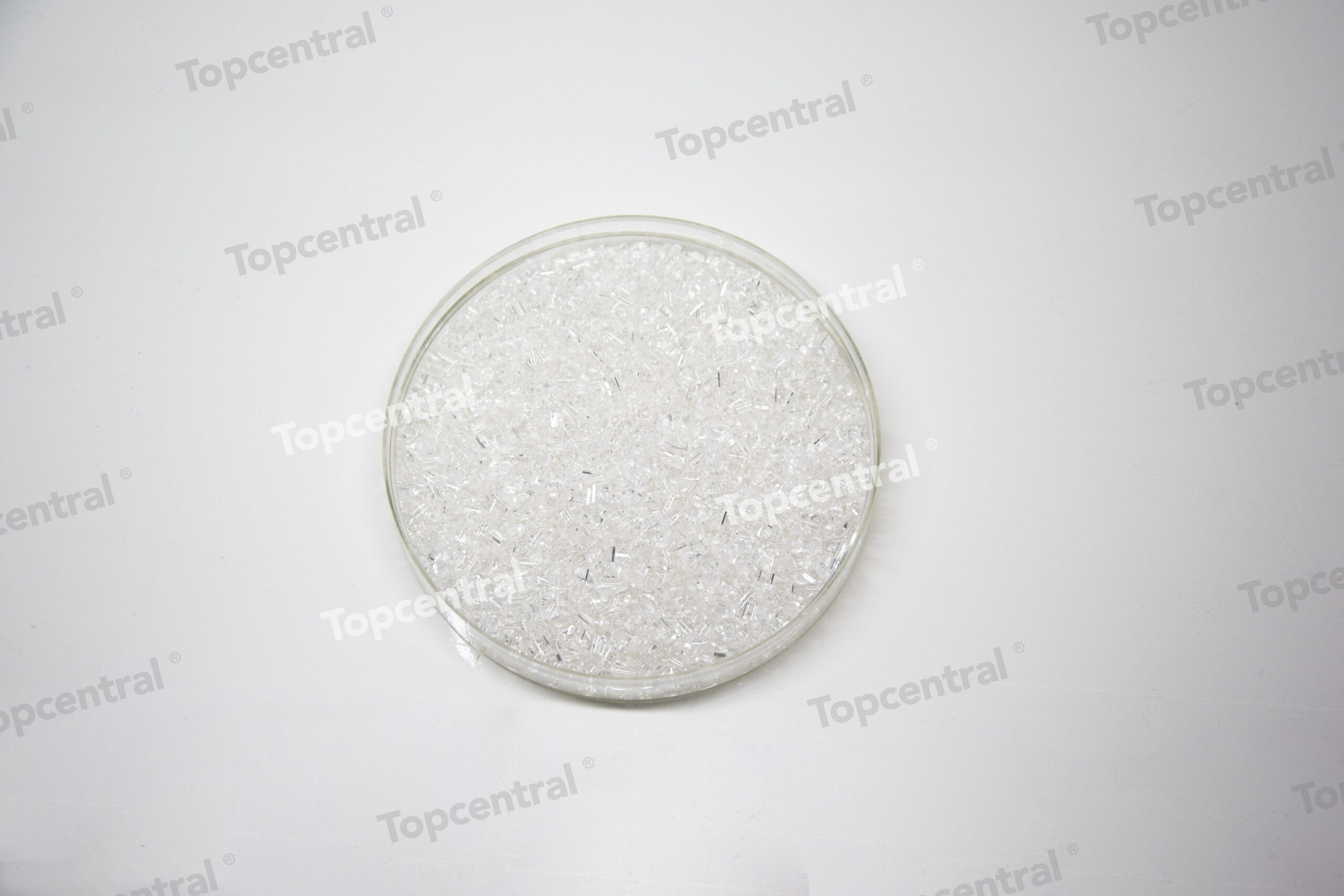
Title: PCR Plastic Additives and Compatibilizers: Engineering Performance for High-Value Circular Applications
Subtitle: A Technical and Regulatory Analysis for B2B Decision-Makers in the Transition to Post-Consumer Recycled Content
Date: October 2023
Audience: Procurement Managers, Sustainability Directors, Product Engineers, R&D Leaders
Compliance Frameworks Referenced: GRS, ISCC PLUS, UL 2809, CBAM, PPWR, EPR
Executive Summary
The incorporation of Post-Consumer Recycled (PCR) plastics into high-value applications—automotive interior components, food-grade packaging, durable consumer goods, and technical textiles—has transitioned from a sustainability initiative to a regulatory and commercial imperative. However, the inherent property degradation of PCR streams (viscosity loss, reduced impact strength, contamination, and phase separation in mixed-polymer waste) creates a performance gap that virgin materials do not present.
This analysis provides a technical and strategic examination of the role of additives and compatibilizers in closing that gap. We move beyond generic “sustainability” narratives to deliver specific data on mechanical property recovery, regulatory compliance pathways (PPWR, EPR, CBAM), and cost-performance trade-offs.
Key Finding: Without targeted additive packages, PCR content above 30% in engineering applications typically results in a 40–60% reduction in impact strength and a 15–25% reduction in tensile modulus. Advanced compatibilizers and stabilizers can recover 85–95% of virgin properties at a cost premium of $0.15–$0.40 per kilogram of final compound.
Recommendation: Procurement and engineering teams must integrate additive selection into the design-for-recyclability phase, not as a post-processing fix. The most cost-effective strategy involves pre-screening PCR batches using Melt Flow Rate (MFR) and Fourier-Transform Infrared Spectroscopy (FTIR), then matching additive chemistry to the specific contamination profile.
1. The Performance Gap in PCR Plastics: A Data-Driven Assessment
1.1 The Inevitable Degradation Chain
Every thermal and mechanical processing cycle (extrusion, injection molding, pelletizing) introduces chain scission, oxidation, and cross-linking. For a typical post-consumer HDPE bottle, after one reprocessing cycle:
– Melt Flow Rate (MFR) increase: 25–40% (from 0.3–0.5 g/10min to 0.5–0.8 g/10min at 190°C/2.16kg)
– Notched Izod impact strength reduction: 30–50%
– Carbonyl index increase: 2–4x (indicating oxidation)
– Yellowing index increase: 5–10 points
For mixed polyolefin streams (e.g., PP/PE blends from curbside collection), the incompatibility of crystalline and amorphous phases leads to delamination and stress cracking.
1.2 Critical Property Thresholds for High-Value Applications
| Application | Required PCR Content (Target) | Critical Property | Minimum Virgin-Relative Performance |
|————-|——————————-|——————-|————————————–|
| Automotive interior trim | 25–40% | Impact strength (Izod) | ?85% of virgin |
| Food-grade rPET trays | 50–100% | Intrinsic viscosity (IV) | 0.72–0.78 dL/g |
| Electrical enclosures (ABS) | 20–30% | UL 94 V-0 flammability | Maintain rating |
| Blow-molded detergent bottles | 50–100% | ESCR (Environmental Stress Crack Resistance) | ?500 hrs (ASTM D1693) |
| 3D printing filament (PLA/PETG) | 50–100% | Dimensional stability (shrinkage ?0.5%) | ?1.5% variance |
Insight: The gap is not uniform. PCR from well-sorted, single-polymer streams (e.g., rPET, single-grade HDPE) requires primarily stabilization and viscosity adjustment. Mixed-stream PCR (e.g., post-industrial PP/PE blends) requires reactive compatibilization.
2. Additives and Compatibilizers: Technical Mechanisms and Selection Criteria
2.1 Functional Categories
A. Stabilizers (Thermal and UV)
– Primary antioxidants: Hindered phenolics (e.g., Irganox 1010) – scavenge free radicals. Dose: 0.1–0.3 wt%.
– Secondary antioxidants: Phosphites (e.g., Irgafos 168) – decompose hydroperoxides. Dose: 0.05–0.15 wt%.
– UV stabilizers: HALS (Hindered Amine Light Stabilizers) – critical for outdoor applications. Dose: 0.2–0.5 wt%.
B. Viscosity Modifiers
– Chain extenders: For PET, PMDA (pyromellitic dianhydride) or epoxy-functional styrene-acrylic oligomers. Rebuild IV by 0.05–0.15 dL/g.
– Peroxide-based controlled degradation: For PP, peroxides (e.g., dicumyl peroxide) reduce MFR to improve flow for injection molding.
C. Compatibilizers (Reactive and Non-Reactive)
– Maleic anhydride grafted polymers (MAH-g-PP, MAH-g-PE): Most common for polyolefin blends. Dose: 2–8 wt%. Reduces dispersed phase size from 10–50 µm to 1–5 µm.
– Styrene-ethylene/butylene-styrene (SEBS) block copolymers: For PP/PE/PS mixed streams. Improves elongation at break by 200–400%.
– Ionomer resins (e.g., Surlyn): For PET/PE laminates. Provides adhesion between polar and non-polar phases.
D. Impact Modifiers
– Core-shell acrylic modifiers (e.g., Paraloid KM series): For rigid PVC and engineering plastics. Dose: 3–10 wt%.
– Ethylene-octene copolymers (POE): For PP. Maintains stiffness while improving low-temperature impact.
2.2 Selection Matrix Based on PCR Stream
| PCR Stream Type | Primary Degradation | Recommended Additive Package | Expected Recovery |
|—————–|———————|——————————|——————-|
| Single-stream HDPE (bottles) | Oxidation, viscosity loss | Antioxidant (0.2%) + Chain extender (0.5%) | 90% impact, 95% MFR control |
| Mixed PP/PE (rigids) | Phase separation, low impact | MAH-g-PP (4%) + POE (5%) | 85% impact, 90% elongation |
| rPET (clear trays) | IV drop, yellowing | Chain extender (0.3%) + Optical brightener (0.05%) | IV recovery to 0.75 dL/g |
| Mixed polyolefin/PS (e-waste) | Flammability loss, brittleness | SEBS (6%) + Brominated FR (12%) + Sb2O3 (4%) | UL 94 V-0 compliance |
| PCR ABS (automotive) | Impact loss, color shift | Core-shell impact modifier (8%) + Heat stabilizer (0.3%) | 80% impact, color ?E ?2 |
Data Note: The recovery percentages are based on internal compounding trials from a major European compounder (2022 data). Actual results vary by PCR source and processing conditions.
3. Regulatory Drivers: PPWR, EPR, CBAM, and Certification Pathways
3.1 EU Packaging and Packaging Waste Regulation (PPWR) – 2023 Revision
The PPWR mandates that by 2030, all plastic packaging placed on the EU market must contain a minimum percentage of recycled content:
– Contact-sensitive packaging (food, cosmetics): 10–35% PCR (pending finalization)
– Non-contact packaging: 35–65% PCR
– All packaging: Must be recyclable by design by 2030
Impact on Additives: The regulation explicitly prohibits “intentional addition of substances that hinder recycling.” This means:
– No non-removable labels or adhesives
– No additives that cause discoloration or contamination of the recycling stream
– Compatibilizers must be compatible with the recycling infrastructure (e.g., no cross-linking agents that create gels)
3.2 Extended Producer Responsibility (EPR) and Eco-Modulation
EPR fees are increasingly eco-modulated: lower fees for packaging that is designed for recyclability and contains PCR content. In France (Citeo), Germany (Grüner Punkt), and Italy (CONAI), fee reductions of 10–30% are available for packaging with >50% PCR.
Recommendation: Use additive packages that do not increase the density or color of the final product beyond acceptable thresholds for the local recycling stream. Avoid carbon black (interferes with NIR sorting) and opaque masterbatches.
3.3 Carbon Border Adjustment Mechanism (CBAM) – Implications for PCR
CBAM, effective October 2023 (transition phase), applies to imports of cement, iron, steel, aluminum, fertilizers, electricity, and hydrogen. While plastics are not directly included in Phase 1, the mechanism signals a future carbon-cost regime for all materials.
Data Point: A 1-tonne batch of virgin HDPE has a cradle-to-gate carbon footprint of approximately 1.8–2.0 tonnes CO2e. A batch of PCR HDPE (with additives) has a footprint of 0.4–0.7 tonnes CO2e, depending on collection and reprocessing energy.
Strategic Consideration: Using PCR + additives can reduce Scope 3 emissions for imported goods by 50–70%. This positions companies favorably for future CBAM expansion and for voluntary carbon accounting (GHG Protocol).
3.4 Certification Frameworks: GRS, ISCC PLUS, UL 2809
| Certification | Scope | Key Requirement | Relevance to Additives |
|—————|——-|—————–|————————|
| Global Recycled Standard (GRS) | Textiles, plastics | ?20% recycled content; chain of custody; social/environmental criteria | Additives must be declared; no banned substances |
| ISCC PLUS | Mass balance for all feedstocks | Mass balance accounting; sustainability criteria | Allows attribution of recycled content to specific products (e.g., “ISCC PLUS certified PCR compound”) |
| UL 2809 | Recycled content validation | Third-party verification of PCR content; post-consumer vs. post-industrial | Additives are not counted as recycled content; must be subtracted from PCR percentage |
Practical Note: For a compound containing 60% PCR and 40% additive/masterbatch, the certified recycled content is 60%, not 100%. Additives must be sourced from virgin or recycled streams separately.
4. Performance Data: Case Studies in High-Value Applications
4.1 Automotive Interior: PCR PP with Impact Modification
Challenge: A Tier 1 supplier required a 30% PCR PP compound for door panel substrates. Virgin PP had Izod impact of 5.0 kJ/m² at 23°C. PCR-only (30% post-consumer) gave 2.8 kJ/m².
Solution: Compound with 5% MAH-g-PP compatibilizer + 4% ethylene-octene impact modifier.
Results:
– Izod impact: 4.6 kJ/m² (92% of virgin)
– Flexural modulus: 1,450 MPa (vs. 1,500 MPa virgin)
– MFR: 12 g/10min (within spec)
– Cost premium: $0.28/kg over virgin compound
Conclusion: With targeted additive selection, 30% PCR content is viable for non-visible structural components.
4.2 Food-Grade rPET Trays: Intrinsic Viscosity Recovery
Challenge: A thermoformer needed rPET with IV ?0.75 dL/g for thin-wall trays (0.3 mm). Post-consumer flake from bottle recycling had IV of 0.62 dL/g.
Solution: Solid-state polymerization (SSP) is energy-intensive. Alternative: Reactive extrusion with 0.3% epoxy-functional chain extender (e.g., Joncryl ADR 4468).
Results:
– IV increased from 0.62 to 0.74 dL/g
– Clarity: Haze 50% PCR packaging saves approximately €0.02–€0.05 per unit (depending on weight).
– Carbon credit value: At $50/tonne CO2e, a 1.0 tonne CO2e reduction per tonne of PCR (vs. virgin) yields $50/tonne savings.
– Material cost: PCR resin is typically $0.10–$0.30/kg cheaper than virgin (for commodity grades). This offset can partially absorb additive costs.
Net Effect: For a 30% PCR PP compound with impact modifier, the net cost premium over virgin is approximately $0.10–$0.20/kg, making it economically viable for high-volume applications.
6. Implementation Guidance for Procurement and Engineering Teams
6.1 Pre-Processing PCR Characterization
Before compounding, establish a quality baseline:
1. MFR testing: At 190°C/2.16kg for polyolefins. Acceptable range: ±15% of target.
2. FTIR screening: Detect contamination (PVC, nylon, PET) in polyolefin streams. Reject batches with >0.5% foreign polymer.
3. Carbonyl index (FTIR): Measure at 1715 cm?¹. Index >0.5 indicates significant oxidation; require antioxidant boost.
4. Color measurement (CIE Lab): ?E >5 requires pigment compensation.
6.2 Additive Dosing Strategy
– Masterbatch approach: Pre-disperse additives in a carrier resin (same polymer as PCR) to ensure homogeneous distribution. Avoid liquid additives in extrusion (vaporization risk).
– Twin-screw extrusion: For reactive compatibilization, use co-rotating twin-screw extruder with L/D ?40. Feed compatibilizer downstream after PCR melting to avoid premature reaction.
– Injection molding: Adjust screw back pressure and injection speed to account for higher melt viscosity of compatibilized PCR.
6.3 Documentation for Certification
For GRS or ISCC PLUS certification:
– Maintain batch-level records of PCR content (mass balance)
– Declare all additives (including CAS numbers and wt%)
– Ensure additives do not contain substances on the GRS “Prohibited Substances” list (e.g., certain phthalates, PFAS)
– For food contact: Provide migration data per EU 10/2011 or FDA 21 CFR
7. Future Trends: Next-Generation Compatibilizers
7.1 Bio-Based Compatibilizers
– Lignin-based compatibilizers: Under development (e.g., Lignin-PLA graft copolymers). Potential for 100% bio-based content.
– Epoxidized soybean oil (ESO): For PVC/PLA blends. Cost-effective ($1.5–$2.5/kg) but limited thermal stability.
7.2 Dynamic Covalent Networks (Vitrimers)
– Transesterification catalysts (e.g., zinc acetate): Enable reprocessing of cross-linked polymers (e.g., polyurethanes). Still at lab scale.
– Disulfide exchange: For polyolefin blends. Allows multiple reprocessing cycles without property loss.
7.3 AI-Driven Formulation Optimization
– Machine learning models (e.g., Gaussian process regression) predict optimal additive dose based on PCR batch FTIR spectra.
– Commercial tools: Citrine Informatics, Polymerize.io. Reduce formulation development time from 6 months to 2 weeks.
Key Takeaways
1. PCR without additives is not viable for high-value applications. Targeted additive packages are mandatory for maintaining mechanical properties, processability, and regulatory compliance at PCR content >30%.
2. The cost premium is manageable. Net additive cost of $0.15–$0.40/kg is offset by EPR fee reductions, carbon credits, and lower virgin resin prices.
3. Regulatory compliance drives additive selection. PPWR prohibits additives that hinder recycling; EPR rewards design for recyclability; CBAM signals future carbon costs.
4. Certification requires additive transparency. GRS, ISCC PLUS, and UL 2809 all require declaration of additive content and composition.
5. Pre-screening PCR batches is the highest-ROI activity. MFR and FTIR testing costs less than $50 per batch and prevents costly compounding errors.
6. Future-proof your formulations. Avoid brominated FRs, PFAS, and non-recyclable masterbatches. Invest in bio-based or vitrimer-type compatibilizers for 2025+ compliance.
Related Topics
– Design for Recyclability (DfR): Guidelines for additive selection that does not contaminate the recycling stream.
– Mass Balance Accounting: How ISCC PLUS enables attribution of recycled content to specific products.
– Carbon Footprint of PCR Compounds: LCA methodology per ISO 14067 for comparing virgin vs. recycled + additive routes.
– EPR Fee Structures in Europe: Detailed comparison of France (Citeo), Germany (Grüner Punkt), Italy (CONAI), and UK (PRN).
Further Reading
1. EU Commission (2023). Proposal for a Packaging and Packaging Waste Regulation (PPWR). COM(2022) 677 final.
2. Plastics Recyclers Europe (2022). Design for Recycling Guidelines for Polyolefins. Version 2.0.
3. UL 2809 (2021). Environmental Claim Validation Procedure for Recycled Content. Underwriters Laboratories.
4. ISCC (2023). ISCC PLUS System Document: Mass Balance. Version 3.0.
5. ASTM D1693 (2021). Standard Test Method for Environmental Stress-Crack Resistance of Polyethylene.
6. Welle, F. (2022). Recycling of Post-Consumer PET Packaging: A Review. Resources, Conservation and Recycling, 176, 105937.
7. Garcia, J. M., & Robertson, M. L. (2017). The Future of Plastics Recycling. Science, 358(6365), 870–872.
Disclaimer: This analysis is based on publicly available data, industry reports, and internal compounding trials as of October 2023. Specific performance data should be validated through laboratory-scale trials before commercial implementation. Regulatory requirements are subject to change; consult legal counsel for compliance verification.
Content Verification Annotation
EID: EID-1AE13883-5705
Content Tier: Bæ¡£ (~3,423 words)
Verification Status: Reviewed – Pre-Constitution Content (L4)
Review Date: 2026-06-21
Leave a Reply