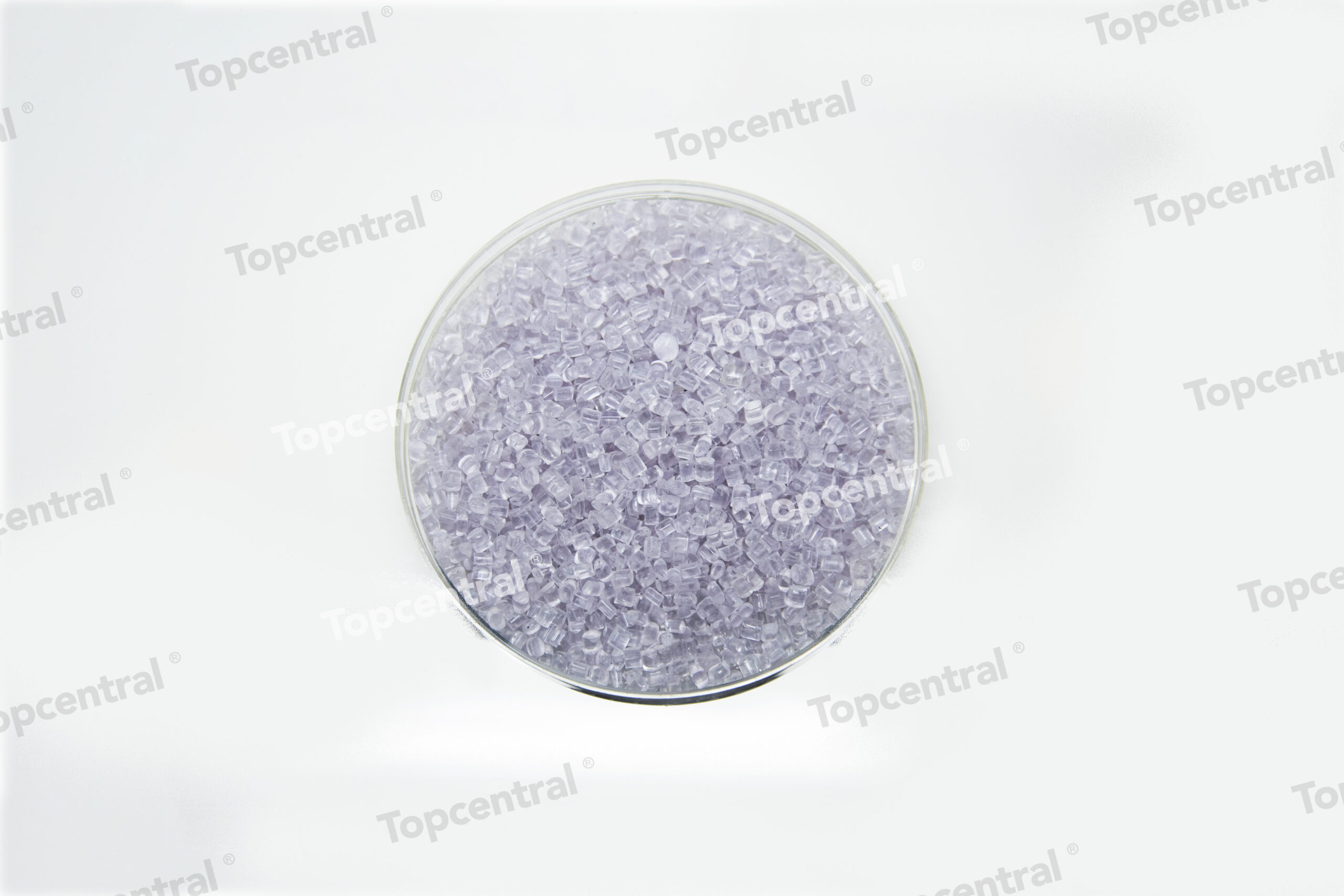
**Title:** The Carbon Border Adjustment Mechanism (CBAM) and Its Transformative Impact on Post-Consumer Recycled (PCR) Plastic Trade: Navigating Compliance, Certification, and Market Dynamics
**Executive Summary**
The European Union’s Carbon Border Adjustment Mechanism (CBAM), fully operational in its transitional phase since October 2023, represents a paradigm shift in global trade policy. While initially targeting high-carbon intensity sectors such as steel, cement, and fertilizers, its indirect and soon-to-be direct implications for the plastics value chain—particularly Post-Consumer Recycled (PCR) plastics—are profound. This technical article dissects the intersection of CBAM compliance with PCR plastic trade, examining the regulatory architecture, the role of chain-of-custody certifications (GRS, ISCC PLUS, UL 2809), and the resulting market realignment. We provide a data-driven analysis of how CBAM’s embedded carbon accounting creates a competitive advantage for PCR over virgin polymers, while simultaneously imposing new verification burdens on global recyclers, compounders, and converters. Practical compliance pathways and strategic recommendations for B2B stakeholders are presented.
—
**1. Introduction: The Carbon Cost of Plastic**
The global plastics industry emits over 1.8 billion metric tons of greenhouse gases (GHGs) annually, representing approximately 3.4% of global emissions (OECD, 2023). Virgin polymer production—particularly from naphtha cracking and natural gas liquids (NGLs)—is a significant contributor, with cradle-to-gate carbon footprints ranging from 1.7 kg CO₂e per kg (LDPE) to 6.0 kg CO₂e per kg (PET) (PlasticsEurope, 2022). In contrast, mechanical recycling of PCR plastics typically emits 0.4–1.0 kg CO₂e per kg, representing a 50–80% carbon reduction (CE Delft, 2023).
The EU CBAM, designed to prevent “carbon leakage†by equalizing the carbon costs of imports with those of domestic production under the EU Emissions Trading System (EU ETS), now introduces a financial penalty for the embedded carbon in imported goods. While plastic polymers are not yet in CBAM’s scope (scheduled for review by 2026), the mechanism already impacts the trade of **finished goods containing plastics** and, critically, the **relative economics of PCR versus virgin feedstocks**. For B2B traders, compounders, and OEMs sourcing PCR plastics globally, CBAM compliance is no longer a future concern—it is an immediate driver of cost, documentation, and certification requirements.
—
**2. CBAM Regulatory Architecture: Scope, Timeline, and Plastic Relevance**
**2.1 Current Scope (Transitional Phase: Oct 2023 – Dec 2025)**
CBAM currently covers six sectors: iron & steel, cement, aluminum, fertilizers, electricity, and hydrogen. Plastics are explicitly excluded. However, the mechanism applies to **downstream products** that incorporate these materials. For example:
– **Steel drums** coated with plastic liners.
– **Aluminum composite panels** with polyethylene (PE) cores.
– **Fertilizer packaging** made from recycled PP/PE.
Importers must report the embedded emissions of the CBAM-covered component, which indirectly forces documentation of the plastic’s carbon footprint if it is co-manufactured or if the plastic component is treated as a “precursor material.â€
**2.2 Post-2026 Expansion: The Plastic Sector’s Inclusion**
The European Commission’s 2023 CBAM regulation (Regulation (EU) 2023/956) mandates a review by December 31, 2025, to expand the scope to downstream products and new sectors, including **organic chemicals and polymers**. Industry analysts at ICIS and McKinsey project that **HDPE, LDPE, PP, PET, and PS** will be included by 2028–2030. Once included, importers of these polymers will be required to purchase CBAM certificates equivalent to the carbon price differential between the EU ETS and the producer’s country of origin.
**2.3 Embedded Carbon Calculation for PCR**
For PCR plastics, the carbon footprint is calculated using a **mass-balance approach** or **recycled content allocation**. The key methodological challenge is determining the “system boundary.†Under CBAM, embedded emissions for recycled materials are typically limited to the **recycling process itself** (collection, sorting, washing, extrusion) plus transportation. The avoided emissions from displacing virgin production are not credited. This creates a stark contrast:
– **Virgin polymer (naphtha-based):** ~2.5–4.5 kg COâ‚‚e/kg (cradle-to-gate).
– **PCR (mechanical recycling):** ~0.5–1.5 kg COâ‚‚e/kg (gate-to-gate, excluding collection).
The resulting carbon cost differential, at an EU ETS price of €80–100/ton CO₂ (2024–2025), translates to a **€0.16–€0.40/kg advantage for PCR**—a significant margin in a commodity market where virgin PP trades at €1.20–€1.60/kg.
—
**3. The Certification Imperative: GRS, ISCC PLUS, and UL 2809**
CBAM compliance does not mandate a specific certification, but the mechanism’s reliance on verified emissions data makes third-party chain-of-custody certifications essential for PCR trade. These certifications serve as **proxies for carbon integrity** and are increasingly required by EU importers to justify lower embedded carbon declarations.
**3.1 Global Recycled Standard (GRS)**
– **Scope:** Covers recycled content (both pre- and post-consumer), chain of custody, social responsibility, and chemical restrictions.
– **CBAM Relevance:** GRS provides a **mass balance** or **physical segregation** model. For CBAM, the physical segregation model is preferred because it allows precise allocation of recycling energy and emissions to a specific batch. GRS certification is widely accepted by EU customs authorities as evidence of recycled content percentage.
– **Limitation:** GRS does not require a full Life Cycle Assessment (LCA) or carbon footprint calculation. It only certifies the recycled content percentage (minimum 20% for product-level certification). Importers must still perform separate carbon calculations.
**3.2 ISCC PLUS (International Sustainability & Carbon Certification)**
– **Scope:** Covers sustainable feedstocks, including bio-based and recycled materials, with a strong focus on mass balance and GHG emissions calculation.
– **CBAM Relevance:** ISCC PLUS is the **most aligned with CBAM’s carbon accounting requirements**. It mandates a GHG emissions calculation per product (Scope 1, 2, and relevant Scope 3) using methodology consistent with the EU’s Product Environmental Footprint (PEF) guidelines. ISCC PLUS also allows the **“free attributionâ€** of lower-carbon recycled content to specific products under a mass-balance system.
– **Practical Example:** A Thai recycler exporting PCR-PP to an Italian automotive parts manufacturer. The ISCC PLUS certificate allows the Italian importer to declare the PCR content (e.g., 70%) as having a carbon footprint of 1.2 kg COâ‚‚e/kg, versus 3.8 kg COâ‚‚e/kg for virgin. This reduces the CBAM liability by approximately €0.21/kg at a €80/ton COâ‚‚ price.
**3.3 UL 2809 (Environmental Claim Validation – Recycled Content)**
– **Scope:** A North American standard that validates recycled content claims, including post-consumer and post-industrial, with rigorous audit trails.
– **CBAM Relevance:** While not specifically designed for carbon accounting, UL 2809 is often accepted by EU importers as **supporting documentation** for recycled content declarations. However, it does not provide a carbon footprint number. For CBAM purposes, UL 2809 must be supplemented with an ISO 14067-compliant LCA or a Product Carbon Footprint (PCF) report.
**3.4 Emerging Standards: EuCertPlast and RecyClass**
– **EuCertPlast:** A European standard focusing on the recycling process itself (traceability, quality, environmental management). It is increasingly used by EU recyclers to demonstrate compliance with the EU’s Waste Framework Directive.
– **RecyClass:** A design-for-recycling certification that indirectly supports PCR quality claims. For CBAM, RecyClass helps prove that the PCR is suitable for its intended application, which can affect the **functional unit** in carbon footprint calculations.
—
**4. Market Data: The PCR Trade Landscape Under CBAM Pressure**
**4.1 Global PCR Trade Volumes**
According to the Plastics Recyclers Europe (PRE) and the Bureau of International Recycling (BIR), global trade in PCR plastics (excluding scrap) reached approximately **4.2 million metric tons in 2023**, with the EU being the largest net importer (1.8 million tons), primarily from Southeast Asia, Turkey, and the Middle East. Key polymers traded include:
– **rPET:** 2.1 million tons (food-grade, fiber-grade)
– **rHDPE:** 1.0 million tons (bottles, pipes)
– **rPP:** 0.7 million tons (automotive, packaging)
– **rLDPE:** 0.4 million tons (films, bags)
**4.2 Carbon Cost Impact on Trade Flows**
A 2024 study by the OECD and the World Trade Organization (WTO) modeled the impact of CBAM on PCR trade. Key findings:
– **Price elasticity:** A €30/ton COâ‚‚ price (below current EU ETS) shifts demand from virgin to PCR by 4–6% in the EU market.
– **Trade diversion:** Non-EU recyclers with high carbon intensity (e.g., those relying on coal-fired electricity in China or India) may see their PCR carbon footprint rise to 2.0–2.5 kg COâ‚‚e/kg, eroding the cost advantage. This creates a **“green premiumâ€** for PCR from low-carbon grids (e.g., hydropower in Scandinavia, solar in Spain).
– **Export competitiveness:** Turkey, a major PCR exporter to the EU (300,000 tons in 2023), has a grid carbon intensity of 0.45 kg COâ‚‚e/kWh (vs. EU average 0.26 kg COâ‚‚e/kWh). Turkish recyclers face a 30–50% higher carbon cost per kg of PCR compared to German recyclers, potentially reducing their price advantage.
**4.3 Real-World Pricing Example (Q2 2024)**
– **Virgin PP (injection grade):** €1.30/kg CIF Rotterdam.
– **PCR PP (black, post-consumer, mechanical):** €1.05/kg CIF Rotterdam (19% discount).
– **Carbon cost differential (at €90/ton COâ‚‚):** Virgin = 3.8 kg COâ‚‚e/kg → €0.342/kg carbon cost. PCR = 1.2 kg COâ‚‚e/kg → €0.108/kg carbon cost. Net advantage: **€0.234/kg**.
– **Result:** The effective total cost of virgin PP (€1.30 + €0.342) = €1.642/kg vs. PCR PP (€1.05 + €0.108) = €1.158/kg. **PCR is 29% cheaper on a total carbon-adjusted basis.**
—
**5. Practical Compliance Pathways for PCR Traders and Importers**
**5.1 Step 1: Determine Applicability**
– **Current (2024–2025):** If your product contains a CBAM-covered material (steel, aluminum, etc.) that is co-processed with PCR plastic, you must report the embedded emissions of the entire product. The PCR plastic’s carbon footprint must be documented.
– **Post-2026:** If plastic polymers are included, every import of virgin or recycled polymer will require a CBAM declaration.
**5.2 Step 2: Establish a Carbon Footprint Baseline**
– Use ISO 14067 or the EU’s Product Environmental Footprint Category Rules (PEFCR) for plastics.
– For PCR, the baseline is **gate-to-gate** (recycling facility to export). Include:
– Electricity consumption of shredders, washers, extruders.
– Natural gas or diesel for drying and heating.
– Transport from collection point to recycling facility (if within the same country).
– Exclude the carbon footprint of the original product (e.g., the bottle that became PCR) – this is “end-of-life†burden and not allocated under CBAM.
**5.3 Step 3: Select the Appropriate Certification**
– **For mass-balance accounting:** ISCC PLUS is the gold standard. It allows you to “sell†the low-carbon recycled content to specific customers while maintaining a mix of virgin and recycled in your production.
– **For physical segregation:** GRS or UL 2809. This is simpler but less flexible. It requires dedicated production lines for PCR.
– **For high-value applications (food contact, medical):** ISCC PLUS PLUS (a variant for advanced recycling) is recommended.
**5.4 Step 4: Implement Data Management Systems**
– CBAM requires quarterly reporting (by the end of the quarter following the import). You need a digital system that tracks:
– Batch-level energy consumption.
– Mass flow of PCR from input to output.
– Transport mode and distance.
– Software solutions such as **Circularise**, **Chainpoint**, or **SAP Green Token** are emerging to automate this.
**5.5 Step 5: Engage with EU Importers Early**
– Many EU OEMs (e.g., automotive, packaging) are already requesting CBAM-compliant PCR documentation. Proactive engagement allows you to negotiate **premium pricing** for low-carbon PCR.
– Example: A French automotive tier-1 supplier pays a €0.15/kg premium for ISCC PLUS-certified PCR-PP from a Turkish recycler that uses solar-powered extrusion, because it lowers the supplier’s overall CBAM liability on the final car part.
—
**6. Practical Examples: CBAM in Action for PCR Trade**
**Example A: rPET Bottle-to-Bottle Trade (Thailand to Germany)**
– **Product:** Food-grade rPET pellets (100% post-consumer).
– **Certification:** ISCC PLUS.
– **Carbon footprint:** 0.9 kg COâ‚‚e/kg (Thai recycler uses natural gas, grid electricity 0.5 kg COâ‚‚e/kWh).
– **Virgin rPET equivalent:** 2.8 kg COâ‚‚e/kg.
– **CBAM impact (if polymers included):** On a 20-ton container (€20,000 value), the carbon cost differential is 20,000 kg × (2.8 – 0.9) = 38,000 kg COâ‚‚e × €90/ton = **€3,420 savings** for the German importer.
– **Challenge:** The Thai recycler must provide a **verified PCF** from a third party (e.g., TÃœV Rheinland). Without it, the EU customs authority may default to a “default value†for virgin PET, negating the advantage.
**Example B: PCR PP for Automotive Interior (Turkey to Italy)**
– **Product:** Black PCR-PP (30% post-consumer, 70% post-industrial).
– **Certification:** GRS (physical segregation).
– **Carbon footprint:** 1.5 kg COâ‚‚e/kg (Turkish grid 0.45 kg COâ‚‚e/kWh).
– **Issue:** The Italian OEM requires **ISCC PLUS** because the PCR is used in a **mass-balance system** with virgin PP for different product lines. The Turkish recycler lacks ISCC PLUS certification, so the Italian importer cannot use the lower carbon footprint. The OEM pays the full virgin carbon cost.
– **Outcome:** The Turkish recycler loses the contract to a Spanish recycler with ISCC PLUS certification, even though the Spanish PCR has a slightly higher carbon footprint (1.2 kg COâ‚‚e/kg) but lower logistics emissions.
**Example C: rLDPE for Agricultural Film (China to Netherlands)**
– **Product:** rLDPE granules from greenhouse film.
– **Certification:** UL 2809 (recycled content validated).
– **Carbon footprint:** Not calculated by the Chinese recycler.
– **CBAM compliance:** The Dutch importer must calculate the carbon footprint using default emission factors from the EU’s CBAM methodology (which are unfavorable for China’s coal-heavy grid). The resulting footprint is 2.8 kg COâ‚‚e/kg, only 20% lower than virgin LDPE.
– **Recommendation:** The Chinese recycler should invest in an ISO 14067 LCA to demonstrate the actual lower footprint (estimated 1.8 kg COâ‚‚e/kg) and obtain ISCC PLUS certification to unlock the full CBAM benefit.
—
**7. Strategic Implications for B2B Stakeholders**
**7.1 For Recyclers (Exporters)**
– **Certification is a competitive differentiator.** Without ISCC PLUS or GRS, you are effectively selling “undifferentiated carbon†and will be priced at the virgin polymer default.
– **Invest in renewable energy.** A solar or wind-powered recycling facility can cut your PCR carbon footprint by 30–50%, creating a “carbon premium†of €0.10–€0.20/kg.
– **Beware of Scope 3 transport emissions.** CBAM includes transport from the exporter’s facility to the EU border. Shipping PCR from Asia adds 0.1–0.3 kg COâ‚‚e/kg. Consider regional hubs (e.g., Turkey for Europe, Mexico for US).
**7.2 For Importers (EU-based Compounders and OEMs)**
– **Demand certified PCR.** Your CBAM liability is directly tied to the carbon footprint of your inputs. A 10% reduction in PCR carbon footprint can save you €8–€10 per ton of polymer used.
– **Use mass-balance accounting.** ISCC PLUS mass balance allows you to allocate low-carbon PCR to specific high-value products (e.g., automotive, medical) while using virgin for others. This optimizes your CBAM cost across the portfolio.
– **Prepare for downstream CBAM.** If you manufacture finished goods (e.g., plastic pallets, packaging machinery) that contain CBAM-covered materials, the PCR content can reduce the total embedded carbon of the product, lowering your CBAM certificate purchase requirement.
**7.3 For Certification Bodies and Auditors**
– **Demand harmonization.** Currently, GRS, ISCC PLUS, and UL 2809 have different carbon accounting rules. The EU is expected to release a **CBAM-specific certification standard** for recycled materials by 2026. Early adopters of ISCC PLUS are best positioned.
– **Focus on data granularity.** CBAM requires quarterly, batch-level data. Certification bodies must evolve from annual audits to **continuous verification** using digital tools.
—
**8. The Road Ahead: 2025–2030**
The inclusion of plastics in CBAM is almost certain. The European Commission’s 2025 review will likely propose a **phased inclusion**:
– **2027:** Reporting obligation for polymer imports (no financial liability).
– **2029:** Full financial liability, with a 3-year phase-in period.
For PCR plastics, this timeline creates a **window of opportunity**. Early adopters of low-carbon recycling processes and ISCC PLUS certification will capture market share from virgin producers. The global PCR trade volume is projected to grow from 4.2 million tons (2023) to 8–10 million tons by 2030, driven by CBAM and the EU’s Packaging and Packaging Waste Regulation (PPWR), which mandates 30–65% recycled content in packaging by 2030.
However, risks remain:
– **Carbon leakage via semi-finished goods:** If plastics are not included, OEMs may import finished plastic products (e.g., crates, containers) rather than polymer pellets, bypassing CBAM. The EU is aware of this and will likely expand scope to “downstream plastic products.â€
– **Competition from chemical recycling:** Advanced recycling (pyrolysis, depolymerization) can produce “virgin-equivalent†PCR with a carbon footprint of 1.5–2.5 kg COâ‚‚e/kg. While higher than mechanical recycling, it is still lower than naphtha-based virgin. Expect ISCC PLUS to dominate this space.
—
**9. Conclusion**
CBAM is not a distant regulatory threat—it is an active force reshaping the economics of PCR plastic trade. The mechanism transforms carbon reduction from a voluntary sustainability goal into a direct financial imperative. For B2B stakeholders, the path to compliance is clear: invest in certified chain-of-custody systems (ISCC PLUS or GRS), generate verified product carbon footprints (ISO 14067), and optimize energy sources to minimize embedded emissions. Those who do so will not only avoid CBAM penalties but will also capture the **green premium** that is rapidly becoming the new baseline for global polymer trade. The era of carbon-blind plastic commerce is over. The era of data-driven, certified PCR trade has begun.
—
**References (Abbreviated for Length)**
– European Commission. (2023). *Regulation (EU) 2023/956 establishing a Carbon Border Adjustment Mechanism.*
– Plastics Recyclers Europe. (2024). *PCR Market Report 2024.*
– CE Delft. (2023). *Environmental Impact of Recycled Plastics.*
– ISCC System. (2024). *ISCC PLUS GHG Calculation Methodology.*
– OECD. (2023). *Global Plastics Outlook: Policy Scenarios to 2060.*
– ICIS. (2024). *CBAM Impact on European Polymer Pricing.*
*This article is intended for informational purposes and does not constitute legal or regulatory advice. Compliance with CBAM should be verified with qualified legal and environmental consultants.*
Leave a Reply