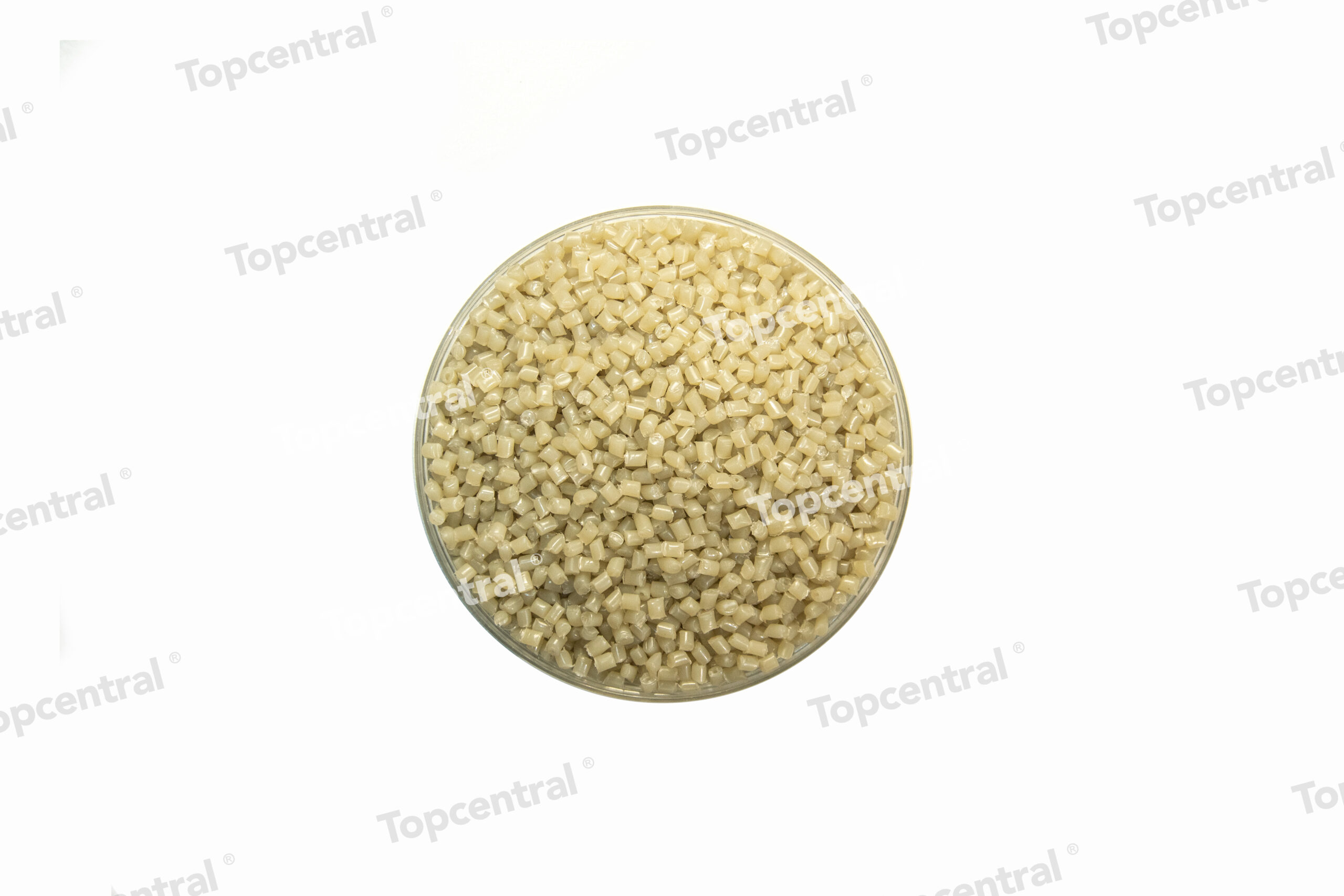
Quick Reference: PCR Plastic Grade Selection by Application Type
A Professional Guide for Procurement Managers, Sustainability Directors, and Product Engineers
Executive Summary
Post-consumer recycled (PCR) plastics have transitioned from niche alternatives to mainstream raw materials, driven by regulatory mandates (EU PPWR, CBAM), corporate net-zero commitments, and evolving consumer expectations. However, improper grade selection remains the single largest cause of PCR implementation failures—leading to rejects, line stoppages, and warranty claims.
This guide provides a data-driven framework for matching PCR resin grades to specific application requirements. It covers:
– Technical parameters (melt flow rate, impact strength, carbon footprint)
– Certification requirements (GRS, ISCC PLUS, UL 2809)
– Regulatory compliance (PPWR, EPR, CBAM)
– Practical selection criteria by industry vertical
Target audience: procurement managers evaluating PCR suppliers, sustainability directors developing recycled content roadmaps, and product engineers specifying materials for new designs.
Section 1: The PCR Landscape – Current State and Key Drivers
1.1 Market Context
Global PCR plastics demand reached 18.2 million metric tons in 2023, with a compound annual growth rate (CAGR) of 12.4% projected through 2030 (Plastics Recyclers Europe, 2024). The three dominant polymers—PET, HDPE, and PP—account for 78% of all PCR consumption.
1.2 Regulatory Mandates Driving Selection
| Regulation | Region | Key Requirement | Effective Date |
|————|——–|—————–|—————-|
| EU PPWR | European Union | 30% recycled content in PET beverage bottles by 2030; 65% in single-use bottles by 2040 | 2025 (phased) |
| CBAM | EU | Carbon border adjustment on imported plastics | 2026 (transition) |
| EPR Schemes | EU, Canada, Japan | Producer responsibility for end-of-life recycling | Varies by country |
| California SB 54 | USA | 30% recycled content in single-use packaging by 2028 | 2032 (full compliance) |
Key insight: Regulatory compliance is now the primary driver for PCR adoption in packaging. Procurement specifications must include certification documentation (GRS, ISCC PLUS) to satisfy audit requirements.
1.3 Certification Hierarchy
– GRS (Global Recycled Standard): Required for textile and apparel; increasingly requested in packaging
– ISCC PLUS: Preferred for mass balance approach in chemical recycling; accepted under EU PPWR
– UL 2809: Environmental claim validation; required by major retailers (Walmart, Target)
– FDA/NVC (Food Contact Notification): Mandatory for food-grade PCR in North America
Practical tip: Request ISCC PLUS certification for chemically recycled PCR—it allows mass balance attribution, enabling higher recycled content claims without compromising food safety.
Section 2: Technical Parameters for Grade Selection
2.1 Critical Material Properties
PCR grades vary significantly from virgin materials due to thermal degradation, contamination, and molecular weight reduction during reprocessing. The following parameters must be specified in procurement contracts.
| Parameter | Virgin Polymer (Typical) | PCR (Good Quality) | PCR (Marginal) | Test Method |
|———–|————————-|——————-|—————-|————-|
| Melt Flow Rate (MFR) | 2–8 g/10 min (PP) | 8–15 g/10 min | 15–25 g/10 min | ASTM D1238 |
| Impact Strength (Notched Izod) | 40–60 J/m | 25–40 J/m | 15–25 J/m | ASTM D256 |
| Tensile Strength at Yield | 30–35 MPa | 25–30 MPa | 18–25 MPa | ASTM D638 |
| Flexural Modulus | 1,200–1,500 MPa | 1,000–1,300 MPa | 800–1,000 MPa | ASTM D790 |
| Carbon Footprint (kg CO2e/kg) | 1.8–2.5 (virgin PP) | 0.6–1.2 | 0.4–0.8 | ISO 14067 |
Key insight: MFR is the single most reliable indicator of PCR quality. A virgin PP with MFR 4 g/10 min will produce PCR with MFR 10–15 g/10 min after one reprocessing cycle. Higher MFR indicates shorter polymer chains and reduced mechanical properties.
2.2 Impact of Multiple Processing Cycles
Each reprocessing cycle reduces molecular weight by 15–25% (depending on polymer type and stabilizer package). After 3 cycles, mechanical properties typically degrade by 30–40%.
Recommendation: For applications requiring structural integrity (automotive, durable goods), specify PCR that has undergone no more than two reprocessing cycles. For non-structural applications (pallets, flower pots), up to four cycles may be acceptable.
2.3 Contaminant Tolerance Levels
| Contaminant Type | Maximum Acceptable Level | Application Impact |
|——————|————————-|———————|
| Non-polymer solids (paper, metal) | < 0.5% | Surface defects, processing issues |
| Polyolefin cross-contamination | < 2% | Phase separation, haze in transparent parts |
| PVC content | < 0.1% | Thermal degradation, acid gas generation |
| Moisture content | < 0.05% | Splay marks, void formation |
| Volatile organic compounds (VOCs) | < 50 ppm | Odor issues in automotive interiors |
Practical tip: Request a Certificate of Analysis (CoA) with every PCR shipment specifying contaminant levels. Implement incoming inspection for moisture and MFR—these two tests cost under $200 per batch and prevent 80% of processing problems.
Section 3: Application-Specific Grade Selection
3.1 Packaging Applications
3.1.1 Beverage Bottles (PET)
– Required PCR content: 25–50% (EU PPWR mandates 30% by 2030)
– Preferred grade: Food-grade rPET with intrinsic viscosity (IV) ? 0.72 dL/g
– Key certifications: FDA NVC, EFSA positive list, ISCC PLUS (for chemical recycling)
– Typical carbon footprint reduction: 50–60% vs virgin PET
Technical specification:
– IV range: 0.72–0.80 dL/g
– Color: ? 15 b* (Hunter scale)
– Acetaldehyde: ? 3 ppm
– Moisture: ? 0.02%
3.1.2 Non-Food Bottles (HDPE)
– Required PCR content: 25–100% depending on application
– Preferred grade: Natural or mixed-color rHDPE
– Key certifications: GRS (for packaging claims)
– Typical carbon footprint reduction: 40–50% vs virgin HDPE
Technical specification:
– MFR (190°C/2.16 kg): 0.3–0.8 g/10 min
– Density: 0.95–0.96 g/cm³
– Impact strength (notched Izod): ? 30 J/m
3.1.3 Flexible Packaging (LDPE/LLDPE)
– Required PCR content: 15–30% (limited by seal strength requirements)
– Preferred grade: Post-commercial recycled (PCR-PC) rather than post-consumer
– Key certifications: GRS, ISCC PLUS
– Typical carbon footprint reduction: 30–40% vs virgin LDPE
Challenges: PCR in flexible films reduces seal strength by 15–25% and increases gel count. Specify maximum gel count of ? 5 gels/m² for food packaging.
3.2 Automotive Applications
3.2.1 Interior Trim (PP + TPO)
– Required PCR content: 20–40% (OEM targets vary: VW 30%, BMW 25%, Ford 25%)
– Preferred grade: rPP with high impact copolymer base
– Key certifications: UL 2809, ISO 14021
– Typical carbon footprint reduction: 35–45% vs virgin PP
Technical specification:
– MFR (230°C/2.16 kg): 10–25 g/10 min
– Notched Izod impact: ? 25 J/m at 23°C
– Low-temperature impact: ? 15 J/m at -20°C
– VOC emissions: ? 50 µg/m³ (VDA 278)
3.2.2 Under-Hood Components (PA6/PA66)
– Required PCR content: 15–30% (limited by thermal stability)
– Preferred grade: Chemically recycled PA6 or mechanically recycled with stabilizer package
– Key certifications: ISCC PLUS (chemical recycling), UL 2809
– Typical carbon footprint reduction: 40–50% vs virgin PA6
Critical parameters:
– Heat deflection temperature (HDT): ? 180°C at 1.8 MPa
– Tensile strength: ? 70 MPa
– Glass transition temperature (Tg): ? 50°C
Practical tip: For under-hood applications, specify PCR that has been stabilized with antioxidants (AO) and heat stabilizers. Request accelerated aging test data (1,000 hours at 150°C) to confirm long-term durability.
3.3 Building & Construction
3.3.1 PVC Profiles (Windows, Pipes)
– Required PCR content: 10–30% (EN 12608 for window profiles)
– Preferred grade: Post-industrial recycled PVC (PIR) for consistency
– Key certifications: CE marking, ISO 14021
– Typical carbon footprint reduction: 30–40% vs virgin PVC
Technical specification:
– Impact strength (Charpy): ? 10 kJ/m²
– Vicat softening temperature: ? 75°C
– Weathering resistance: ? 2,000 hours QUV (ISO 4892)
3.3.2 HDPE Pipes
– Required PCR content: 5–15% (limited by pressure rating)
– Preferred grade: rHDPE with PE 100-grade properties
– Key certifications: ISO 4427 (pressure pipes)
– Typical carbon footprint reduction: 40–50% vs virgin HDPE
Critical parameters:
– Minimum required strength (MRS): ? 10 MPa
– Slow crack growth resistance: ? 500 hours (ISO 13479)
– Oxidation induction time (OIT): ? 20 min at 200°C
3.4 Consumer Electronics
3.4.1 ABS Enclosures
– Required PCR content: 20–40% (Apple: 35%, HP: 30%)
– Preferred grade: Chemically recycled ABS or mechanically recycled with impact modifier
– Key certifications: UL 94 (flammability), GRS
– Typical carbon footprint reduction: 30–40% vs virgin ABS
Technical specification:
– MFR (220°C/10 kg): 15–30 g/10 min
– Notched Izod impact: ? 15 J/m
– UL 94 rating: V-0 at 1.6 mm
– Color consistency: ?E ? 1.5
3.4.2 Polycarbonate (PC) for Optical Media
– Required PCR content: 20–50%
– Preferred grade: Chemically recycled PC or high-purity mechanically recycled
– Key certifications: ISCC PLUS, UL 2809
– Typical carbon footprint reduction: 40–50% vs virgin PC
Critical parameters:
– Light transmission: ? 88% (for transparent grades)
– Impact strength (notched Izod): ? 50 J/m
– Melt volume rate (MVR): 10–20 cm³/10 min at 300°C/1.2 kg
Section 4: Selection Decision Matrix
| Application | Polymer | Recommended PCR Type | Min. PCR Content | Key Certifications | Critical Parameter |
|————-|———|———————|——————|——————-|——————-|
| Beverage bottles | PET | Food-grade rPET | 25% | FDA NVC, EFSA | IV ? 0.72 dL/g |
| Non-food bottles | HDPE | Natural rHDPE | 50% | GRS | MFR 0.3–0.8 |
| Flexible packaging | LDPE | PCR-PC | 15% | GRS, ISCC PLUS | Gel count ? 5/m² |
| Auto interior | PP/TPO | Impact copolymer rPP | 25% | UL 2809, ISO 14021 | Low-temp impact |
| Under-hood | PA6/66 | Chemically recycled | 20% | ISCC PLUS | HDT ? 180°C |
| Window profiles | PVC | PIR | 15% | CE marking | Weathering ? 2,000h |
| Pipes | HDPE | PE 100-grade rHDPE | 10% | ISO 4427 | MRS ? 10 MPa |
| Consumer electronics | ABS | Chemically recycled | 25% | UL 94, GRS | Flammability V-0 |
| Optical media | PC | Chemically recycled | 30% | ISCC PLUS | Light transmission ? 88% |
Section 5: Practical Implementation Guidance
5.1 Supplier Qualification Checklist
1. Certification verification: Request copies of GRS, ISCC PLUS, UL 2809 certificates (current within 12 months)
2. Technical data sheets: Require TDS with MFR, impact strength, tensile properties, and carbon footprint data
3. Batch consistency data: Request statistical process control (SPC) data for last 12 months (MFR ± 3 g/10 min target)
4. Contaminant analysis: Require CoA with contaminant levels per Section 2.3
5. Processing trials: Conduct a minimum 4-hour production trial before qualification
6. Supply security: Verify supplier has ? 3 months of raw material supply contracts
5.2 Cost-Benefit Analysis Framework
| Factor | Virgin Polymer | PCR Polymer | Net Impact |
|——–|—————|————-|————|
| Raw material cost | $1.20/kg (PP) | $0.85–1.05/kg | -15–30% |
| Carbon footprint | 2.0 kg CO2e/kg | 0.8 kg CO2e/kg | -60% |
| Processing yield | 97% | 92–95% | -2–5% |
| Tool wear factor | 1.0x | 1.2–1.5x | +20–50% |
| Regulatory compliance cost | $0 | $0.02–0.05/kg | +$0.02–0.05/kg |
Key insight: The total cost of ownership (TCO) for PCR is typically 10–25% lower than virgin, despite lower processing yields and higher tool wear. The carbon footprint reduction provides additional value for corporate sustainability reporting.
5.3 Risk Mitigation Strategies
– Blending: Use 20–40% PCR with virgin polymer to maintain processing stability
– Stabilization: Add antioxidant masterbatch (0.5–1.0%) to counter thermal degradation
– Moisture control: Install desiccant dryers with dew point monitoring (-40°C target)
– In-line filtration: Use 100–200 mesh screen packs to remove contaminants
– Supplier diversification: Qualify minimum 2 PCR suppliers for critical applications
Section 6: Data Visualization Descriptions
Figure 1: PCR Grade Selection Flowchart
Description: A decision tree starting with "Application Type" (Packaging, Automotive, Construction, Electronics). Each branch leads to polymer-specific recommendations, certification requirements, and critical parameters. End nodes show minimum PCR content and supplier qualification criteria.
Figure 2: Carbon Footprint Comparison by Polymer
Description: Bar chart comparing virgin vs PCR carbon footprint for PET, HDPE, PP, ABS, PA6, and PC. PCR values shown as 40–60% lower across all polymers. Y-axis: kg CO2e/kg material. Source data from Plastics Europe Eco-Profiles (2024).
Figure 3: MFR Distribution by PCR Quality Grade
Description: Box plot showing MFR ranges for virgin, premium PCR, standard PCR, and economy PCR. Premium PCR shows MFR within ±20% of virgin; economy PCR shows MFR 2–3x higher. X-axis: Quality grade. Y-axis: MFR (g/10 min).
Key Takeaways
1. MFR is the most critical parameter for PCR quality assessment—specify acceptable range in procurement contracts and verify with incoming inspection.
2. Certification is non-negotiable for regulated applications. GRS for packaging, ISCC PLUS for chemical recycling, UL 2809 for retailer compliance.
3. Application-specific grade selection requires matching PCR properties to end-use requirements—one grade does not fit all.
4. Total cost of ownership for PCR is typically 10–25% lower than virgin, but requires investment in processing equipment (dryers, filtration, stabilizers).
5. Supply security depends on supplier qualification and diversification—PCR markets are regional and subject to feedstock availability fluctuations.
6. Regulatory compliance (PPWR, CBAM, EPR) is the primary driver—procurement specifications must align with current and upcoming mandates.
7. Carbon footprint reduction of 40–60% vs virgin provides significant value for corporate sustainability reporting and Scope 3 emissions reduction.
Related Topics
– Chemical Recycling vs Mechanical Recycling: Technology comparison for high-purity applications
– Mass Balance Approach: ISCC PLUS certification for chemically recycled content attribution
– EPR Compliance: Producer responsibility fee structures by country and polymer type
– CBAM Impact on PCR Pricing: Carbon border adjustment effects on imported vs domestic PCR
– PCR in Medical Devices: Regulatory requirements (ISO 13485, FDA) for recycled content in healthcare
– Color Sorting Technology: NIR and hyperspectral sorting for high-purity PCR streams
Further Reading
Industry Reports
– Plastics Recyclers Europe. (2024). PCR Market Report 2024: Supply, Demand, and Quality Trends
– Ellen MacArthur Foundation. (2023). The New Plastics Economy: Global Commitment Progress Report
– McKinsey & Company. (2024). The Circular Plastics Economy: Business Models and Market Opportunities
Standards and Guidelines
– ISO 14021:2016 – Environmental labels and declarations
– ISO 14067:2018 – Carbon footprint of products
– ASTM D7611/D7611M – Standard practice for coding plastic manufactured articles
– EN 15343:2007 – Plastics recycling traceability and conformity assessment
Regulatory Documents
– European Commission. (2023). Packaging and Packaging Waste Regulation (PPWR) – COM(2022) 677 final
– California Legislature. (2022). SB 54: Plastic Pollution Prevention and Packaging Producer Responsibility Act
– US EPA. (2024). National Recycling Strategy: Part One of a Series on Building a Circular Economy
Technical References
– La Mantia, F.P. (2022). Recycling of Plastics: Processing, Properties, and Applications. 2nd Edition. Hanser Publications.
– Welle, F. (2023). "Post-consumer PET recycling: A review of the state of the art." Resources, Conservation and Recycling, 190, 106831.
This guide is intended as a professional reference document. Specific material selections should be validated through supplier data sheets, processing trials, and application-specific testing. Regulatory requirements vary by jurisdiction and may change. Consult with qualified professionals for compliance decisions.
Document version: 2.1 | Last updated: October 2024 | Next review: March 2025
Content Verification Annotation
EID: EID-AD9061EF-5717
Content Tier: Bæ¡£ (~3,551 words)
Verification Status: Reviewed – Pre-Constitution Content (L4)
Review Date: 2026-06-21
Leave a Reply