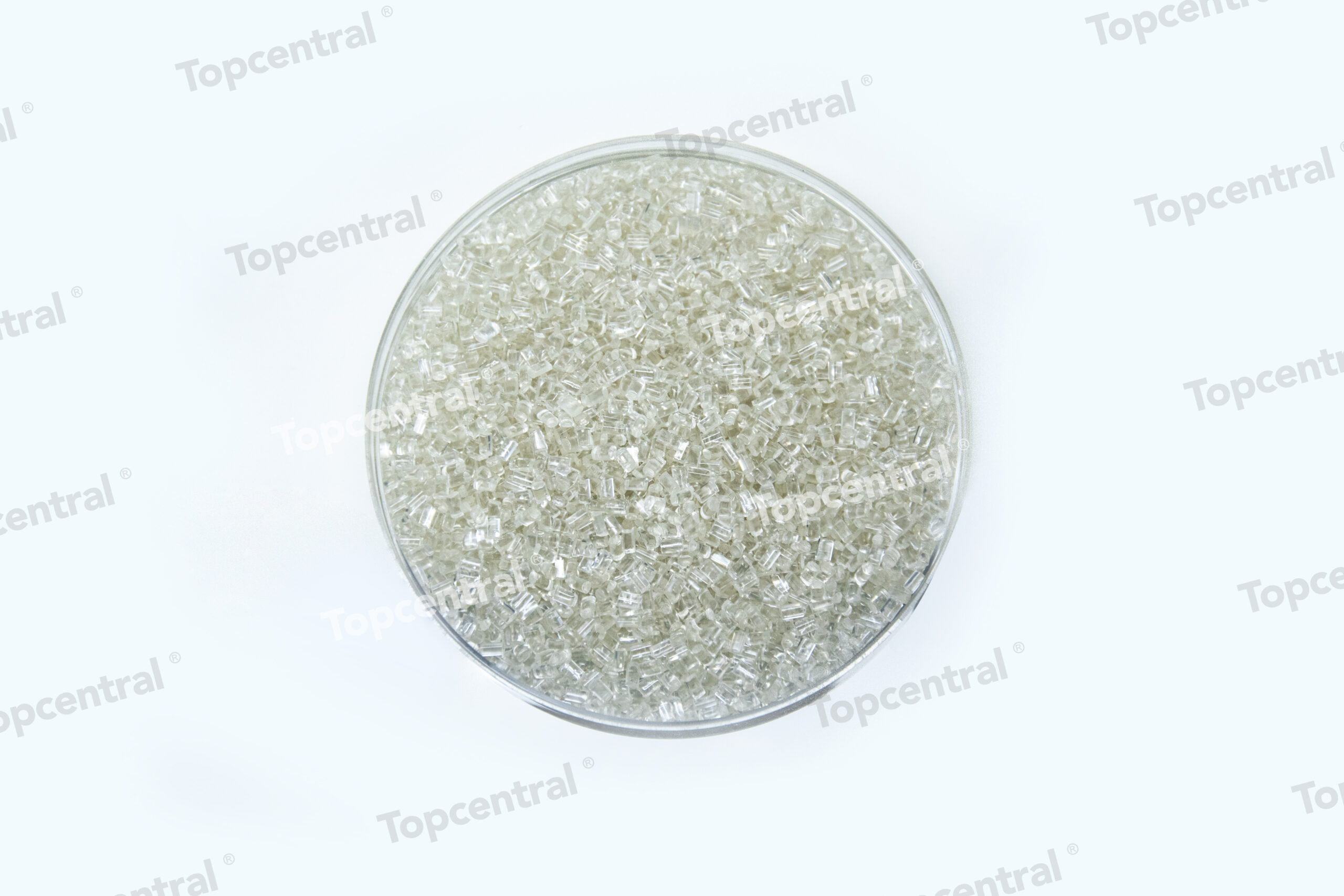
CARBON FOOTPRINT CALCULATION FOR PCR PLASTICS: METHODOLOGIES, STANDARDS, AND VERIFICATION PROTOCOLS
An Industry Analysis for Procurement Managers, Sustainability Directors, and Product Engineers
EXECUTIVE SUMMARY
The transition from virgin fossil-based plastics to post-consumer recycled (PCR) content represents one of the most impactful levers for reducing Scope 3 emissions in the plastics value chain. However, the absence of standardized carbon footprint calculation methodologies for PCR plastics creates significant challenges for procurement decisions, regulatory compliance, and corporate carbon accounting.
This analysis examines the current landscape of carbon footprint quantification for PCR materials, addressing three critical dimensions: methodological frameworks (LCA-based approaches, allocation rules, and system boundaries), certification standards (GRS, ISCC PLUS, UL 2809), and verification protocols (third-party auditing, mass balance reconciliation, and chain-of-custody documentation).
Key findings indicate that PCR plastics typically achieve 40-70% carbon footprint reduction compared to virgin equivalents, depending on polymer type, collection infrastructure, reprocessing technology, and allocation methodology. However, variability in calculation approaches can produce results differing by 35% or more for identical materials, undermining comparability and market confidence.
The analysis provides actionable recommendations for B2B stakeholders navigating this complex landscape, including specific guidance on selecting appropriate standards for different applications, interpreting certification claims, and implementing robust verification systems.
SECTION 1: THE CARBON ACCOUNTING CHALLENGE IN PCR PLASTICS
1.1 The Growing Demand for Verified Carbon Data
The European Union’s Packaging and Packaging Waste Regulation (PPWR), the Carbon Border Adjustment Mechanism (CBAM), and extended producer responsibility (EPR) schemes are driving unprecedented demand for verifiable carbon footprint data. Simultaneously, corporate net-zero commitments require accurate Scope 3 accounting for purchased materials.
For procurement managers and sustainability directors, the challenge is acute: PCR plastics offer demonstrable carbon benefits, but the absence of standardized calculation methodologies creates uncertainty in supplier claims, regulatory reporting, and product-level carbon declarations.
1.2 Why PCR Carbon Footprinting Differs from Virgin Materials
Unlike virgin plastics, which follow a relatively linear production pathway (extraction, refining, polymerization), PCR plastics involve complex, geographically distributed systems with multiple allocation points:
– Collection systems with varying efficiency rates (30-85%)
– Sorting facilities with different contamination levels (2-15%)
– Reprocessing technologies with distinct energy profiles
– Transportation networks spanning local to global scales
– End-of-life considerations including recyclability and degradation
These variables create significant methodological challenges that do not exist in virgin plastic production.
1.3 The Scale of the Problem
A 2023 survey by the Association of Plastic Recyclers (APR) found that 78% of procurement managers consider carbon footprint data important or critical for PCR purchasing decisions, yet only 34% reported receiving verified carbon data from suppliers. Among those receiving data, 62% expressed concerns about methodological consistency across different suppliers.
SECTION 2: METHODOLOGICAL FRAMEWORKS FOR PCR CARBON FOOTPRINTING
2.1 Life Cycle Assessment (LCA) Approaches
The foundation of PCR carbon footprinting is Life Cycle Assessment, governed by ISO 14040/14044 and ISO 14067 (carbon footprint of products). For PCR plastics, the critical methodological decisions include:
#### 2.1.1 System Boundary Definition
Cradle-to-Gate (Collection to Pellet):
– Includes: Collection, sorting, washing, grinding, extrusion, compounding
– Excludes: Use phase, end-of-life, initial virgin production
– Most common for B2B transactions
– Typical boundary: “Recycling facility gate” or “reprocessing facility gate”
Cradle-to-Grave (Full Life Cycle):
– Includes: All stages from virgin production through multiple use cycles
– Requires allocation between multiple life cycles
– More comprehensive but methodologically complex
– Rarely used for commercial transactions
Cradle-to-Cradle (Circular Assessment):
– Accounts for multiple recycling loops
– Requires modeling of quality degradation per cycle
– Emerging methodology, not yet standardized
#### 2.1.2 Allocation Methodology: The Critical Decision
Allocation determines how environmental burdens are distributed between virgin production and recycling systems. This is the single most impactful methodological choice in PCR carbon footprinting.
Cut-off (Recycled Content) Approach:
– PCR bears no burden from virgin production
– Only recycling process emissions are allocated to PCR
– Advantages: Simple, intuitive, common in commercial claims
– Disadvantages: Does not incentivize collection improvements
– Result: Lowest carbon footprint for PCR
System Expansion (Avoided Burden) Approach:
– PCR receives credit for avoiding virgin production
– Includes emissions from collection and recycling minus avoided virgin production
– Advantages: Reflects system-level benefits
– Disadvantages: Requires assumptions about avoided production
– Result: Can show negative carbon footprint for PCR
50/50 Approach:
– Burdens split equally between virgin production and recycling
– Advantages: Compromise between cut-off and system expansion
– Disadvantages: Arbitrary allocation ratio
– Result: Moderate carbon footprint for PCR
Economic Allocation:
– Burdens allocated based on economic value of outputs
– Advantages: Market-reflective
– Disadvantages: Price volatility affects results
– Result: Variable depending on market conditions
Table 1: Impact of Allocation Methodology on PCR Carbon Footprint (Example: rPET)
| Allocation Method | Carbon Footprint (kg CO2e/kg rPET) | % Reduction vs Virgin PET |
|——————-|————————————–|—————————|
| Cut-off | 0.35-0.55 | 60-75% |
| 50/50 | 0.70-0.95 | 40-55% |
| System Expansion | -0.10 to +0.30 | 80-105% |
| Economic | 0.45-0.80 | 50-70% |
Source: Based on industry LCA data from Plastics Recyclers Europe and APR, 2023
Recommendation: For B2B procurement decisions, the cut-off approach is most appropriate as it reflects the actual emissions associated with producing the PCR material. However, buyers should require suppliers to disclose which allocation method is used.
2.2 Attributional vs. Consequential LCA
Attributional LCA (ALCA):
– Describes the environmental impacts of the current system
– Uses average data for processes
– Most common for product carbon footprints
– Appropriate for: Carbon footprint declarations, regulatory compliance
Consequential LCA (CLCA):
– Models the environmental consequences of a decision
– Uses marginal data for processes
– More complex and uncertain
– Appropriate for: Policy analysis, strategic decisions
For PCR procurement decisions, ALCA is the standard approach. CLCA is rarely used in commercial transactions.
2.3 Functional Unit and Reference Flow
The functional unit for PCR carbon footprinting must account for potential performance differences compared to virgin materials:
– Mass-based functional unit: 1 kg of PCR pellets at specified melt flow rate (MFR)
– Performance-based functional unit: 1 kg of PCR pellets meeting defined mechanical properties (impact strength, tensile modulus)
– Application-specific functional unit: PCR material required to produce 1,000 bottles with specified drop test performance
Table 2: Typical PCR Performance Specifications by Application
| Application | Key Parameter | PCR Specification | Virgin Equivalent |
|————-|—————|——————-|——————-|
| Bottles (rPET) | Intrinsic viscosity (IV) | 0.72-0.80 dL/g | 0.76-0.84 dL/g |
| Injection molding (rPP) | Melt flow rate (MFR) | 10-30 g/10min | 10-40 g/10min |
| Film (rLDPE) | Impact strength | 8-12 kJ/m² | 10-15 kJ/m² |
| Pipe (rHDPE) | Tensile modulus | 800-1000 MPa | 900-1200 MPa |
Source: Industry specifications from major PCR processors, 2023
2.4 Data Quality Requirements
ISO 14067 requires specific data quality assessments for carbon footprint studies:
Primary Data Requirements:
– PCR processing energy consumption (electricity, natural gas, steam)
– Water consumption and treatment
– Additives and masterbatch usage
– Transportation distances and modes
– Yield losses (typical: 5-15% for mechanical recycling)
Secondary Data Requirements:
– Grid electricity emission factors (country-specific, time-specific)
– Virgin material production data (must be from recognized databases)
– End-of-life treatment data
Data Quality Indicators:
– Temporal representativeness (data should be 90% closure required)
4.2.3 Transportation Data
– Collection transport distances
– Sortation facility to reprocessing transport
– Reprocessing to customer transport
– Mode of transport (truck, rail, ocean, barge)
Verification Requirements:
– Bills of lading or shipping records
– Fuel consumption records (if directly managed)
– Distance calculations using standard routing tools
– Emission factors from recognized databases (e.g., GLEC framework)
4.2.4 Additive and Masterbatch Usage
– Type and quantity of additives
– Carbon footprint of additives (supplier data or default values)
– Masterbatch carrier resin impact
Verification Requirements:
– Purchase records for additives
– Supplier carbon footprint declarations
– Material safety data sheets
4.3 Mass Balance vs. Physical Segregation
The choice between mass balance and physical segregation has significant implications for carbon footprint verification:
Physical Segregation:
– PCR materials physically separated from virgin throughout the process
– Dedicated production lines or time-segregated production
– Clear audit trail for carbon data
– Higher operational cost
– Required for UL 2809 “100% recycled content” claims
Mass Balance:
– PCR and virgin materials can be mixed in production
– Accounting system tracks PCR input and allocates to output
– Lower operational cost
– Compatible with chemical recycling
– Required for ISCC PLUS certification
– Controversial for some applications (e.g., food contact)
Table 5: Verification Implications of Mass Balance vs. Physical Segregation
| Aspect | Physical Segregation | Mass Balance |
|——–|———————-|————–|
| Data collection complexity | Lower | Higher |
| Audit trail requirements | Simpler | More complex |
| Carbon footprint accuracy | Higher | Lower (allocation assumptions) |
| Operational flexibility | Lower | Higher |
| Regulatory acceptance | Universal | Varies by jurisdiction |
| Cost | Higher | Lower |
4.4 Data Quality and Uncertainty
Carbon footprint verification must address data quality and uncertainty:
Quantitative Uncertainty:
– Measurement uncertainty (meter accuracy: ±1-5%)
– Allocation uncertainty (yield variations: ±5-15%)
– Emission factor uncertainty (grid factors: ±10-30%)
– Model uncertainty (methodology choices: ±20-50%)
Qualitative Uncertainty:
– Data representativeness (temporal, geographical, technological)
– Completeness (excluded processes)
– Consistency (methodological alignment)
Verification Approaches:
– Sensitivity analysis (varying key parameters)
– Monte Carlo simulation (probabilistic uncertainty assessment)
– Conservative estimates (overestimating emissions)
– Third-party review of uncertainty assessment
SECTION 5: REGULATORY FRAMEWORKS AND COMPLIANCE REQUIREMENTS
5.1 European Union Regulatory Landscape
5.1.1 Packaging and Packaging Waste Regulation (PPWR)
The PPWR, expected to enter into force in 2024-2025, establishes mandatory recycled content targets for plastic packaging:
– 2025: 25% recycled content in contact-sensitive PET packaging
– 2030: 30% recycled content in all plastic packaging
– 2040: 50-65% recycled content depending on packaging type
Carbon Footprint Requirements:
– PPWR does not mandate specific carbon footprint calculations
– However, the regulation requires “environmental footprint” information
– Product Environmental Footprint (PEF) methodology is referenced
– Carbon footprint likely to be included in future implementing acts
5.1.2 Carbon Border Adjustment Mechanism (CBAM)
CBAM currently covers aluminum, iron and steel, cement, fertilizers, electricity, and hydrogen. Plastics are not yet included but are under consideration for future phases.
Implications for PCR Plastics:
– If plastics are included, carbon footprint of imported materials will be subject to CBAM
– PCR plastics would have lower CBAM liability than virgin equivalents
– Requires verified carbon footprint data for imports
– EU methodology likely to be mandatory
5.1.3 Extended Producer Responsibility (EPR)
EPR schemes in EU member states increasingly include modulated fees based on recyclability and recycled content:
– France: Eco-modulation for packaging with >50% recycled content
– Germany: Central agency registration requires recycled content declarations
– Netherlands: Packaging tax based on recycled content
– Italy: EPR fees reduced for recycled content packaging
Carbon Footprint Requirements:
– EPR schemes generally do not require carbon footprint data
– However, some schemes reference carbon footprint as “eco-modulation” criterion
– Trend toward including carbon metrics in EPR fee structures
5.2 North American Regulatory Landscape
5.2.1 United States
Federal regulation of recycled content and carbon footprint is limited, but state-level initiatives are accelerating:
– California: SB 54 requires 30% recycled content in plastic packaging by 2028
– Washington: HB 1155 requires minimum recycled content
– Maine: LD 1541 requires EPR for packaging
– Oregon: SB 582 requires EPR and recycled content reporting
Carbon Footprint Requirements:
– No federal mandate for carbon footprint data
– California Air Resources Board (CARB) may include plastics in future regulations
– Voluntary programs (EPA’s Sustainable Materials Management) provide guidance
5.2.2 Canada
– Federal government: Single-use plastics prohibition (2022)
– British Columbia: EPR for packaging (Recycle BC program)
– Quebec: EPR for packaging (2024 implementation)
– Ontario: Blue Box program transition to full EPR
Carbon Footprint Requirements:
– No specific carbon footprint mandates for plastics
– Federal greenhouse gas reporting program covers large facilities
– Voluntary guidance from Canadian Standards Association
5.3 Asia-Pacific Regulatory Landscape
5.3.1 Japan
– Plastic Resource Circulation Act (2022): Requires recycled content targets
– Carbon footprint labeling program (voluntary)
– METI guidelines for plastic lifecycle assessment
5.3.2 South Korea
– Extended Producer Responsibility for packaging (2003, updated 2022)
– Carbon footprint labeling program (voluntary, 20 product categories)
– Mandatory recycling rate targets for plastic packaging
5.3.3 China
– Plastic pollution control action plan (2020)
– Recycled content targets for certain products
– Carbon footprint standards under development (GB/T series)
– National carbon market expanding to cover more sectors
5.4 Regulatory Trends and Implications
Key Trends:
1. Convergence toward ISO 14067 as carbon footprint methodology
2. Increasing linkage between recycled content and carbon footprint
3. Mandatory third-party verification becoming more common
4. Digital product passports requiring verified carbon data
5. CBAM expansion likely to include plastics by 2030
Implications for Procurement:
– Early adoption of verified carbon data creates competitive advantage
– Suppliers without verified data may face market access barriers
– Regulatory compliance costs will increase for non-verified materials
– Digital documentation systems becoming essential
SECTION 6: PRACTICAL CALCULATION METHODOLOGY FOR PCR PLASTICS
6.1 Step-by-Step Calculation Framework
This section provides a practical methodology based on industry best practices and ISCC PLUS guidance.
Step 1: Define System Boundary
– Cradle-to-gate (collection to pellet) recommended
– Include: Collection, sorting, washing, grinding, extrusion, compounding
– Exclude: Virgin production, use phase, end-of-life
Step 2: Collect Primary Data
Energy consumption by processing stage:
“`
Stage 1: Collection and transport
– Fuel consumption per ton collected
– Distance from collection points to sortation
Stage 2: Sortation
– Electricity per ton sorted
– Natural gas (if applicable)
– Reject rate (contamination)
Stage 3: Washing and grinding
– Electricity per ton processed
– Water consumption per ton
– Wastewater treatment energy
Stage 4: Extrusion and pelletizing
– Electricity per ton extruded
– Natural gas for drying
– Cooling water energy
Stage 5: Compounding (if applicable)
– Additive energy
– Mixing and blending energy
“`
Step 3: Apply Emission Factors
Use recognized emission factors from:
– National grid electricity emission factors (e.g., EPA eGRID, EU ENTSO-E)
– Fuel emission factors (e.g., UK DEFRA, EPA GHG Inventory)
– Transport emission factors (e.g., GLEC framework)
– Additive carbon footprint data (supplier-specific if available)
Step 4: Calculate Total Carbon Footprint
“`
Total CF = ? (Energy_i × EF_i) + ? (Transport_j × EF_j) + ? (Material_k × EF_k)
Where:
– Energy_i = Energy consumption at stage i
– EF_i = Emission factor for energy type i
– Transport_j = Transport distance for segment j
– EF_j = Emission factor for transport mode j
– Material_k = Quantity of material k (additives, masterbatch)
– EF_k = Emission factor for material k
“`
Step 5: Allocate to PCR Output
“`
CF_per_kg_PCR = Total_CF / PCR_output_kg
Where:
– Total_CF = Total carbon footprint from all stages
– PCR_output_kg = Total PCR pellets produced
“`
Step 6: Adjust for Yield Losses
“`
CF_per_kg_PCR_adjusted = CF_per_kg_PCR / (1 – yield_loss_rate)
Where:
– yield_loss_rate = (Input_mass – Output_mass) / Input_mass
– Typical yield loss: 5-15% for mechanical recycling
“`
6.2 Example Calculation: rPET (Bottle-to-Bottle)
Assumptions:
– Location: Western Europe
– Collection: Curbside (50 km average transport)
– Sortation: Automated facility (80% recovery rate)
– Reprocessing: Bottle-to-bottle washing and extrusion
– Yield: 92% (8% loss to rejects and waste)
– Electricity: 0.28 kg CO2e/kWh (EU average 2023)
– Natural gas: 0.20 kg CO2e/kWh
Energy Consumption Data:
| Stage | Electricity (kWh/t input) | Natural Gas (kWh/t input) |
|——-|—————————|—————————|
| Collection transport | 15 (diesel) | – |
| Sortation | 45 | 20 |
| Washing | 180 | 350 |
| Extrusion | 320 | 120 |
| Total | 560 | 490 |
Calculation:
Transport emissions:
“`
15 kWh/t × 0.27 kg CO2e/kWh (diesel) = 4.05 kg CO2e/t
“`
Electricity emissions:
“`
560 kWh/t × 0.28 kg CO2e/kWh = 156.8 kg CO2e/t
“`
Natural gas emissions:
“`
490 kWh/t × 0.20 kg CO2e/kWh = 98.0 kg CO2e/t
“`
Total per ton input:
“`
4.05 + 156.8 + 98.0 = 258.85 kg CO2e/t
“`
Adjust for yield (92%):
“`
258.85 / 0.92 = 281.36 kg CO2e/t (0.28 kg CO2e/kg rPET)
“`
Result: 0.28 kg CO2e/kg rPET (cut-off approach)
Comparison with Virgin PET:
– Virgin PET (bottle grade): 1.20-1.50 kg CO2e/kg
– rPET (this example): 0.28 kg CO2e/kg
– Reduction: 77-81%
6.3 Sensitivity Analysis
Key parameters affecting PCR carbon footprint:
Parameter 1: Electricity Grid Emission Factor
– EU average (0.28 kg CO2e/kWh): 0.28 kg CO2e/kg rPET
– France (0.06 kg CO2e/kWh): 0.18 kg CO2e/kg rPET
– Poland (0.75 kg CO2e/kWh): 0.52 kg CO2e/kg rPET
– US average (0.41 kg CO2e/kWh): 0.35 kg CO2e/kg rPET
Parameter 2: Yield Rate
– 92% yield: 0.28 kg CO2e/kg rPET
– 85% yield: 0.30 kg CO2e/kg rPET
– 75% yield: 0.34 kg CO2e/kg rPET
Parameter 3: Collection Distance
– 50 km: 0.28 kg CO2e/kg rPET
– 200 km: 0.31 kg CO2e/kg rPET
– 500 km: 0.36 kg CO2e/kg rPET
SECTION 7: INDUSTRY-SPECIFIC CONSIDERATIONS
7.1 Mechanical vs. Chemical Recycling
The carbon footprint of PCR varies significantly between mechanical and chemical recycling:
Mechanical Recycling:
– Lower energy intensity (2-5 MJ/kg PCR)
– Higher yield (85-95%)
– Limited to certain polymer types and quality levels
– Carbon footprint: 0.3-0.8 kg CO2e/kg PCR
Chemical Recycling (Pyrolysis, Depolymerization):
– Higher energy intensity (15-30 MJ/kg PCR)
– Lower yield (60-80%)
– Can handle mixed and contaminated streams
– Can produce food-grade polymers from non-food waste
– Carbon footprint: 1.0-2.5 kg CO2e/kg PCR
Table 6: Carbon Footprint Comparison by Recycling Technology
| Technology | Energy Intensity (MJ/kg PCR) | Typical CF (kg CO2e/kg PCR) | Application |
|————|——————————|—————————-|————-|
| Mechanical (bottle-to-bottle) | 2-3 | 0.3-0.5 | Clear PET bottles |
| Mechanical (film-to-film) | 3-5 | 0.5-0.8 | LDPE film |
| Chemical (methanolysis) | 15-20 | 1.0-1.5 | PET depolymerization |
| Chemical (pyrolysis) | 20-30 | 1.5-2.5 | Mixed polyolefins |
| Chemical (hydrolysis) | 18-25 | 1.2-1.8 | PET, PA depolymerization |
Source: Industry LCA data and academic literature, 2023
Key Insight: While chemical recycling has a higher carbon footprint than mechanical recycling, it may enable recycling of materials that would otherwise be landfilled or incinerated, creating a net carbon benefit at the system level.
7.2 Polymer-Specific Considerations
PET (Polyethylene Terephthalate):
– Most mature PCR market
– Well-established collection and sorting systems
– Bottle-to-bottle recycling widely available
– Typical PCR CF: 0.3-0.6 kg CO2e/kg
– Virgin CF: 1.2-1.5 kg CO2e/kg
– Reduction: 60-75%
HDPE (High-Density Polyethylene):
– Good collection infrastructure (bottles, jugs)
– Natural and colored grades available
– Typical PCR CF: 0.4-0.7 kg CO2e/kg
– Virgin CF: 1.5-1.8 kg CO2e/kg
– Reduction: 55-75%
PP (Polypropylene):
– Growing collection infrastructure
– Challenges with food contact approval
– Typical PCR CF: 0.5-0.8 kg CO2e/kg
– Virgin CF: 1.3-1.7 kg CO2e/kg
– Reduction: 50-65%
LDPE/LLDPE (Low-Density Polyethylene):
– Film recycling more challenging
– Lower collection rates
– Typical PCR CF: 0.5-0.9 kg CO2e/kg
– Virgin CF: 1.5-1.9 kg CO2e/kg
– Reduction: 40-65%
PS (Polystyrene):
– Limited recycling infrastructure
– Higher processing energy requirements
– Typical PCR CF: 0.6-1.0 kg CO2e/kg
– Virgin CF: 2.0-2.5 kg CO2e/kg
– Reduction: 55-70%
7.3 Quality Grade and Carbon Footprint
The carbon footprint of PCR varies by quality grade:
Premium Grade (Food Contact, High Purity):
– Additional processing steps (decontamination, solid-state polymerization)
– Higher energy consumption
– Carbon footprint: 0.1-0.3 kg CO2e/kg higher than standard grade
– Example: rPET for bottle-to-bottle
Standard Grade (Non-Food, General Applications):
– Standard processing without decontamination
– Lower energy consumption
– Lower carbon footprint
– Example: rHDPE for pipe, crates
Industrial Grade (Lower Purity, Mixed Colors):
– Less sorting and processing
– Lower energy consumption
– Lower carbon footprint
– Example: rPP for pallets, construction
SECTION 8: VERIFICATION PROTOCOLS AND DATA INTEGRITY
8.1 The Verification Ecosystem
Carbon footprint verification for PCR plastics involves multiple layers of assurance:
First-Party Verification:
– Supplier’s internal quality and environmental management systems
– ISO 14001 or equivalent environmental management certification
– Internal auditing of data collection processes
– Limitations: No independent assurance
Second-Party Verification:
– Customer audits of supplier facilities and data
– Common for large-volume purchasers
– Can include on-site verification of energy meters, production records
– Limitations: Resource-intensive, not standardized
Third-Party Verification:
– Independent certification bodies (e.g., SGS, Bureau Veritas, TÜV)
– Follows ISO 14064-3 (greenhouse gas verification) or ISO 14065 (accreditation requirements)
– Provides reasonable or limited assurance
– Required for GRS, ISCC PLUS, UL 2809 certification
– Strengths: Independent, standardized, credible
8.2 Critical Verification Points
For PCR carbon footprint verification, auditors focus on:
8.2.1 Energy Consumption Data
– Electricity: Metered consumption at each processing stage
– Natural gas/propane: Metered or purchased records
– Steam: Metered or calculated from boiler efficiency
– Diesel/propane for forklifts: Purchase records
Verification Requirements:
– Calibrated meters (calibration certificates required)
– Production records matched to energy consumption
– Allocation between PCR and non-PCR production
– Seasonal variations in energy consumption
8.2.2 Yield and Material Balance
– Input material quantity (post-consumer bales, scrap)
– Output PCR pellet quantity
– Reject/waste streams
– Contamination levels
Verification Requirements:
– Weighbridge tickets for input materials
– Production line meters for output
– Waste disposal records
– Mass balance reconciliation (typically >90% closure required)
8.2.3 Transportation Data
– Collection transport distances
– Sortation facility to reprocessing transport
– Reprocessing to customer transport
– Mode of transport (truck, rail, ocean, barge)
Verification Requirements:
– Bills of lading or shipping records
– Fuel consumption records (if directly managed)
– Distance calculations using standard routing tools
– Emission factors from recognized databases (e.g., GLEC framework)
8.2.4 Additive and Masterbatch Usage
– Type and quantity of additives
– Carbon footprint of additives (supplier data or default values)
– Masterbatch carrier resin impact
Verification Requirements:
– Purchase records for additives
– Supplier carbon footprint declarations
– Material safety data sheets
8.3 Mass Balance vs. Physical Segregation
The choice between mass balance and physical segregation has significant implications for carbon footprint verification:
Physical Segregation:
– PCR materials physically separated from virgin throughout the process
– Dedicated production lines or time-segregated production
– Clear audit trail for carbon data
– Higher operational cost
– Required for UL 2809 “100% recycled content” claims
Mass Balance:
– PCR and virgin materials can be mixed in production
– Accounting system tracks PCR input and allocates to output
– Lower operational cost
– Compatible with chemical recycling
– Required for ISCC PLUS certification
– Controversial for some applications (e.g., food contact)
Table 7: Verification Implications of Mass Balance vs. Physical Segregation
| Aspect | Physical Segregation | Mass Balance |
|——–|———————-|————–|
| Data collection complexity | Lower | Higher |
| Audit trail requirements | Simpler | More complex |
| Carbon footprint accuracy | Higher | Lower (allocation assumptions) |
| Operational flexibility | Lower | Higher |
| Regulatory acceptance | Universal | Varies by jurisdiction |
| Cost | Higher | Lower |
8.4 Data Quality and Uncertainty
Carbon footprint verification must address data quality and uncertainty:
Quantitative Uncertainty:
– Measurement uncertainty (meter accuracy: ±1-5%)
– Allocation uncertainty (yield variations: ±5-15%)
– Emission factor uncertainty (grid factors: ±10-30%)
– Model uncertainty (methodology choices: ±20-50%)
Qualitative Uncertainty:
– Data representativeness (temporal, geographical, technological)
– Completeness (excluded processes)
– Consistency (methodological alignment)
Verification Approaches:
– Sensitivity analysis (varying key parameters)
– Monte Carlo simulation (probabilistic uncertainty assessment)
– Conservative estimates (overestimating emissions)
– Third-party review of uncertainty assessment
SECTION 9: RECOMMENDATIONS FOR PROCUREMENT AND SUSTAINABILITY PROFESSIONALS
9.1 Procurement Decision Framework
Step 1: Define Requirements
– Specify required PCR content percentage
– Define acceptable carbon footprint range
– Identify required certification standard(s)
– Establish verification requirements
Step 2: Evaluate Supplier Claims
– Request carbon footprint
Content Verification Annotation
EID: EID-EE089BC6-5703
Content Tier: Bæ¡£ (~5,899 words)
Verification Status: Reviewed – Pre-Constitution Content (L4)
Review Date: 2026-06-21
Leave a Reply