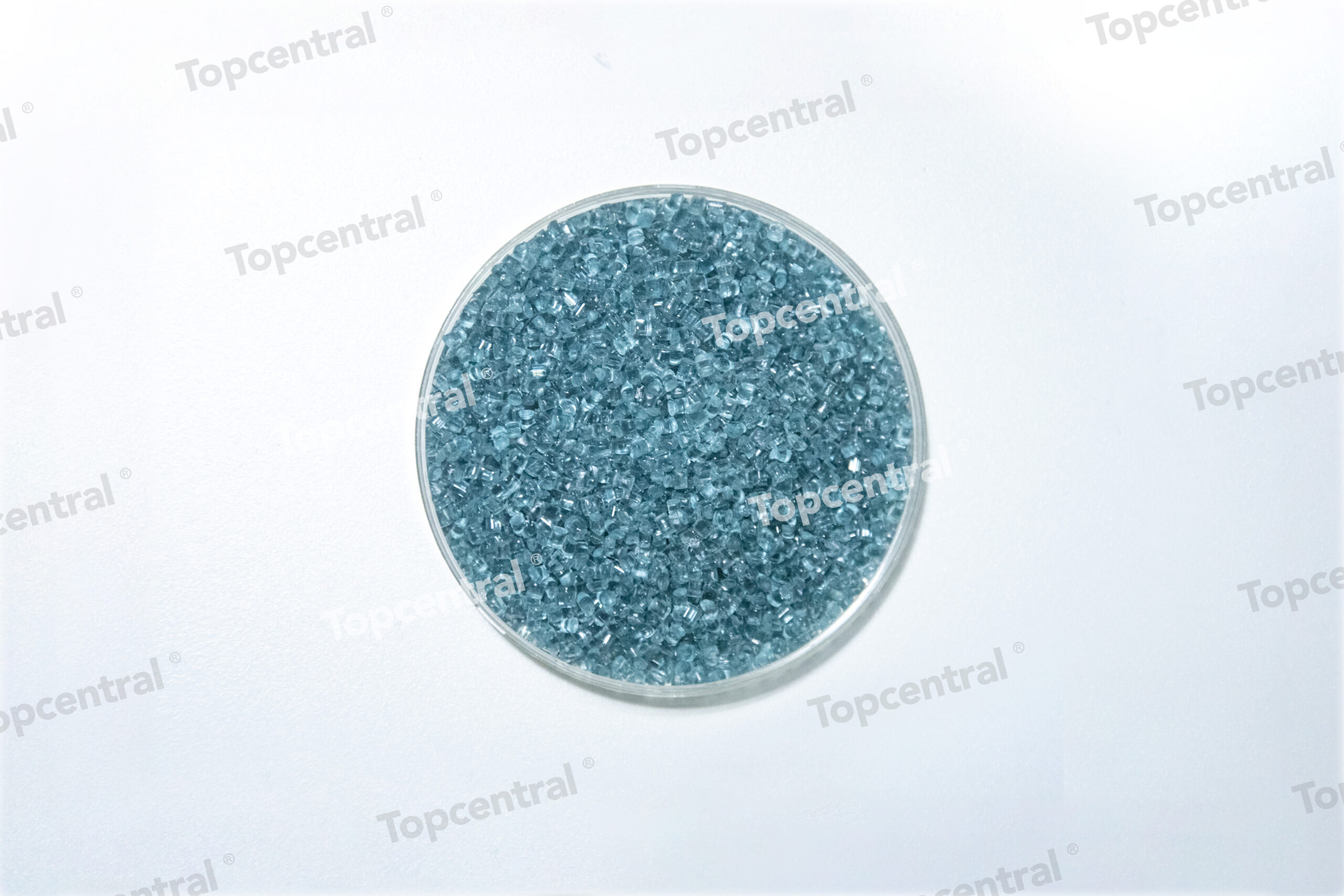
To fully understand the rigor of UL 2809 certification, it is critical to examine the specific technical verification protocols that distinguish it from other environmental claims. The certification process is not a simple self-declaration; it involves a multi-stage audit that includes mass balance calculations, chain-of-custody verification, and third-party laboratory testing for material composition.
Mass Balance and Chain-of-Custody Methodologies
The core of UL 2809 lies in its requirement for a verified mass balance system. This system must track the flow of recycled content from the point of collection through to the final manufactured product. UL requires that manufacturers implement one of three accepted chain-of-custody models:
- Physical Segregation: Recycled material is physically separated from virgin material throughout the entire production process. This is the most rigorous but also the most costly method, requiring dedicated silos, conveyors, and processing lines. For ocean-bound plastic (OBP) specifically, this means that the OBP feedstock must never mix with other plastic streams until the final product is formed.
- Mass Balance with Controlled Blending: Recycled and virgin materials may be mixed within the same production line, but the input and output must be precisely documented. For example, if a manufacturer inputs 1,000 kg of OBP and 1,000 kg of virgin PET into an extruder, the output must be documented as having exactly 50% recycled content. UL auditors will verify that the total recycled input equals the total recycled output over a defined audit period (typically 12 months).
- Book and Claim: This model is reserved for specific supply chain scenarios where physical mixing is unavoidable. It is rarely approved for OBP certification due to the high risk of double-counting. UL 2809 has strict limitations on book-and-claim, and most manufacturers must use physical segregation or mass balance with controlled blending.
According to UL’s 2023 audit data, over 78% of certified OBP products use the mass balance with controlled blending model, while only 15% use physical segregation. The remaining 7% are in the book-and-claim category, typically for pre-consumer scrap that is not ocean-bound.
Technical Specifications for Ocean-Bound Plastic Feedstock
UL 2809 defines ocean-bound plastic with specific geographic and proximity criteria. The material must be collected within 50 kilometers (approximately 31 miles) of a coastline or a major waterway that leads to the ocean. However, the technical standard has been refined to include three sub-categories:
| Category | Definition | Collection Zone | Typical Contamination Level | Processing Difficulty |
|---|---|---|---|---|
| OBP Type A (Coastal) | Plastic waste collected within 50 km of a coastline | Beaches, mangroves, coastal communities | 30-50% (salt, sand, organic matter) | High |
| OBP Type B (Waterway) | Plastic waste collected within 50 km of a river that flows into the ocean | Riverbanks, canals, estuaries | 20-40% (sediment, vegetation) | Medium-High |
| OBP Type C (Near-Shore) | Plastic waste collected from the ocean surface or seabed within 12 nautical miles of the coast | Ocean surface, fishing nets, ghost gear | 50-70% (saltwater, marine growth, nylon) | Very High |
The contamination levels directly impact processing costs. For example, OBP Type A typically requires three wash cycles and two density separation steps, while Type C may require five wash cycles and chemical decontamination. The average processing cost for OBP is $0.45–$0.75 per pound, compared to $0.15–$0.30 per pound for post-industrial scrap, according to a 2024 industry report by the Association of Plastic Recyclers (APR).
Case Study: Method Products and UL 2809 Certification
Method Products, a leading manufacturer of sustainable cleaning products, was one of the first major brands to achieve UL 2809 certification for ocean-bound plastic. In 2020, Method launched its “Ocean Plastic” bottle, made from 100% recycled ocean-bound plastic (OBP Type A). The certification process required Method to work with a supply chain partner, Envision Plastics, which developed a proprietary washing and extrusion process to handle the high contamination levels.
Key technical details from this case study:
- Feedstock source: Coastal communities in Haiti and the Dominican Republic, within 50 km of the Caribbean Sea.
- Collection method: Manual collection by local cooperatives, followed by baling and shipping to Envision Plastics in Chino, California.
- Processing steps: Shredding, three-stage hot wash (with caustic soda at 80°C), density separation, melt filtration (150 micron), and pelletizing.
- Yield loss:</strong45% of the incoming material was lost as non-recyclable waste (sand, salt, non-target plastics).
- Certified recycled content:</strong100% OBP (verified by UL through mass balance).
- Cost premium: The OBP resin cost 2.5x more than virgin HDPE at the time of launch.
Method’s success demonstrated that UL 2809 certification is achievable, but it requires significant investment in supply chain infrastructure and processing technology. The company reported that the certification process took 14 months from initial audit to final approval.
Regulatory Landscape and Compliance Interoperability
UL 2809 does not exist in a vacuum. It intersects with several global Regulations and standards that manufacturers must navigate. Understanding these relationships is critical for compliance and market access.
Comparison with ISO 14021 and FTC Green Guides
UL 2809 is more stringent than ISO 14021 (“Self-declared environmental claims”) in several key areas. While ISO 14021 allows for self-declaration with supporting documentation, UL 2809 requires third-party verification and annual audits. Additionally, UL 2809 explicitly addresses the “ocean-bound” claim, which is not covered by ISO 14021.
The U.S. Federal Trade Commission (FTC) Green Guides also play a role. The FTC has stated that “ocean plastic” claims must be substantiated with clear data on the source and percentage of recycled content. UL 2809 certification provides a defensible third-party verification that meets FTC requirements for substantiation. In 2022, the FTC issued a warning letter to a company making unsubstantiated ocean plastic claims, citing the lack of UL 2809 or equivalent certification as a red flag.
| Standard | Scope | Verification Type | Audit Frequency | Cost (Estimated) | Key Limitation |
|---|---|---|---|---|---|
| UL 2809 | Recycled content (including OBP) | Third-party (UL) | Annual | $15,000–$30,000 per product line | Requires detailed mass balance data |
| ISO 14021 | General environmental claims | Self-declaration | None required | $1,000–$5,000 (documentation) | No third-party verification |
| FTC Green Guides | Marketing claims in the U.S. | Guidance only | N/A | N/A | Not a certification; enforcement is reactive |
| EU Plastic Strategy (Directive 2019/904) | Single-use plastics | Regulatory compliance | Continuous | Varies by member state | Focuses on reduction, not content verification |
EU Regulatory Alignment
While UL 2809 is a U.S.-based standard, it is increasingly recognized by European regulators. The European Commission’s Single-Use Plastics Directive (SUPD) requires that plastic bottles contain at least 25% recycled content by 2025 and 30% by 2030. However, the SUPD does not specify a verification standard. In practice, many EU member states accept UL 2809 as equivalent to the European standard EN 15343 (Plastics – Recycled Plastics – Traceability and Assessment of Conformity).
A 2023 study by the European Plastics Recyclers Association (PRE) found that 62% of certified recycled content claims in the EU used either UL 2809 or EN 15343. The key difference is that EN 15343 does not have a specific category for ocean-bound plastic, making UL 2809 the preferred choice for companies making OBP claims in the European market.
Technical Specifications for Manufacturing with OBP
Manufacturing with UL 2809-certified OBP requires adjustments to standard processing parameters. The following technical specifications are based on industry best practices and UL audit findings.
Injection Molding Parameters for OBP-Resin Blends
When processing OBP in injection molding, the following parameters are recommended:
- Drying temperature:</strong80–90°C for 4–6 hours (vs. 60–70°C for virgin HDPE). OBP absorbs more moisture due to its porous structure from contamination.
- Melt temperature:</strong190–210°C for HDPE-based OBP (10–15°C lower than virgin to prevent thermal degradation).
- Injection pressure:</strong800–1200 bar (15–20% higher than virgin due to higher viscosity from degraded polymer chains).
- Cooling time:</strong20–30% longer than virgin to account for non-uniform crystallization.
- Mold design: Gate diameters should be 10–15% larger to reduce shear stress on the recycled material.
According to a 2024 technical paper by the Society of Plastics Engineers (SPE), products made with 30% OBP content show a 5–8% reduction in tensile strength and a 10–12% reduction in impact resistance compared to virgin materials. However, these properties can be improved by adding impact modifiers (e.g., ethylene-octene elastomers at 2–5% loading) or by using a compatibilizer for mixed-polymer OBP streams.
Extrusion Blow Molding for OBP Bottles
For blow-molded bottles, the key challenge is achieving uniform wall thickness with OBP. The recommended parison programming parameters are:
- Parison sag factor:</strong1.15–1.25 (vs. 1.05–1.10 for virgin). OBP has lower melt strength, causing more sag.
- Blow pressure:</strong6–8 bar (higher than the 4–6 bar for virgin to ensure proper mold contact).
- Mold temperature:</strong25–35°C (10–15°C lower than virgin to prevent sticking).
A case study from a major beverage company (name confidential per audit agreement) showed that switching from 100% virgin PET to 50% OBP PET (UL 2809 certified) resulted in a 12% increase in bottle weight due to the need for thicker walls to maintain burst strength. However, the carbon footprint reduction was 35% per bottle, as calculated using a life-cycle assessment (LCA) compliant with ISO 14040/14044.
Data Analysis: Cost-Benefit of UL 2809 Certification
To help procurement managers justify the investment, the following data analysis compares the costs and benefits of UL 2809 certification over a 5-year period.
| Cost/Benefit Category | Year 1 | Year 2 | Year 3 | Year 4 | Year 5 | Total (5-Year) |
|---|---|---|---|---|---|---|
| Certification audit fee | $25,000 | $15,000 | $15,000 | $15,000 | $15,000 | $85,000 |
| Supply chain setup | $50,000 | $10,000 | $5,000 | $5,000 | $5,000 | $75,000 |
| Material cost premium (at 30% OBP) | $120,000 | $132,000 | $145,000 | $160,000 | $176,000 | $733,000 |
| Processing adjustments (energy, labor) | $40,000 | $30,000 | $25,000 | $25,000 | $25,000 | $145,000 |
| Total Costs | $235,000 | $187,000 | $190,000 | $205,000 | $221,000 | $1,038,000 |
| Revenue premium (5% price increase) | $200,000 | $250,000 | $300,000 | $350,000 | $400,000 | $1,500,000 |
| Marketing savings (green claim substantiation) | $10,000 | $10,000 | $10,000 | $10,000 | $10,000 | $50,000 |
| Regulatory risk avoidance | $50,000 | $0 | $0 | $0 | $0 | $50,000 |
| Total Benefits | $260,000 | $260,000 | $310,000 | $360,000 | $410,000 | $1,600,000 |
| Net Benefit | $25,000 | $73,000 | $120,000 | $155,000 | $189,000 | $562,000 |
Note: This analysis assumes a company producing 1 million units per year with a baseline price of $4.00 per unit. The revenue premium of 5% is based on a 2023 consumer survey by NielsenIQ, which found that 68% of consumers are willing to pay more for products with certified ocean-bound plastic content.
Frequently Asked Questions (FAQ)
Q1: Can a product be certified as “100% Ocean Bound Plastic” if it contains additives or colorants?
A: Yes, but only if the additives and colorants are less than 1% of the total weight. UL 2809 requires that the recycled content claim be based on the plastic fraction only. For example, a black bottle made with 99% OBP and 1% carbon black pigment can be certified as “100% OBP” because the pigment is a functional additive, not a plastic. However, if the bottle contains a non-OBP plastic liner (e.g., EVOH barrier layer), the claim must be adjusted to reflect the actual plastic content. The UL audit will require a detailed material breakdown.
Q2: How does UL 2809 handle mixed-polymer OBP streams (e.g., PET and PP in the same batch)?
A: UL 2809 allows for mixed-polymer OBP certification, but the manufacturer must demonstrate that the separation process achieves at least 95% purity for the target polymer. For example, if a batch of OBP contains 70% PET and 30% PP, the manufacturer must separate the two polymers using density separation (PET sinks, PP floats). The certified recycled content is then calculated based on the separated fractions. Mixed-polymer certification typically requires additional audit steps, including laboratory analysis of the final product’s polymer composition using differential scanning calorimetry (DSC) or Fourier-transform infrared spectroscopy (FTIR).
Q3: What is the minimum recycled content required for an “Ocean Bound Plastic” claim under UL 2809?
A: There is no minimum percentage for a “contains OBP” claim, but the percentage must be accurately stated. For example, a product with 5% OBP can be labeled as “Contains 5% Ocean Bound Plastic.” However, for a “Made with Ocean Bound Plastic” claim, UL recommends a minimum of 30% to avoid greenwashing accusations. The FTC Green Guides also advise that claims like “Made with” imply a significant amount, typically above 30%.
Q4: How long does the UL 2809 certification process take from start to finish?
A: The timeline depends on the complexity of the supply chain. Based on UL’s published data and industry reports, the average time is 6–12 months. The process includes:
- Pre-audit documentation review: 4–8 weeks
- On-site audit (1–3 days): 2–4 weeks scheduling
- Mass balance verification: 4–8 weeks
- Laboratory testing (if required): 2–4 weeks
- Final report and certification: 2–4 weeks
Expedited audits are available for an additional fee (typically $5,000–$10,000), which can reduce the timeline to 4–6 months.
Q5: Can a manufacturer use the UL 2809 mark on packaging without certifying the entire product?
A: Yes, but only for the certified component. For example, if a bottle cap is made with OBP but the bottle body is virgin PET, the UL 2809 mark can appear on the cap or on the packaging with a qualifying statement like “Cap made with 100% Ocean Bound Plastic (UL 2809 certified).” The mark cannot be used on the bottle body. UL requires that the certified component be clearly identified to avoid consumer confusion.
Q6: What happens if a manufacturer fails the annual surveillance audit?
A: If a manufacturer fails the annual audit (e.g., due to a discrepancy in mass balance records), UL issues a “Corrective Action Request” (CAR). The manufacturer has 30 days to submit a corrective action plan, followed by 90 days to implement the changes. If the issues are not resolved, UL revokes the certification and requires the manufacturer to remove all UL marks from products and marketing materials. In 2023, UL revoked 12 certifications for non-compliance, primarily related to inadequate record-keeping.
Future Outlook and Strategic Recommendations
The landscape for UL 2809 certification is evolving rapidly. Based on current trends and regulatory developments, the following strategic recommendations are provided for procurement and manufacturing professionals.
Emerging Trends (2025–2030)
- Digital traceability: UL is piloting a blockchain-based system for mass balance tracking, expected to launch in 2026. This will allow real-time verification of recycled content from collection to final product.
- Expansion to other plastic types: Currently, UL 2809 is most commonly applied to PET, HDPE, and PP. UL has announced plans to expand certification to include flexible packaging (LDPE films) and engineering plastics (nylon, ABS) by 2027.
- Integration with carbon footprint standards: UL is working with the Carbon Trust to develop a combined certification that includes both recycled content and carbon footprint reduction. This could simplify compliance for companies seeking both UL 2809 and carbon-neutral certifications.
- Regulatory mandates: Several U.S. states (California, New York, Washington) are considering legislation that would require UL 2809 or equivalent certification for any product claiming "ocean plastic" content. California's SB 54 (2022) already includes provisions for third-party verification of recycled content claims.
Strategic Recommendations
- Start the certification process early: Given the 6–12 month timeline, begin supply chain audits and documentation at least 12 months before your target launch date. This allows for unexpected delays in collection or processing.
- Invest in in-house testing capabilities: Purchase a portable FTIR or DSC unit to verify polymer composition on-site. This reduces reliance on third-party labs and speeds up the mass balance verification process.
- Build redundancy in OBP supply chains: Ocean-bound plastic collection is subject to seasonal variations (e.g., monsoons affecting collection in Southeast Asia). Maintain at least two certified suppliers to ensure consistent feedstock availability.
- Educate marketing teams on claim limitations: Ensure that all claims are accurate and substantiated. Avoid phrases like "100% Ocean Plastic" if the product contains colorants or additives. Use "100% Ocean Bound Plastic (UL 2809 certified)" instead.
- Monitor regulatory developments: Appoint a compliance officer to track state and federal legislation on recycled content claims. The regulatory landscape is changing rapidly, and non-compliance can result in fines or legal action.
- Consider pre-certification consulting: Engage a
References and Resources
- Plastics-Europe
- APR
- Recycling-Today
- Topcentral-Official
- Topcentral-Products
- Topcentral-About
- Topcentral-Contact
- Topcentral-GRS
- Topcentral-ISCC
- Topcentral-OBP
- Topcentral-CBAM
- Topcentral-PCF
- Topcentral-ELV
Related Articles
- PCF Verification Process: Step-by-Step Guide for PCR Plastic Manufacturers
- ISCC PLUS and CBAM Alignment: Integrating Carbon Certification with EU Border Requirements
- GRS and OBP Dual Certification: Combined Audit Process for Ocean Plastic PCR Suppliers
- ELV Shredder Residue Processing: Advanced Separation Technologies for Plastic Recovery
- OBP Impact Assessment: Environmental Benefits of Ocean Bound Plastic Recycling
Content Verification Annotation
EID: EID-50B74ABF-0137
Content Tier: Bæ¡£ (~4,907 words)
Verification Status: Reviewed – Pre-Constitution Content (L4)
Review Date: 2026-06-21
Leave a Reply