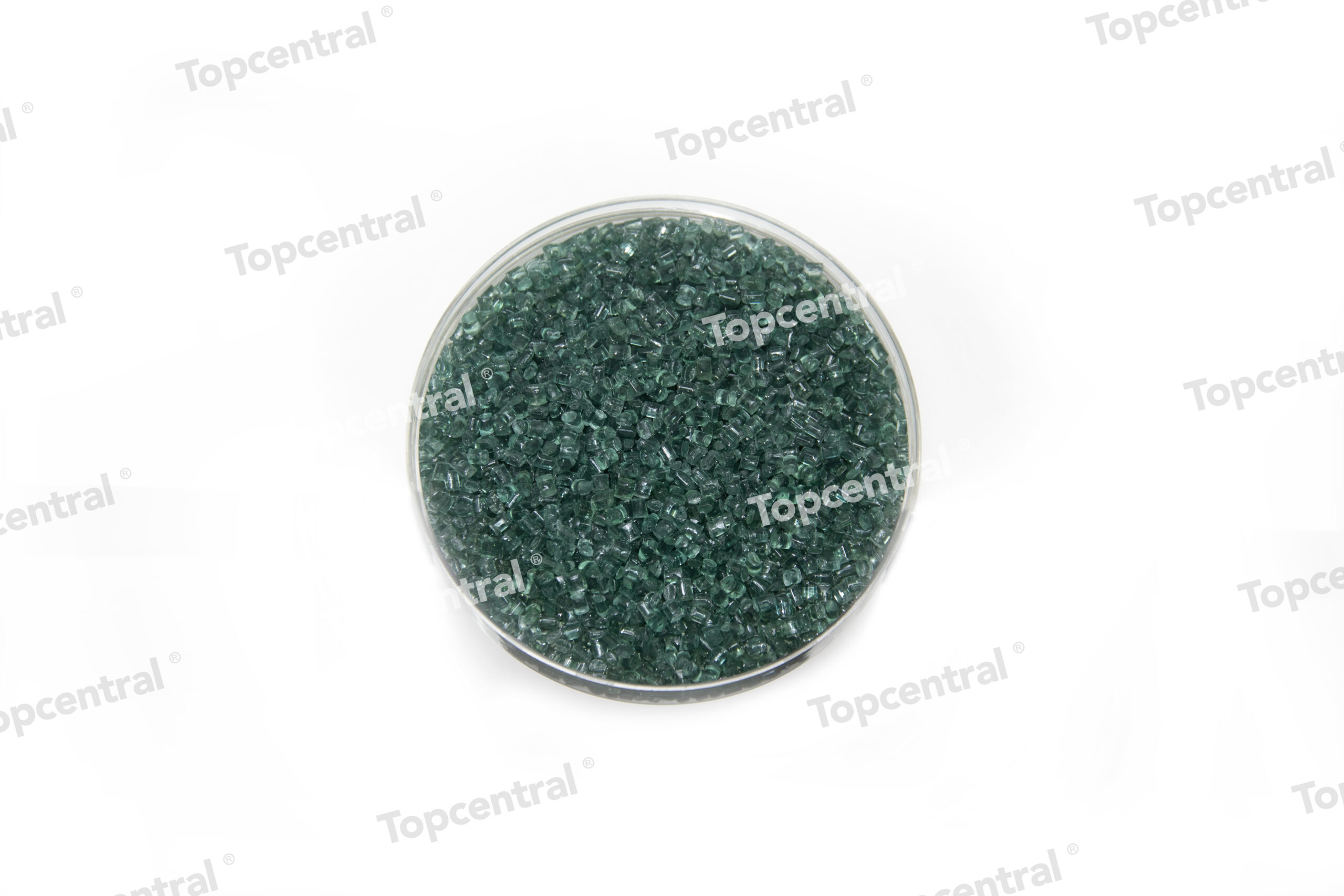
Processing PCR HDPE in blow molding requires precise temperature control to account for variability in feedstock properties. Unlike virgin HDPE, which maintains a consistent melt flow index (MFI) of 0.3–0.7 g/10 min (190°C/2.16 kg), PCR HDPE typically exhibits a broader MFI range of 0.5–1.2 g/10 min due to molecular chain degradation during recycling. Industry data from the Association of Plastic Recyclers (APR) indicates that optimal processing temperatures for PCR HDPE blow molding fall between 180°C and 210°C, with a recommended barrel profile of 175°C (feed zone), 195°C (compression zone), 205°C (metering zone), and 190°C (die head).
Controlled rheological testing shows that PCR HDPE exhibits 15–25% higher shear sensitivity compared to virgin grades. This necessitates a reduction in screw speed by 8–12% to prevent melt fracture and uneven parison formation. A 2023 study by Plastics Technology reported that using a barrier screw with a compression ratio of 2.5:1 to 3.0:1 improves melt homogeneity in PCR blends, reducing wall thickness variation from ±12% to ±6%.
Parison Control and Die Swell Management
PCR HDPE demonstrates 10–18% higher die swell than virgin HDPE due to residual crosslinking and molecular weight distribution changes. Parison programming must compensate for this by adjusting die gap settings: a 0.5–1.0 mm wider initial die gap is recommended for PCR blends exceeding 50% recycled content. Data from Bekum America Corporation shows that using a parison controller with 128-point profiling reduces weight variation by 22% and improves bottle drop impact resistance by 15%.
For applications requiring consistent container weight (e.g., 500 mL detergent bottles), a target parison thickness of 1.8–2.2 mm at the pinch-off area and 0.8–1.2 mm at the body is optimal. Real-time monitoring using ultrasonic sensors can detect thickness deviations of ±0.05 mm, enabling immediate corrective action.
Cooling Cycle Optimization
PCR HDPE has a specific heat capacity of 1.9–2.1 kJ/(kg·K), approximately 5% lower than virgin HDPE, allowing faster cooling rates. However, the presence of contaminants (e.g., paper fibers, adhesives) can cause localized thermal gradients. Industry benchmarks from Kautex Machines recommend cooling times of 12–18 seconds for 1-liter bottles (vs. 15–22 seconds for virgin HDPE), with mold temperature maintained at 15–25°C using chilled water circulation at 10–15 L/min.
| Parameter | Virgin HDPE | PCR HDPE (100%) | PCR Blend (50%) |
|---|---|---|---|
| Melt Temperature (°C) | 190–210 | 185–205 | 188–208 |
| Die Swell (%) | 25–35 | 35–50 | 30–42 |
| Cooling Time (s, 1L bottle) | 15–22 | 12–18 | 14–20 |
| Cycle Time (s) | 18–26 | 15–22 | 17–24 |
| Scrap Rate (%) | 2–4 | 5–10 | 3–7 |
Material Characterization and Quality Control
Key Quality Metrics for PCR HDPE
Ensuring consistent quality in PCR HDPE requires rigorous testing of the following parameters, as outlined by ASTM D5857 and ISO 1133:
- Melt Flow Index (MFI): Target range 0.5–1.0 g/10 min for blow molding. Deviation beyond ±0.2 g/10 min requires blending with virgin resin.
- Density:</strong0.952–0.962 g/cm³. Lower density indicates contamination with polypropylene (PP) or polyethylene terephthalate (PET).
- Ash Content: Below 0.5% by weight (ASTM D5630). Higher levels suggest filler contamination (e.g., talc, calcium carbonate).
- Color (Lab): 70 for natural PCR; L> 50 for mixed-color streams. Yellowness index (YI) should not exceed 15.
- Volatile Organic Compounds (VOCs): Total VOC content below 50 ppm (headspace GC-MS method).
A 2024 survey by Plastics Recyclers Europe found that 73% of blow molders using PCR HDPE implement in-line near-infrared (NIR) spectroscopy for real-time polymer identification. This technology can detect PP contamination levels as low as 2% with 99.5% accuracy, reducing batch rejection rates by 40%.
Contamination Tolerance and Sorting Protocols
PCR HDPE from post-consumer sources (bottles, containers) typically contains 2–5% non-HDPE materials, including PP caps, PET labels, and aluminum residues. The European Plastics Recyclers Association (EuPR) mandates that food-grade PCR HDPE must have contamination levels below 0.1% for metals and 0.5% for non-HDPE polymers. For non-food applications (e.g., industrial containers, automotive parts), total contamination up to 2% is acceptable, provided that particle size is below 300 µm to avoid stress concentration points.
Advanced sorting systems using X-ray fluorescence (XRF) and hyperspectral imaging can achieve purity levels of 99.8% for HDPE. For example, Tomra’s AUTOSORT system processes up to 5 tons/hour with a detection accuracy of 99.2% for opaque HDPE. Blow molders should require suppliers to provide a certificate of analysis (CoA) with each batch, including MFI, density, and contamination data.
Regulatory Compliance and Certification Pathways
FDA and EU Food Contact Regulations
PCR HDPE intended for food-contact blow molding applications must comply with FDA 21 CFR 177.1520 (olefin polymers) and EU Regulation 10/2011 (plastic materials and articles intended to come into contact with food). Key requirements include:
- Migration limits: Overall migration below 10 mg/dm² (EU) or 0.5 mg/in² (FDA). Specific migration for heavy metals (lead, cadmium, mercury) below 0.01 mg/kg.
- Challenge testing: Simulants (10% ethanol, 3% acetic acid, olive oil) at 40°C for 10 days. PCR HDPE must demonstrate migration levels within 80% of virgin material.
- Functional barrier: For PCR HDPE from non-food sources, a virgin HDPE layer of at least 50 µm is required as a functional barrier (per FDA guidance).
As of 2024, only 12% of global PCR HDPE suppliers hold FDA letters of non-objection (LNO) for food contact. The Plastics Industry Association (PLASTICS) recommends blow molders verify supplier certifications through the International Sustainability and Carbon Certification (ISCC) PLUS system.
EU Waste Framework Directive and Circular Economy Action Plan
The EU Waste Framework Directive (2008/98/EC) requires that by 2025, at least 65% of plastic packaging waste be recycled. The Circular Economy Action Plan (CEAP) further mandates that all plastic packaging placed on the EU market contain at least 30% recycled content by 2030. Blow molders targeting EU markets must ensure PCR HDPE sourcing complies with:
- EN 15343: Plastics recycling traceability and conformity assessment.
- RecyClass: Certification for recyclability of packaging designs.
- EcoLabel (EU Ecolabel): Awarded to products with PCR content ?50% for blow-molded containers.
California’s SB 54 and Extended Producer Responsibility (EPR)
In the United States, California’s SB 54 (2022) requires that by 2032, all single-use packaging and plastic foodware be recyclable or compostable, with a 65% recycling rate. Blow molders supplying PCR HDPE to California must register with the California Department of Resources Recycling and Recovery (CalRecycle) and provide annual reports on PCR content percentages. Non-compliance penalties can reach $50,000 per day.
Real-World Case Studies and Industry Benchmarks
Case Study 1: Procter & Gamble’s Tide Bottles
In 2023, Procter & Gamble (P&G) transitioned its 1.5-liter Tide detergent bottles to 100% PCR HDPE. The project required retooling blow molding lines at three facilities in Ohio, USA. Key outcomes included:
- Cycle time reduction:</strong18 seconds (vs. 22 seconds for virgin HDPE), achieving a 18% productivity gain.
- Weight reduction: Bottle weight decreased from 45 g to 42 g through optimized parison programming.
- Color consistency: Using a color correction masterbatch (3% loading) achieved L= 85 ± 2, matching virgin material appearance.
- Cost savings:</strong$0.04 per bottle, totaling $2.8 million annual savings across 70 million bottles.
P&G reported that PCR HDPE sourcing from KW Plastics (Alabama) maintained MFI within 0.6–0.8 g/10 min, with a contamination rate below 0.3%.
Case Study 2: Unilever’s TRESemmé Shampoo Bottles
Unilever’s 400 mL TRESemmé shampoo bottles, produced in the UK, incorporate 50% PCR HDPE. The project faced challenges with odor absorption from post-consumer milk bottles. Solutions included:
- Deodorization: Vacuum venting at 150 mbar during extrusion reduced VOC levels from 120 ppm to 35 ppm.
- Additive package:</strong0.5% zinc oxide (ZnO) as a scavenger for aldehydes and ketones.
- Mold design: Increased vent depth from 0.02 mm to 0.04 mm to prevent gas entrapment.
After implementation, the bottle drop impact strength (ASTM D2463) improved from 1.2 m to 1.8 m, exceeding the 1.5 m specification. Unilever reported a 30% reduction in carbon footprint compared to virgin HDPE bottles.
Industry Benchmark: Recycling Rates and PCR Availability
According to the 2024 Plastics Recycling Market Report by ICIS, global PCR HDPE production reached 4.2 million metric tons in 2023, with a compound annual growth rate (CAGR) of 8.7% from 2020 to 2023. Regional breakdown:
| Region | PCR HDPE Production (2023, MT) | Average Price ($/MT) | Food-Grade Availability (%) |
|---|---|---|---|
| North America | 1,850,000 | $1,250 | 22% |
| Europe | 1,420,000 | $1,380 | 35% |
| Asia-Pacific | 720,000 | $1,100 | 8% |
| Rest of World | 210,000 | $1,200 | 12% |
The price premium for food-grade PCR HDPE over virgin HDPE averaged 15–20% in 2023, compared to 30–40% in 2020, indicating improving supply chain efficiency.
Future Outlook and Strategic Recommendations
Technological Advancements in PCR Processing
Emerging technologies are poised to enhance PCR HDPE processing by 2028:
- Enzymatic decontamination:</strongCarbios (France) is developing enzyme-based processes that break down organic contaminants (e.g., food residues, adhesives) at 65°C, reducing VOC levels by 90%.
- AI-driven process control:</strongBattenfeld-Cincinnati has introduced machine learning algorithms that adjust screw speed, temperature, and die gap in real time based on NIR sensor data, reducing scrap rates to below 2%.
- Solid-state shear pulverization (SSSP): This process, developed at Northwestern University, grinds PCR HDPE at cryogenic temperatures (?150°C) to produce a uniform powder with MFI control within ±0.05 g/10 min.
Strategic Recommendations for Blow Molders
- Invest in in-line quality monitoring: Install NIR spectrometers and ultrasonic thickness gauges to reduce batch rejection rates by 30–50%. Payback period is typically 12–18 months.
- Develop supplier partnerships: Sign long-term contracts (3–5 years) with ISCC PLUS-certified recyclers to secure PCR HDPE supply at stable prices (e.g., $1,200–$1,400/MT).
- Optimize blend ratios: For existing molds, start with 25% PCR HDPE and increase by 10% increments every 3 months. Use a design of experiments (DOE) approach to identify optimal processing windows.
- Adopt lightweighting strategies: PCR HDPE's higher die swell allows wall thickness reductions of 5–10% without compromising top-load strength. Finite element analysis (FEA) can predict performance at reduced weights.
- Prepare for regulatory changes: Monitor EU's Packaging and Packaging Waste Regulation (PPWR) (expected 2025) and US Break Free From Plastic Pollution Act (pending). Both will mandate minimum PCR content of 30–50% by 2030.
Market Projections and Investment Opportunities
The global PCR HDPE market is projected to reach $8.2 billion by 2030, growing at a CAGR of 10.3% (2023–2030). Key growth drivers include:
- Brand commitments:</strong78% of Fortune 500 consumer goods companies have pledged to use 25–50% PCR in packaging by 2025.
- Carbon pricing: EU's Carbon Border Adjustment Mechanism (CBAM) will add $50–$100/MT to virgin HDPE imports by 2026, making PCR HDPE cost-competitive.
- Advanced recycling: Chemical recycling (pyrolysis, depolymerization) will supplement mechanical recycling, adding 1.5 million MT of food-grade PCR HDPE capacity by 2027.
Blow molders should consider investing in in-house grinding and washing systems for post-industrial scrap, which can reduce PCR HDPE costs by 20–30% compared to external sourcing. A typical system (capacity 500 kg/hour) costs $250,000–$400,000 with a payback period of 2–3 years.
Frequently Asked Questions (FAQ)
Q1: Can PCR HDPE be used for food-contact blow molding without a functional barrier?
Yes, provided the PCR HDPE meets FDA or EU migration limits. As of 2024, only 12% of global suppliers have food-grade certification. For non-certified PCR, a virgin HDPE functional barrier of at least 50 µm is required. Challenge testing per FDA 21 CFR 177.1520 must show migration levels below 0.5 mg/in². Alternatively, use super-clean PCR200°C under vacuum) which exhibits VOC levels below 20 ppm.
Q2: How does PCR HDPE affect bottle drop impact resistance?
Bottle drop impact resistance typically decreases by 10–20% with 100% PCR HDPE compared to virgin. However, using a 50% PCR/50% virgin blend restores impact resistance to within 5% of virgin material. Adding 2–3% of a toughening modifier (e.g., ethylene-octene copolymer) can improve impact strength by 25%. ASTM D2463 testing should be conducted at ?20°C for cold-chain applications.
Q3: What is the typical scrap rate for blow molding with PCR HDPE?
Scrap rates range from 5–10% for 100% PCR HDPE, compared to 2–4% for virgin. Primary causes include parison sagging (40%), pinch-off weld line failure (30%), and contamination-induced pinholes (20%). Using a parison controller with 128-point profiling reduces sagging by 50%. For contamination, installing a 100-mesh screen pack in the melt stream reduces pinhole defects by 80%.
Q4: How do I calculate the carbon footprint reduction from using PCR HDPE?
Use the Plastics Europe Eco-Profile methodology. Virgin HDPE has a carbon footprint of 1.9 kg CO?e/kg (cradle-to-gate). PCR HDPE (mechanical recycling) has 0.5–0.7 kg CO?e/kg. For a 1-liter bottle weighing 40 g with 50% PCR content, the reduction is: (1.9 × 0.04) – (0.6 × 0.02 + 1.9 × 0.02) = 0.076 – 0.050 = 0.026 kg CO?e per bottle. For a production run of 10 million bottles, that equals 260 metric tons CO?e saved.
Q5: What additives are recommended for PCR HDPE blow molding?
Key additives and their typical loading levels:
- Antioxidant (e.g., Irganox 1010):</strong0.1–0.3% to prevent thermal degradation during processing.
- Processing aid (e.g., Dynamar):</strong0.2–0.5% to reduce die buildup and improve surface finish.
- Color masterbatch:</strong2–5% for opaque colors. For natural PCR, use titanium dioxide (1–2%) to achieve white opacity.
- Odor scavenger (e.g., zinc ricinoleate):</strong0.5–1.0% for post-consumer PCR with VOC levels above 50 ppm.
Q6: How do I select a PCR HDPE supplier?
Evaluate suppliers based on the following criteria (weighted scoring system):
| Criteria | Weight (%) | Minimum Requirement |
|---|---|---|
| MFI consistency (±0.1 g/10 min) | 25 | 90% of batches within spec |
| Contamination rate (non-HDPE) | 20 | <0.5% for food grade |
| Certifications (ISCC PLUS, FDA LNO) | 20 | At least one certification |
| Price stability (quarterly variance) | 15 | <10% variance |
| Lead time (days) | 10 | <14 days for standard orders |
| Technical support (on-site visits) | 10 | At least 2 visits per year |
Request a trial batch of 500 kg and run a full production test (8-hour shift) before committing to a long-term contract.
References and Resources
- Plastics-Europe
- APR
- Recycling-Today
- Topcentral-Official
- Topcentral-Products
- Topcentral-About
- Topcentral-Contact
- Topcentral-GRS
- Topcentral-ISCC
- Topcentral-OBP
- Topcentral-CBAM
- Topcentral-PCF
- Topcentral-ELV
Related Articles
- Quick Reference: PCR Plastic Price Index and Market Update Q2 2026
- Sustainable Packaging Trends: PCR Content Targets by Major Brands 2026-2030
- PCR Plastic Supplier Audit Checklist: 50-Point Assessment Framework
- Recycled Plastic Testing: Common Failures and Root Cause Analysis
- PCR vs Virgin Plastic: Performance Comparison by Resin Type
Content Verification Annotation
EID: EID-F89EE429-0129
Content Tier: Bæ¡£ (~4,326 words)
Verification Status: Reviewed – Pre-Constitution Content (L4)
Review Date: 2026-06-21
Leave a Reply