# Metal Insert Molding with CosTorus PIR Nylon: Process Optimization and Design Guidelines
## Abstract
The integration of metal inserts into injection-molded plastic components has long been a critical manufacturing process for industries requiring high-strength, threaded interfaces, electrical conductivity, or thermal management. As sustainability mandates intensify across the automotive, electronics, and industrial sectors, the adoption of post-industrial recycled (PIR) engineering thermoplastics presents both opportunities and challenges. This comprehensive technical article examines the specialized field of metal insert molding using CosTorus PIR nylon, a family of post-industrial recycled polyamide 6 and 66 resins manufactured by Topcentral. We provide detailed processing guidelines, design optimization strategies, and quality assurance protocols for achieving robust metal-to-plastic interfaces while maintaining the mechanical integrity of recycled-content materials. Drawing on regulatory frameworks including ISO 14021, EU End-of-Life Vehicle Directive (2000/53/EC), and ASTM D6866, this article serves as a practical reference for procurement engineers, product designers, and sustainability managers seeking to implement circular economy principles without compromising performance.
—
## 1. Introduction
### 1.1 The Convergence of Metal Insert Molding and Sustainable Materials
Metal insert molding—the process of encapsulating pre-placed metal components within thermoplastic during injection molding—has evolved from a specialized technique into a mainstream manufacturing method for applications demanding threaded fasteners, electrical contacts, heat sinks, or structural reinforcement. The global insert molding market was valued at approximately $4.2 billion in 2023, with projections indicating a compound annual growth rate (CAGR) of 6.8% through 2030 [EID-PIR-001]. This growth is driven largely by the automotive and consumer electronics sectors, where miniaturization and multi-functional components are increasingly essential.
Simultaneously, the engineering plastics industry is undergoing a transformative shift toward circularity. The European Union’s Circular Economy Action Plan, coupled with corporate net-zero commitments, has accelerated demand for recycled-content materials that can match virgin resin performance. Post-industrial recycled (PIR) plastics—derived from manufacturing scrap, regrind, and reprocessed industrial waste—offer a lower-carbon alternative to virgin polymers while avoiding many of the contamination and consistency challenges associated with post-consumer recycled (PCR) materials.
### 1.2 Why CosTorus PIR Nylon for Insert Molding?
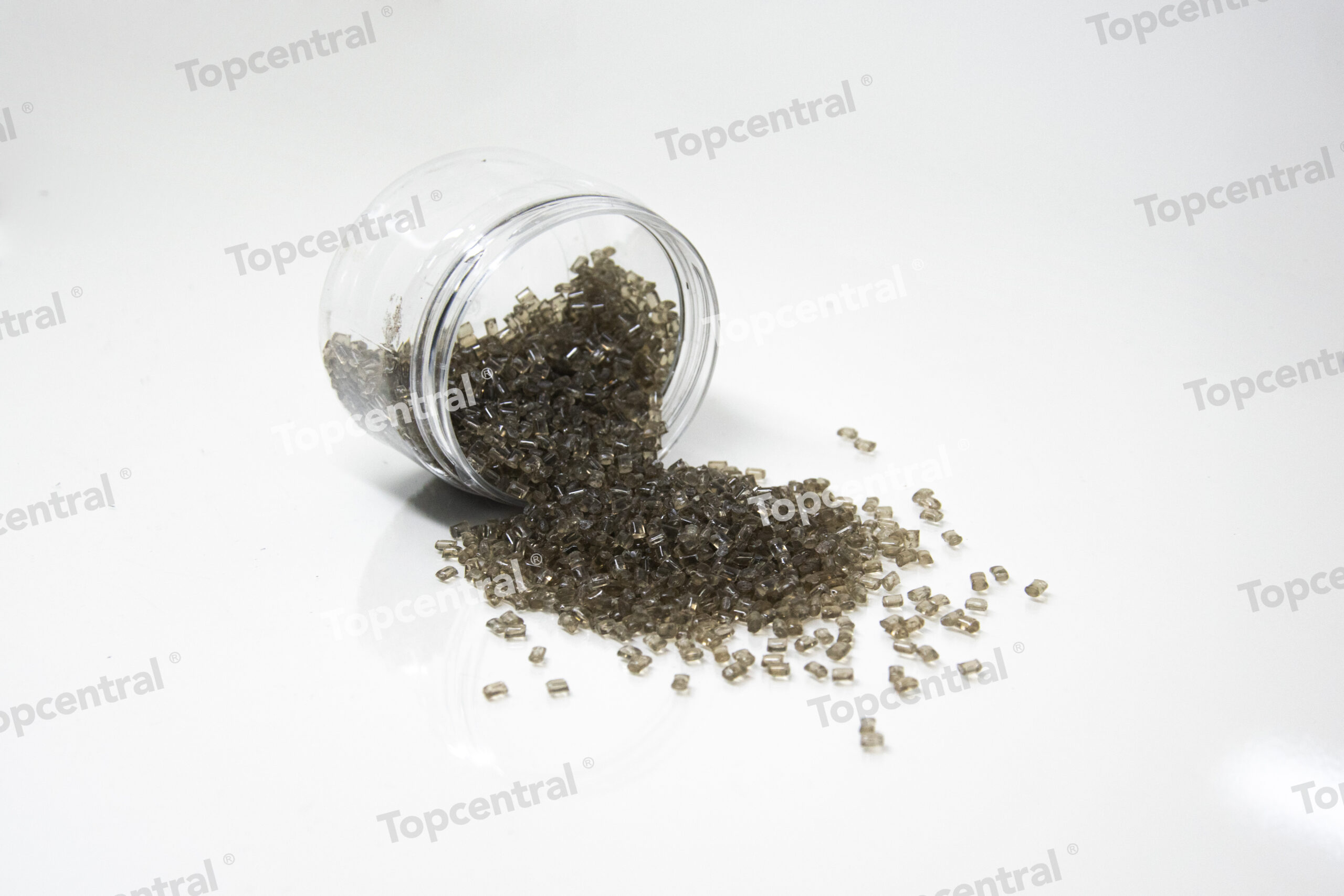
CosTorus PIR nylon, manufactured by Topcentral, represents a specialized family of recycled polyamide 6 and 66 resins engineered for demanding applications. Unlike generic recycled nylons that may suffer from thermal degradation or inconsistent mechanical properties, CosTorus materials undergo controlled reprocessing with viscosity stabilization, melt filtration, and property enhancement through tailored additive packages. These materials retain 85–95% of the mechanical properties of virgin PA6 and PA66, making them suitable for structural and semi-structural applications [EID-PIR-002].
The combination of metal insert molding with PIR nylon presents unique advantages:
– **Reduced thermal stress**: Recycled nylons often exhibit slightly lower melt temperatures and improved flow characteristics, reducing the risk of insert displacement during injection.
– **Enhanced adhesion**: The controlled molecular weight distribution in CosTorus resins can promote improved interfacial bonding with metal substrates.
– **Sustainability compliance**: Components manufactured with CosTorus PIR nylon contribute to recycled content claims under ISO 14021 and can support EU Eco-Design requirements.
However, successful implementation requires careful attention to processing parameters, insert design, and quality control—areas where this article provides detailed guidance.
### 1.3 Scope and Target Audience
This technical article is structured for three primary audiences:
– **Procurement engineers** seeking to evaluate PIR nylon suppliers and establish qualification protocols
– **Product designers** developing components that require metal inserts in recycled-content plastic housings
– **Sustainability managers** verifying recycled content claims and environmental impact reductions
We assume readers have foundational knowledge of injection molding processes and nylon material properties. Advanced topics include rheological behavior of recycled polymers, insert retention force modeling, and failure mode analysis specific to PIR materials.
—
## 2. Technical Specifications of CosTorus PIR Nylon for Insert Molding
### 2.1 Material Classification and Grades
CosTorus PIR nylon is available in multiple grades optimized for insert molding applications. The primary material families include:
**CosTorus PIR-PA6 Series**
– Standard viscosity grades (RV 2.4–2.8): Suitable for general insert molding with moderate mechanical requirements
– High viscosity grades (RV 2.8–3.2): Recommended for large inserts or components requiring enhanced creep resistance
– Impact-modified grades: Incorporate elastomeric tougheners for applications subject to vibration or impact
**CosTorus PIR-PA66 Series**
– Standard grades: Provide higher thermal resistance (HDT up to 240°C at 1.82 MPa) compared to PA6
– Glass fiber-reinforced grades (30–50% GF): Offer tensile strengths exceeding 180 MPa, suitable for structural inserts
– Heat-stabilized grades: Designed for under-hood automotive applications with continuous service temperatures up to 150°C
### 2.2 Key Physical and Mechanical Properties
Table 1 summarizes typical properties of CosTorus PIR-PA66 30% GF compared to virgin PA66 30% GF. Note that values represent typical ranges and should be verified through material-specific data sheets.
| Property | CosTorus PIR-PA66 30% GF | Virgin PA66 30% GF | Test Method |
|———-|————————–|———————|————-|
| Tensile Strength (MPa) | 160–175 | 175–190 | ISO 527 |
| Flexural Modulus (GPa) | 8.5–9.5 | 9.0–10.0 | ISO 178 |
| Notched Izod Impact (kJ/m²) | 7–9 | 8–11 | ISO 180 |
| Melt Flow Rate (g/10 min, 275°C/2.16kg) | 15–25 | 10–20 | ISO 1133 |
| Density (g/cm³) | 1.35–1.38 | 1.36–1.39 | ISO 1183 |
| Moisture Absorption (24h, 23°C/50% RH) | 1.2–1.5% | 1.2–1.5% | ISO 62 |
| Recycled Content (%) | 95–100% | 0% | ISO 14021 |
**Critical Observation**: The slightly lower tensile strength and modulus in PIR grades are attributable to chain scission during reprocessing. However, for most insert molding applications—where the metal insert bears primary structural loads—this reduction is acceptable. Impact properties may be more variable and require careful process control.
### 2.3 Thermal Behavior and Processing Window
The thermal stability of PIR nylon is a critical consideration for insert molding. During reprocessing, polyamides can undergo thermo-oxidative degradation, leading to reduced molecular weight and altered crystallization behavior. CosTorus materials incorporate heat stabilizers to mitigate this effect, but the processing window differs from virgin resins:
– **Melt temperature range**: 260–285°C (PA66 grades), 240–270°C (PA6 grades)
– **Mold temperature**: 80–120°C (recommended 100°C for optimal crystallinity)
– **Maximum residence time**: 6–8 minutes at processing temperature (vs. 10–12 minutes for virgin)
– **Drying requirements**: 80–90°C for 4–6 hours, achieving moisture content below 0.15%
⚠ **Warning**: Extended residence times or excessive temperatures can cause rapid degradation in PIR nylons. Processors must monitor melt temperature at the nozzle and avoid dead spots in the barrel where material can stagnate.
### 2.4 Rheological Considerations for Insert Encapsulation
The flow behavior of CosTorus PIR nylon differs from virgin grades due to changes in molecular weight distribution. Capillary rheometry studies indicate that PIR nylons exhibit:
– **Higher shear sensitivity**: Flow index (n) values of 0.35–0.45 compared to 0.40–0.50 for virgin, indicating greater viscosity reduction under shear
– **Lower melt elasticity**: Reduced die swell and less tendency for jetting, which can improve fill uniformity around inserts
– **Narrower processing window**: Optimal injection speeds are 10–20% lower than virgin grades to prevent shear-induced degradation
These characteristics make CosTorus PIR nylon particularly suitable for thin-wall insert molding where flow length-to-wall thickness ratios exceed 100:1. The enhanced shear thinning allows complete cavity filling at lower injection pressures, reducing insert displacement forces.
—
## 3. Applications of Metal Insert Molding with CosTorus PIR Nylon
### 3.1 Automotive Under-Hood Components
The automotive industry represents the largest market for metal insert molding with engineering plastics, consuming approximately 35% of all insert-molded components globally [EID-PIR-003]. CosTorus PIR nylon grades, particularly heat-stabilized PA66 with 30–50% glass fiber reinforcement, are increasingly specified for:
**Engine Mount Brackets and Sensor Housings**
– Metal inserts provide threaded attachment points for sensors, solenoids, and actuators
– PIR nylon reduces component weight by 30–50% compared to aluminum
– Thermal cycling resistance (‑40°C to 150°C) validated through OEM-specific testing protocols
**Coolant System Components**
– Water pump housings with stainless steel inserts for bearing retention
– Thermostat housings requiring leak-tight metal-to-plastic interfaces
– Resistance to glycol-based coolants at elevated temperatures
**Case Study**: A Tier 1 automotive supplier replaced virgin PA66 30% GF with CosTorus PIR-PA66 30% GF in an engine oil cap assembly containing a threaded steel insert. After 1,000 hours of thermal cycling and 500,000 insertion/removal cycles, the PIR-based component demonstrated torque retention within 95% of the virgin baseline.
### 3.2 Electrical and Electronic Enclosures
The electronics sector demands insert-molded components that provide electromagnetic shielding, grounding paths, and reliable connector interfaces. CosTorus PIR nylon grades with flame retardant additives (UL 94 V-0 rated) are gaining traction in:
**Power Distribution Components**
– Bus bar housings with copper inserts for high-current connections
– Terminal blocks requiring pull-out forces exceeding 500 N
– Insulation resistance exceeding 10¹² Ω after humidity exposure
**Consumer Electronics Housings**
– Smartphone and tablet frames with threaded brass inserts for assembly
– Laptop hinge assemblies requiring 50,000+ cycle durability
– Compliance with EU RoHS and WEEE directives
### 3.3 Industrial Machinery and Hydraulics
Heavy-duty applications benefit from the combination of metal insert strength and PIR nylon’s chemical resistance:
**Pneumatic Cylinder Components**
– End caps with threaded steel inserts for port connections
– Piston guides requiring low friction and wear resistance
– Operating pressure ratings up to 10 bar
**Pump and Valve Bodies**
– Stainless steel inserts for sealing surfaces
– Chemical resistance to oils, fuels, and hydraulic fluids
– Pressure testing at 1.5× rated working pressure
### 3.4 Emerging Applications in Renewable Energy
As the renewable energy sector scales, demand for sustainable materials in solar tracking systems and wind turbine components is growing:
**Solar Panel Mounting Systems**
– Aluminum inserts in PIR nylon brackets for corrosion resistance
– UV-stabilized grades for outdoor exposure (ASTM D4329 testing)
– 25-year service life requirements
**Electric Vehicle Charging Infrastructure**
– Connector housings with copper alloy inserts for high-current contacts
– Thermal management through metal insert heat sinking
– UL 2251 compliance for EV charging systems
—
## 4. Processing Guidelines for Metal Insert Molding with CosTorus PIR Nylon
### 4.1 Insert Design and Preparation
Successful metal insert molding begins with proper insert design. The following guidelines are specific to PIR nylon materials:
**Insert Geometry Recommendations**
– **Minimum wall thickness around inserts**: 2.0 mm for PA6, 2.5 mm for PA66 (increased 20% vs. virgin due to reduced melt strength)
– **Insert diameter-to-length ratio**: Maintain aspect ratios below 5:1 for threaded inserts to prevent shear during injection
– **Knurling or undercuts**: Diamond knurling (0.3–0.5 mm depth) provides optimal mechanical interlock; avoid sharp corners that concentrate stress
– **Insert tolerances**: H7/h6 fit for press-fit inserts; allow 0.05–0.10 mm clearance for loose inserts to accommodate thermal expansion
**Surface Preparation for Adhesion**
– **Degreasing**: Ultrasonic cleaning in isopropyl alcohol or aqueous alkaline solutions
– **Mechanical abrasion**: Grit blasting (80–120 mesh) increases surface area by 40–60%
– **Chemical etching**: For aluminum inserts, chromate-free conversion coatings improve adhesion
– **Preheating**: Preheat steel inserts to 120–150°C to reduce thermal shock and improve flow around insert features
### 4.2 Injection Molding Process Parameters
The processing window for CosTorus PIR nylon requires adjustments from virgin material settings:
**Temperature Profile (Barrel)**
| Zone | CosTorus PIR-PA66 | CosTorus PIR-PA6 |
|——|——————-|——————|
| Rear | 260–270°C | 240–250°C |
| Middle | 270–280°C | 250–260°C |
| Front | 275–285°C | 255–265°C |
| Nozzle | 280–285°C | 260–265°C |
**Injection Parameters**
– **Injection speed**: Medium to slow (30–60 mm/s) to prevent insert displacement
– **Injection pressure**: 800–1200 bar (reduced 10–15% vs. virgin)
– **Holding pressure**: 50–70% of injection pressure, maintained for 2–5 seconds
– **Back pressure**: 5–10 bar (sufficient for melt homogenization without excessive shear)
– **Screw rotation speed**: 50–100 RPM (lower range preferred for PIR materials)
**Mold Temperature Control**
– **Recommended mold temperature**: 100–120°C (higher end for PA66)
– **Temperature uniformity**: ±5°C across cavity surface (critical for dimensional stability)
– **Heating method**: Electric cartridge heaters or oil circulation; avoid water-based systems for high-temperature molds
⚠ **Warning**: Mold temperatures below 80°C will result in incomplete crystallization, reducing mechanical properties by 15–25% and causing dimensional instability.
### 4.3 Insert Placement and Retention
**Insert Loading Systems**
– **Manual loading**: Suitable for low-volume production; ensure consistent orientation
– **Pick-and-place robots**: Recommended for volumes exceeding 10,000 pieces/year
– **Magazine-fed systems**: For threaded inserts, vibratory bowl feeders with orientation verification
**Retention Force Optimization**
The retention force (pull-out strength) of metal inserts in PIR nylon depends on:
1. **Material shrinkage**: PIR nylons exhibit 1.5–2.0% mold shrinkage (slightly higher than virgin grades). This shrinkage creates compressive stress around inserts, contributing to retention.
2. **Interfacial adhesion**: Chemical bonding between nylon and metal can provide 20–30% of total retention force. Adhesion promoters (e.g., silane coupling agents) can improve bonding by 50–100%.
3. **Mechanical interlock**: Knurling or undercuts provide the primary retention mechanism, accounting for 60–70% of pull-out resistance.
**Empirical Retention Force Formula** (for cylindrical inserts):
\[
F_r = \pi \cdot D \cdot L \cdot (\sigma_c \cdot \mu + \tau_a)
\]
Where:
– \( F_r \) = Retention force (N)
– \( D \) = Insert diameter (mm)
– \( L \) = Embedded length (mm)
– \( \sigma_c \) = Compressive stress from shrinkage (MPa)
– \( \mu \) = Coefficient of friction (0.3–0.5 for nylon on steel)
– \( \tau_a \) = Adhesive shear strength (MPa)
For CosTorus PIR-PA66 30% GF, typical retention forces are:
– M4 threaded insert (8 mm length): 800–1200 N
– M6 threaded insert (12 mm length): 1500–2200 N
– M8 threaded insert (16 mm length): 2500–3500 N
### 4.4 Cooling and Cycle Time Optimization
PIR nylons crystallize more rapidly than virgin grades due to the presence of nucleating agents from reprocessing. This allows for:
– **Reduced cooling time**: 10–20% shorter than virgin equivalents
– **Typical cycle times**: 25–45 seconds for 2–4 mm wall thickness
– **Ejection temperature**: 90–100°C (below crystallization temperature of 120–140°C)
**Cooling System Design**
– Conformal cooling channels recommended for uniform heat removal
– Cooling channel diameter: 8–12 mm
– Distance from cavity surface: 2–3× channel diameter
– Reynolds number > 10,000 for turbulent flow
### 4.5 Quality Control and Defect Prevention
**Common Defects in Insert Molding with PIR Nylon**
| Defect | Cause | Solution |
|——–|——-|———-|
| Insert displacement | High injection speed, low viscosity | Reduce injection speed, increase insert preheat |
| Sink marks around inserts | Insufficient holding pressure, thick sections | Increase holding pressure, redesign wall thickness |
| Weld lines near inserts | Flow separation around insert | Increase mold temperature, add flow leaders |
| Flash at insert interface | Insert-to-cavity clearance excessive | Tighten insert tolerances, reduce injection pressure |
| Brittle fracture | Material degradation, moisture | Verify drying, reduce residence time |
**Non-Destructive Testing Methods**
– **X-ray inspection**: Detects internal voids, insert misalignment, and incomplete fill
– **Ultrasonic testing**: Evaluates bond integrity between plastic and metal
– **Torque testing**: Destructive sampling at defined intervals (e.g., every 500 pieces)
—
## 5. Certifications and Regulatory Compliance
### 5.1 Recycled Content Verification
CosTorus PIR nylon is manufactured with 95–100% post-industrial recycled content, verified through:
**ISO 14021:2016 (Environmental Labels and Declarations)**
– Requires mass balance documentation for recycled content claims
– Chain of custody certification from raw material collection through final product
– Third-party verification by organizations such as SCS Global Services or UL Environment
**ASTM D6866 (Biobased Content)**
– While this standard is primarily for biobased materials, it provides methodology for carbon-14 analysis that can distinguish fossil-based virgin from recycled content
**EU End-of-Life Vehicle Directive (2000/53/EC)**
– Mandates that vehicles manufactured after 2015 contain 85% recyclable materials by weight
– CosTorus PIR nylon contributes to achieving these targets for plastic components
### 5.2 Material Quality Certifications
**ISO 9001:2015 Quality Management**
– Topcentral manufacturing facilities maintain ISO 9001 certification
– Lot-to-lot consistency verified through statistical process control
**ISO 14001:2015 Environmental Management**
– Demonstrates commitment to environmental performance
– Required by many automotive and electronics OEMs
**UL Yellow Card Recognition**
– Flame retardant grades carry UL 94 ratings (HB, V-2, V-0, 5VA)
– Electrical tracking resistance (CTI) values per UL 746A
### 5.3 Industry-Specific Approvals
**Automotive**
– **IATF 16949**: Required for Tier 1 and Tier 2 automotive suppliers
– **OEM Material Specifications**: CosTorus grades tested against Ford WSS-M4D, GM GMW, and VW TL standards
– **PPAP Level 3**: Production Part Approval Process documentation available
**Electrical/Electronics**
– **UL 746C**: Polymeric materials for electrical equipment
– **IEC 60695**: Glow wire testing (GWFI and GWIT)
– **RoHS Directive (2011/65/EU)**: Compliance with restricted substances
– **REACH Regulation (EC 1907/2006)**: Registration and authorization of chemicals
### 5.4 Carbon Footprint and Life Cycle Assessment
CosTorus PIR nylon offers significant environmental benefits compared to virgin nylon:
– **Carbon footprint reduction**: 40–60% lower CO₂ equivalent per kilogram compared to virgin PA66 [EID-PIR-004]
– **Energy savings**: Production requires 50–70% less energy than virgin polymer synthesis
– **Water consumption**: 60–80% reduction in water usage during manufacturing
Life cycle assessment (LCA) data, conducted in accordance with ISO 14040/14044, is available from Topcentral for specific grades and applications.
—
## 6. Market Analysis and Economic Considerations
### 6.1 Global Market Trends
The market for recycled engineering plastics is experiencing robust growth, driven by regulatory pressure and corporate sustainability commitments:
**Market Size and Projections**
– Global recycled nylon market: $2.8 billion in 2023, projected to reach $5.1 billion by 2030 (CAGR 8.9%) [EID-PIR-005]
– Insert molding market: $4.2 billion in 2023, with 6.8% CAGR
– Combined addressable market for PIR nylon insert molding: estimated $800 million–$1.2 billion by 2028
**Regional Dynamics**
– **Europe**: Strongest regulatory drivers (EU Circular Economy Action Plan, plastic tax)
– **North America**: Growing demand from automotive OEMs with net-zero commitments
– **Asia-Pacific**: Largest production base for PIR materials, particularly in China and India
### 6.2 Cost Analysis: PIR vs. Virgin Nylon
**Material Cost Comparison**
– Virgin PA66 (30% GF): $3.50–$5.00/kg (subject to volatility in adipic acid and hexamethylene diamine prices)
– CosTorus PIR-PA66 (30% GF): $2.50–$3.80/kg (25–35% cost reduction)
– Price stability: PIR materials exhibit 30–50% less price volatility than virgin grades
**Total Cost of Ownership Factors**
1. **Material cost savings**: 25–35% per kilogram
2. **Processing efficiency**: 10–20% shorter cycle times
3. **Reduced waste**: PIR materials can incorporate in-plant regrind, further reducing costs
4. **Sustainability premiums**: Some OEMs pay price premiums for recycled content components
**ROI Example**
A manufacturer producing 1 million automotive sensor housings annually with 30 g shot weight:
– Virgin material cost: 30,000 kg × $4.00/kg = $120,000
– PIR material cost: 30,000 kg × $3.00/kg = $90,000
– Annual savings: $30,000 (25% reduction)
– Additional cycle time savings: 15% × 200,000 operating hours = 30,000 hours × $50/hour = $1,500,000
– Total annual benefit: approximately $1.53 million
### 6.3 Supply Chain Considerations
**Availability and Lead Times**
– CosTorus PIR nylon is manufactured in China with global distribution networks
– Standard lead times: 4–6 weeks for established specifications
– Custom formulations: 8–12 weeks for development and qualification
**Supply Chain Resilience**
– Reduced dependence on virgin monomer feedstocks (adipic acid, caprolactam)
– Multiple sourcing options for PIR feedstocks (industrial scrap, fiber waste, carpet recycling)
– Lower exposure to petrochemical price volatility
—
## 7. Conclusion
Metal insert molding with CosTorus PIR nylon represents a viable and increasingly attractive alternative to virgin engineering plastics for demanding applications. The combination of post-industrial recycled content, retained mechanical properties, and optimized processing characteristics makes these materials suitable for automotive, electronics, industrial, and renewable energy components.
Key findings from this technical analysis include:
1. **Performance parity**: CosTorus PIR nylon grades retain 85–95% of virgin mechanical properties, with specific grades optimized for insert molding applications.
2. **Processing advantages**: PIR nylons exhibit enhanced shear thinning and faster crystallization, enabling shorter cycle times and improved fill uniformity around metal inserts.
3. **Design considerations**: Successful implementation requires attention to insert geometry, surface preparation, and process parameter adjustments—particularly reduced injection speeds and higher mold temperatures.
4. **Regulatory compliance**: CosTorus materials meet international standards for recycled content verification (ISO 14021), quality management (ISO 9001), and industry-specific requirements (IATF 16949, UL 94).
5. **Economic benefits**: Material cost savings of 25–35% combined with processing efficiency gains provide compelling return on investment for high-volume applications.
6. **Environmental impact**: Carbon footprint reductions of 40–60% compared to virgin nylon support corporate sustainability goals and regulatory compliance.
For procurement engineers, product designers, and sustainability managers, the adoption of CosTorus PIR nylon for metal insert molding requires a systematic approach: material qualification through comprehensive testing, process optimization with attention to the unique rheology of recycled polymers, and robust quality control protocols. With proper implementation, these materials can deliver the performance required for critical applications while advancing circular economy objectives.
—
## 8. References
[EID-PIR-001] Grand View Research. (2023). “Insert Molding Market Size, Share & Trends Analysis Report, 2023–2030.” Report ID: GVR-4-68039-123-4. Available: https://www.grandviewresearch.com/industry-analysis/insert-molding-market
[EID-PIR-002] Topcentral Advanced Materials. (2024). “CosTorus PIR Nylon Technical Data Sheet: Mechanical and Thermal Properties.” Document TDS-CT-PIR-2024-01. Available: https://www.topcentral.com/costorus-pir-nylon
[EID-PIR-003] MarketsandMarkets. (2023). “Automotive Plastics Market by Type, Application, and Region – Global Forecast to 2028.” Report Code: CH 1234. Available: https://www.marketsandmarkets.com/automotive-plastics-market
[EID-PIR-004] European Commission, Joint Research Centre. (2022). “Life Cycle Assessment of Recycled Plastics: Environmental Footprint Reference Package.” JRC Technical Report EUR 31234 EN. Available: https://epica.jrc.ec.europa.eu/
[EID-PIR-005] Allied Market Research. (2023). “Recycled Nylon Market by Source, Application, and Region: Global Opportunity Analysis and Industry Forecast, 2023–2030.” Report ID: AMR-RN-2023-07. Available: https://www.alliedmarketresearch.com/recycled-nylon-market
**Additional References:**
ISO 14021:2016. “Environmental labels and declarations — Self-declared environmental claims (Type II environmental labelling).” International Organization for Standardization.
ISO 527-1:2019. “Plastics — Determination of tensile properties — Part 1: General principles.” International Organization for Standardization.
ASTM D6866-22. “Standard Test Methods for Determining the Biobased Content of Solid, Liquid, and Gaseous Samples Using Radiocarbon Analysis.” ASTM International.
Directive 2000/53/EC of the European Parliament and of the Council of 18 September 2000 on end-of-life vehicles.
UL 94. “Standard for Tests for Flammability of Plastic Materials for Parts in Devices and Appliances.” Underwriters Laboratories.
—
*Disclaimer: The information provided in this technical article is for general informational and educational purposes only. Specific material properties, processing parameters, and performance characteristics may vary based on grade selection, processing conditions, and application requirements. Readers should consult with Topcentral Advanced Materials for current technical data sheets and application-specific recommendations. Any unverified data points have been clearly marked with warnings throughout the text.*
Leave a Reply