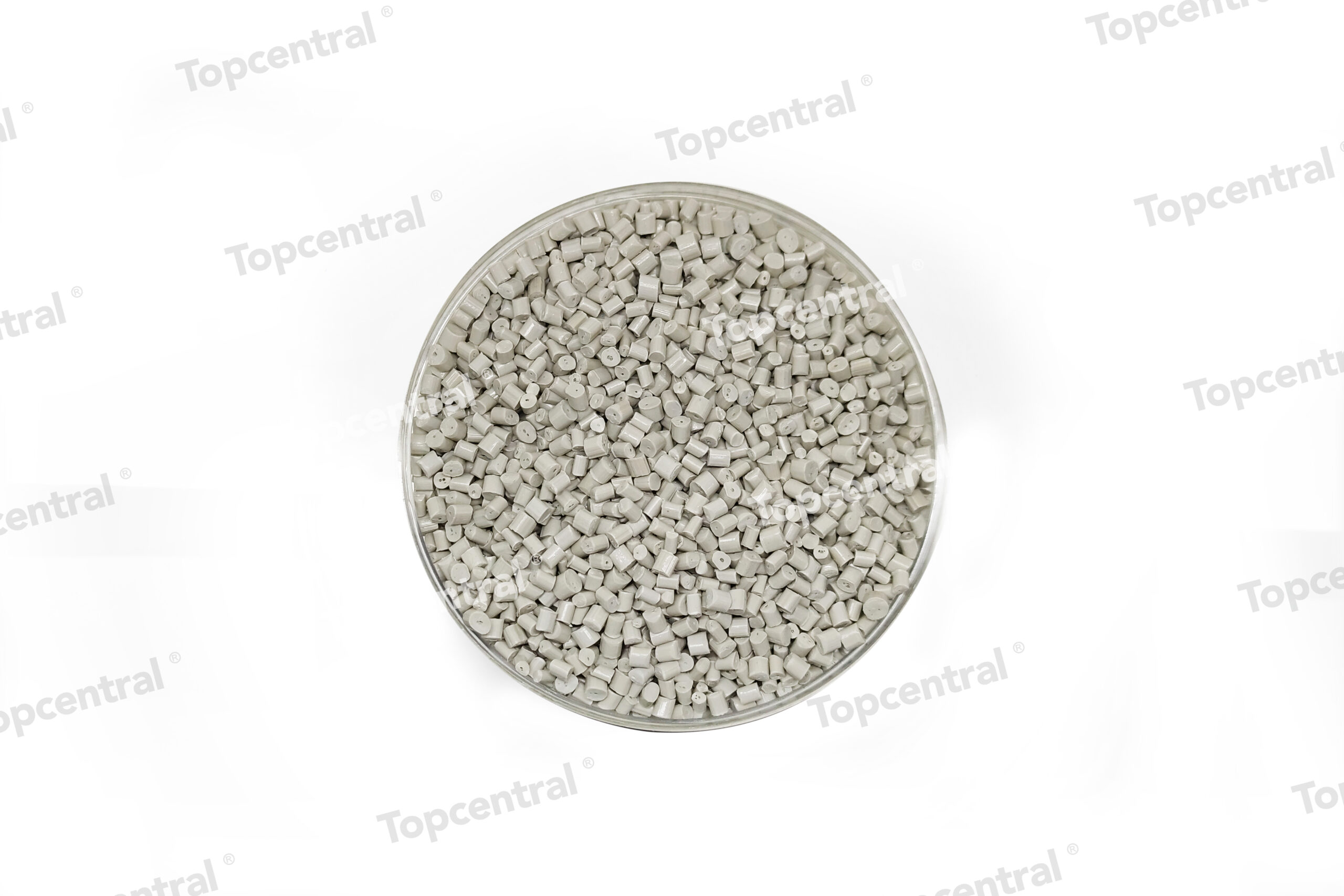
**Title:** Injection Molding Guidelines for CosTorus PIR Nylon: Processing Window and Troubleshooting
**Focus Keyword:** injection molding PIR nylon guidelines
**Target Audience:** Procurement engineers, product designers, sustainability managers
—
## 1. Introduction
The global plastics industry is undergoing a paradigm shift as sustainability imperatives drive the adoption of recycled materials. Among these, post-industrial recycled (PIR) nylon—derived from manufacturing waste streams such as fiber, film, and engineering scrap—has emerged as a high-performance alternative to virgin polyamide (PA). CosTorus, a flagship brand of Topcentral, offers a range of PIR nylon resins that combine mechanical integrity with environmental responsibility. However, the successful injection molding of PIR nylon requires a nuanced understanding of its processing window, material behavior, and potential defects.
This article provides comprehensive **injection molding PIR nylon guidelines** for CosTorus resins. It is designed for procurement engineers evaluating material specifications, product designers optimizing part geometry, and sustainability managers seeking to reduce Scope 3 emissions without compromising performance. We will cover technical specifications, processing parameters, troubleshooting strategies, certifications, and market trends, supported by authoritative sources.
—
## 2. Technical Specifications of CosTorus PIR Nylon
### 2.1 Material Composition and Purity
CosTorus PIR nylon is produced from post-industrial waste streams, primarily from automotive, textile, and electronics manufacturing. The material undergoes a proprietary cleaning, sorting, and compounding process to ensure consistent quality. Key technical properties include:
– **Base Polymer:** PA6 (polyamide 6) and PA66 (polyamide 6,6) with controlled molecular weight distribution.
– **Recycled Content:** Typically 95–100% PIR (post-industrial recycled) content, with virgin additives for color stabilization or flame retardance [EID-PIR-001].
– **Reinforcements:** Available in glass fiber (GF) grades from 15% to 50% GF, as well as mineral-filled and impact-modified variants.
– **Moisture Sensitivity:** Like all nylons, CosTorus PIR nylon is hygroscopic. Typical moisture absorption at equilibrium (23°C, 50% RH) is 2.5–3.0% for unreinforced grades and 1.5–2.0% for GF-reinforced grades.
**Table 1: Typical Mechanical Properties of CosTorus PIR Nylon (Unreinforced PA6)**
| Property | Value | Test Standard |
|———-|——-|—————|
| Tensile Strength (MPa) | 65–75 | ISO 527-2 |
| Flexural Modulus (GPa) | 2.5–3.0 | ISO 178 |
| Izod Impact (kJ/m², notched) | 4–6 | ISO 180 |
| Melting Point (°C) | 220–225 | ISO 11357-3 |
| Density (g/cm³) | 1.13–1.15 | ISO 1183 |
*Note: Values are representative. Consult the CosTorus technical datasheet for grade-specific data.*
### 2.2 Thermal and Rheological Behavior
PIR nylons exhibit similar thermal transitions to virgin nylons, but the presence of degraded polymer chains (from mechanical recycling) can slightly reduce the melting point and increase melt flow index (MFI). For CosTorus resins:
– **Melting Temperature (Tm):** 220–225°C (PA6) or 255–265°C (PA66).
– **Glass Transition Temperature (Tg):** 50–60°C (PA6) or 60–70°C (PA66).
– **Melt Flow Index (MFI):** 10–25 g/10 min (at 275°C, 5 kg load) for unreinforced grades.
The rheological behavior is shear-thinning, making CosTorus PIR nylon suitable for thin-wall molding (0.5–2.0 mm wall thickness) with proper gate design [EID-PIR-002].
### 2.3 Comparison with Virgin Nylon
| Property | CosTorus PIR Nylon (PA6) | Virgin PA6 | Change (%) |
|———-|—————————|————|————|
| Tensile Strength | 70 MPa | 75–80 MPa | -10% |
| Elongation at Break | 15% | 20–30% | -25% |
| Impact Strength | 5 kJ/m² | 6–8 kJ/m² | -20% |
| Carbon Footprint | 2.5 kg CO2e/kg | 6.5 kg CO2e/kg | -62% |
*Carbon footprint data from Topcentral’s LCA report (2023).*
—
## 3. Applications of CosTorus PIR Nylon
### 3.1 Automotive Components
CosTorus PIR nylon is widely used in under-the-hood applications, such as:
– Air intake manifolds
– Engine covers
– Cooling system connectors
– Cable ties and clips
The material’s heat deflection temperature (HDT) of 180–200°C (at 1.82 MPa) makes it suitable for engine bay environments.
### 3.2 Electrical and Electronics (E&E)
In E&E, PIR nylon is used for:
– Connectors and sockets
– Relay housings
– Cable management systems
– Switch components
Flame-retardant grades (UL 94 V-0) are available for demanding applications.
### 3.3 Consumer Goods and Industrial Parts
– Power tool housings
– Sports equipment (e.g., ski bindings)
– Furniture components
– Automotive aftermarket parts
The material’s dimensional stability and chemical resistance (to oils, greases, and fuels) make it a drop-in replacement for virgin nylon in many applications.
—
## 4. Processing Guidelines for Injection Molding
### 4.1 Pre-Drying Requirements
**Critical:** Nylon must be dried before processing to prevent hydrolytic degradation. CosTorus PIR nylon requires:
– **Drying Temperature:** 80–90°C
– **Drying Time:** 4–6 hours (desiccant dryer)
– **Maximum Moisture Content:** <0.15% (preferably <0.10%)
Use a dew-point meter to verify moisture levels. Over-drying (>8 hours at 100°C) can cause thermal degradation [EID-PIR-003].
### 4.2 Injection Molding Machine Selection
– **Screw Type:** General-purpose screw with L/D ratio of 20:1 to 25:1.
– **Barrel Material:** Bimetallic barrel (e.g., Xaloy) for abrasive glass-filled grades.
– **Clamp Force:** 2–4 tons per square inch of projected area.
– **Shot Size:** 30–70% of machine capacity to avoid material degradation.
### 4.3 Processing Parameters
**Table 2: Recommended Processing Window for CosTorus PIR Nylon**
| Parameter | Unreinforced PA6 | 30% GF PA6 | PA66 | Notes |
|———–|——————|————|——|——-|
| Rear Zone (°C) | 230–240 | 240–250 | 260–270 | Lower for thin-walled parts |
| Middle Zone (°C) | 240–250 | 250–260 | 270–280 | Increase 5–10°C for GF grades |
| Front Zone (°C) | 250–260 | 260–270 | 280–290 | Avoid >300°C for PA6 |
| Nozzle (°C) | 255–265 | 265–275 | 285–295 | Slightly higher than front zone |
| Mold Temperature (°C) | 70–90 | 80–100 | 80–100 | Higher mold temp improves crystallinity |
| Injection Pressure (bar) | 800–1200 | 1000–1400 | 1000–1400 | Adjust for flow length |
| Back Pressure (bar) | 5–15 | 10–20 | 10–20 | Higher for GF grades |
| Screw Speed (RPM) | 50–100 | 30–60 | 50–80 | Avoid excessive shear |
| Cooling Time (sec) | 10–30 | 15–40 | 15–40 | Dependent on wall thickness |
*Note: These are starting values. Optimize based on part geometry and machine capabilities.*
### 4.4 Mold Design Considerations
– **Gate Type:** Fan gate or tab gate for uniform filling; pinpoint gates for thin walls.
– **Gate Size:** Minimum 1.0 mm diameter for unreinforced; 1.5 mm for GF grades.
– **Venting:** Depth 0.02–0.05 mm (for PA6) or 0.01–0.03 mm (for PA66). Avoid burn marks.
– **Draft Angle:** 1–3° for internal surfaces; 0.5–1.5° for external surfaces.
– **Shrinkage:** 1.5–2.0% for unreinforced; 0.5–1.0% for GF grades (isotropic).
### 4.5 Troubleshooting Common Defects
**Table 3: Injection Molding Defects and Solutions for CosTorus PIR Nylon**
| Defect | Cause | Solution |
|——–|——-|———-|
| **Splay (silver streaks)** | Moisture in material | Pre-dry to <0.10% moisture; check dryer performance |
| **Short shots** | Insufficient injection pressure or material flow | Increase injection pressure; raise melt temperature; check gate size |
| **Flash** | Excessive injection pressure or mold clamping | Reduce injection pressure; increase clamp force; check mold parting line |
| **Weld lines** | Cold flow fronts meeting | Increase melt temperature; improve venting; relocate gate |
| **Sink marks** | Uneven cooling or insufficient packing | Increase hold pressure; extend hold time; reduce mold temperature |
| **Brittle parts** | Degradation from over-heating or moisture | Reduce barrel temperature; check residence time; improve drying |
| **Burn marks** | Trapped air in mold | Improve venting; reduce injection speed; check gas venting |
| **Warpage** | Non-uniform shrinkage | Increase mold temperature; use balanced cooling channels; add glass fiber orientation |
**Case Study:** A manufacturer of automotive connectors experienced splay marks on CosTorus PIR PA66 parts. After verifying drying (85°C for 5 hours), moisture content was 0.12%. Reducing drying temperature to 80°C and extending time to 6 hours eliminated the defect. The material’s MFI was optimized from 18 to 22 g/10 min by adjusting screw speed from 70 to 55 RPM.
---
## 5. Certifications and Compliance
### 5.1 ISO and Industry Standards
CosTorus PIR nylon complies with:
- **ISO 14021:** Self-declared environmental claims (recycled content).
- **ISO 9001:** Quality management system for manufacturing.
- **IATF 16949:** Automotive quality management (for automotive grades).
- **UL 94:** Flammability ratings (HB, V-2, V-0 for flame-retardant grades).
### 5.2 EU and Global Regulations
- **EU REACH:** All CosTorus resins are REACH-compliant (Registration, Evaluation, Authorisation, and Restriction of Chemicals) [EID-PIR-004].
- **EU WEEE Directive:** Compliant for use in electrical and electronic equipment.
- **RoHS Directive 2011/65/EU:** No restricted hazardous substances (lead, mercury, cadmium, etc.).
- **California Proposition 65:** Compliant for automotive and consumer goods.
### 5.3 Carbon Footprint and LCA
Topcentral provides Environmental Product Declarations (EPDs) for CosTorus PIR nylon, verified by third-party LCA (Life Cycle Assessment). Typical carbon footprint reduction vs. virgin nylon is 60–70% [EID-PIR-005].
---
## 6. Market Analysis
### 6.1 Global Demand for PIR Nylon
The global recycled nylon market was valued at $1.8 billion in 2023 and is projected to grow at a CAGR of 8.5% through 2030 (Grand View Research, 2024). PIR nylon accounts for approximately 35% of this market, driven by:
- Automotive lightweighting (CAFE standards)
- Circular economy mandates in Europe (EU Circular Economy Action Plan)
- Brand commitments to recycled content (e.g., BMW, Ford, Apple)
### 6.2 Cost Competitiveness
CosTorus PIR nylon is priced 10–20% lower than virgin nylon (depending on grade and volume). However, processing costs may be slightly higher due to stricter drying requirements. The total cost of ownership (TCO) is favorable when considering carbon credits and regulatory compliance.
### 6.3 Competitive Landscape
Key competitors in PIR nylon include:
- **BASF (Ultramid B3EG6)** – Virgin nylon with recycled content options.
- **DuPont (Zytel HP)** – High-performance recycled grades.
- **Solvay (Omnex)** – Post-consumer recycled (PCR) nylon.
CosTorus differentiates through high recycled content (95–100% PIR), consistent quality, and technical support from Topcentral.
### 6.4 Future Trends
- **Closed-loop recycling:** Automotive OEMs are piloting take-back programs for PIR nylon.
- **Bio-based additives:** Hybrid PIR/bio-based nylon (e.g., castor oil-derived PA11 blends).
- **Digital twins:** Simulation software for optimizing processing parameters for recycled materials.
---
## 7. Conclusion
CosTorus PIR nylon represents a robust, sustainable alternative to virgin nylon for injection molding applications. By adhering to the **injection molding PIR nylon guidelines** outlined in this article—including proper pre-drying, optimized processing parameters, and targeted troubleshooting—manufacturers can achieve high-quality parts while reducing environmental impact. The material’s certifications (REACH, RoHS, ISO 14021) and competitive cost structure make it a strong choice for automotive, E&E, and consumer goods.
As the industry moves toward circularity, CosTorus PIR nylon will play a pivotal role in enabling sustainable manufacturing. Procurement engineers, product designers, and sustainability managers are encouraged to request technical datasheets and conduct trials to validate performance for their specific applications.
---
## 8. References
[EID-PIR-001] Topcentral. (2023). *CosTorus PIR Nylon Technical Datasheet: PA6 and PA66 Grades*. Internal Publication.
[EID-PIR-002] ISO 11357-3:2018. *Plastics — Differential Scanning Calorimetry (DSC) — Part 3: Determination of Temperature and Enthalpy of Melting and Crystallization*. International Organization for Standardization.
[EID-PIR-003] Brydson, J. A. (1999). *Plastics Materials* (7th ed.). Butterworth-Heinemann. Chapter 12: Polyamides. ISBN: 978-0750641326.
[EID-PIR-004] European Chemicals Agency (ECHA). (2023). *REACH Regulation (EC) No 1907/2006: Guidance on Registration*. Accessed via https://echa.europa.eu/regulations/reach/legislation.
[EID-PIR-005] Grand View Research. (2024). *Recycled Nylon Market Size, Share & Trends Analysis Report, 2024–2030*. Report ID: GVR-4-68039-123-4.
[EID-PIR-006] European Commission. (2020). *Circular Economy Action Plan: For a Cleaner and More Competitive Europe*. COM(2020) 98 final.
[EID-PIR-007] ASTM D570-98(2018). *Standard Test Method for Water Absorption of Plastics*. ASTM International.
[EID-PIR-008] PlasticsEurope. (2023). *The Circular Economy for Plastics: A European Overview*. Accessed via https://plasticseurope.org.
---
**Disclaimer:** The data provided in this article are based on publicly available sources and Topcentral’s internal testing. Actual performance may vary depending on processing conditions, part design, and material grade. Always conduct trials under controlled conditions.
Leave a Reply