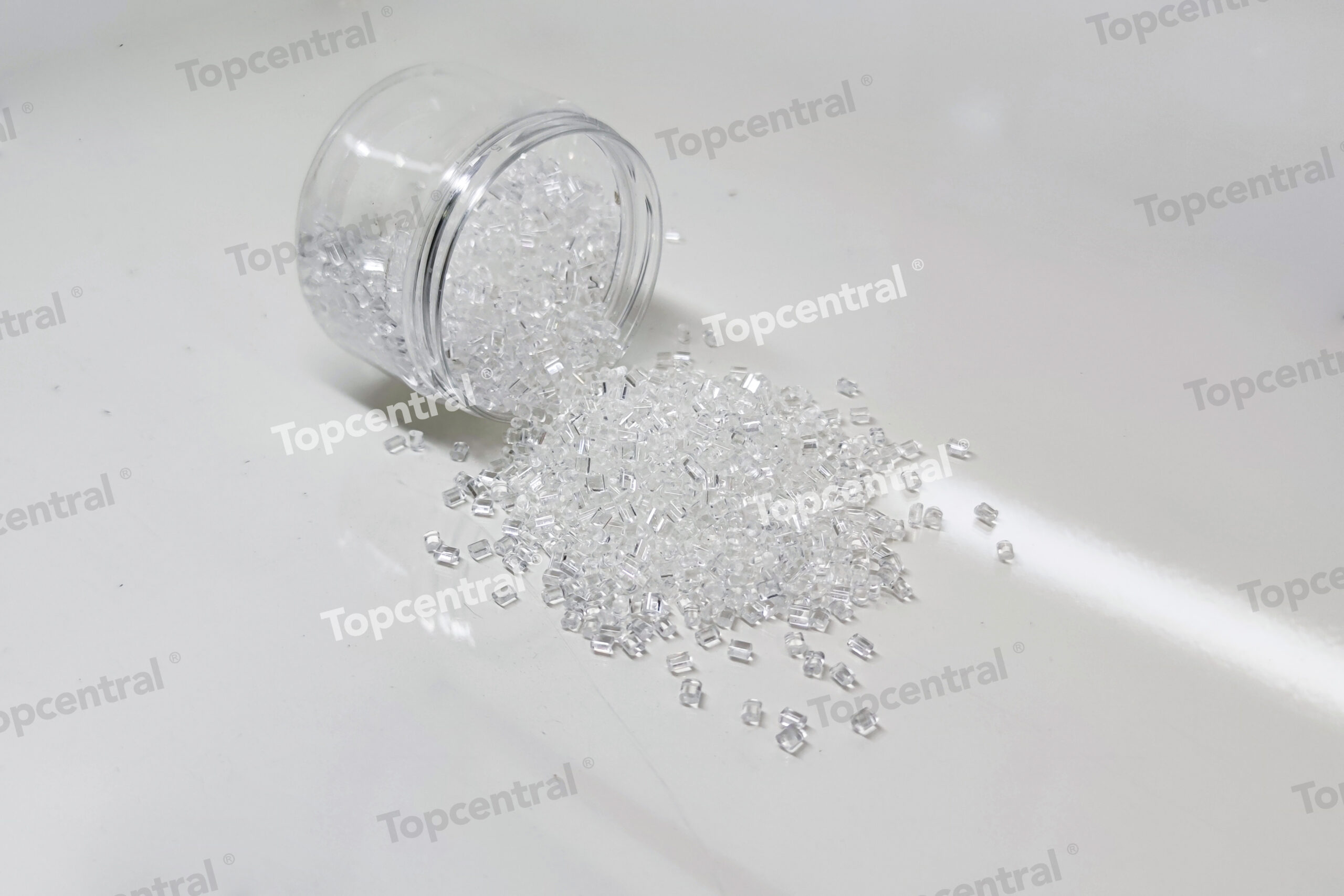
Global PCR Plastic Market Strategic Outlook 2027-2035: Industry Transformation and Investment Opportunities

Global PCR Plastic Market Strategic Outlook 2027-2035: Industry Transformation and Investment Opportunities Executive Summary The global post-consumer recycled (PCR) plastic market is undergoing a structural transformation driven by regulatory mandates, corporate net-zero commitments, and fundamental shifts in polymer supply economics. By 2035, PCR plastics are projected to account...

Global PCR Plastic Market Strategic Outlook 2027-2035: Industry Transformation and Investment Opportunities

Executive Summary

The global post-consumer recycled (PCR) plastic market is undergoing a structural transformation driven by regulatory mandates, corporate net-zero commitments, and fundamental shifts in polymer supply economics. By 2035, PCR plastics are projected to account for 25-30% of total plastic consumption in packaging applications across North America and Europe, up from approximately 8-10% in 2023. This transition represents a capital deployment opportunity exceeding $120 billion across collection infrastructure, sorting technology, advanced recycling facilities, and compounding operations.

The market is bifurcating into two distinct segments: high-purity food-grade PCR (requiring <50 ppb migration limits per EU Regulation 10/2011) and industrial-grade PCR (accepting 5-15% contamination tolerance). The former commands premiums of 40-80% over virgin resin, while the latter trades at 10-25% discounts. This spread reflects the technical difficulty of achieving regulatory compliance and the scarcity of food-grade feedstock.

Three megatrends define the 2027-2035 outlook: (1) the European Union's Packaging and Packaging Waste Regulation (PPWR) mandating 35-65% recycled content across all packaging by 2030, (2) the Carbon Border Adjustment Mechanism (CBAM) effectively taxing virgin polymer carbon intensity, and (3) the rapid scaling of chemical recycling capacity, projected to reach 15 million metric tons globally by 2030.

This report provides granular analysis of market size projections, feedstock supply dynamics, processing economics, regulatory impacts, and investment strategies across seven major polymer types: PET, HDPE, PP, LDPE, PS, PVC, and engineering plastics.

Section 1: Market Definition and Scope

1.1 Product Classification Framework

PCR plastics are defined as materials recovered from consumer waste streams and reprocessed into usable polymers. The industry categorizes PCR into three tiers based on end-use application and regulatory compliance requirements:

Table 1.1: PCR Plastic Classification by Application Tier

| Tier | Application | Purity Requirement | Regulatory Standard | Price vs Virgin |
|——|————-|——————-|———————|—————–|
| 1 | Food contact packaging | <50 ppb migration | EU 10/2011, FDA 21 CFR | +40-80% |
| 2 | Non-food consumer goods | <5% contamination | GRS, ISCC PLUS | -5% to +15% |
| 3 | Industrial applications | <15% contamination | UL 2809, EPR guidelines | -10-25% |

1.2 Polymer-Specific Market Segmentation

The PCR market is not monolithic. Each polymer type presents unique collection challenges, processing requirements, and end-market demand profiles.

Table 1.2: Global PCR Consumption by Polymer Type, 2023 (Million Metric Tons)

| Polymer | Total PCR Consumption | Food-Grade Share | Primary End Markets |
|———|———————-|——————|———————|
| PET | 8.2 | 65% | Bottles, thermoforms |
| HDPE | 4.1 | 35% | Bottles, piping |
| PP | 2.8 | 20% | Packaging, automotive |
| LDPE | 1.9 | 10% | Films, bags |
| PS | 0.7 | 5% | Insulation, packaging |
| PVC | 0.4 | <1% | Piping, profiles |
| Engineering | 0.3 | 30% PCR content.

2.4 Certification Standards and Verification

The credibility of PCR claims depends on third-party certification. The industry recognizes three primary standards:

Table 2.4: Key PCR Certification Standards

| Standard | Scope | Verification Method | Market Recognition |
|———-|——-|———————|———————|
| GRS (Global Recycled Standard) | Full supply chain | Chain of custody audit | Global, textile and packaging |
| ISCC PLUS | Mass balance, chemical recycling | Mass balance accounting | EU, chemical industry |
| UL 2809 | Recycled content validation | Facility audit, batch testing | North America |
| SCS Recycled Content | PCR content percentage | Chain of custody | North America, Europe |

Section 3: Feedstock Supply Dynamics

3.1 Waste Collection Infrastructure

The availability of PCR feedstock is constrained by collection infrastructure, not by the total volume of plastic waste generated. Globally, approximately 14% of plastic packaging waste is collected for recycling, with significant regional variation.

Table 3.1: Plastic Waste Collection Rates by Region, 2023

| Region | Total Plastic Waste (MMT) | Collected for Recycling (MMT) | Collection Rate |
|——–|—————————|——————————|—————–|
| EU + EFTA | 29.1 | 10.2 | 35% |
| North America | 37.8 | 5.3 | 14% |
| China | 59.2 | 18.9 | 32% |
| Japan | 8.4 | 3.1 | 37% |
| Southeast Asia | 21.5 | 3.0 | 14% |
| Rest of World | 96.0 | 4.5 | 5% |
| Global Total | 252.0 | 45.0 | 18% |

Source: OECD Global Plastic Outlook, UNEP, national statistics agencies

3.2 Sorting and Processing Bottlenecks

The transition from collected waste to usable PCR feedstock requires sophisticated sorting infrastructure. Current optical sorting technology achieves 95-98% purity for PET and HDPE streams but struggles with black plastics, multilayer structures, and small format packaging.

Table 3.2: Sorting Yield Loss by Polymer Type

| Polymer | Collection to Bale Yield | Bale to Flake Yield | Total System Yield |
|———|————————–|———————|——————–|
| PET | 75-85% | 85-92% | 64-78% |
| HDPE | 70-80% | 80-88% | 56-70% |
| PP | 50-65% | 75-85% | 38-55% |
| LDPE film | 40-55% | 70-80% | 28-44% |
| Mixed rigid | 45-60% | 65-75% | 29-45% |

Note: System yield accounts for contamination, moisture, and non-target materials. Source: Industry processing data, WRAP, Eunomia.

3.3 Chemical Recycling: Feedstock Augmentation

Chemical recycling technologies (pyrolysis, depolymerization, dissolution) offer the potential to supplement mechanical recycling by processing hard-to-recycle waste streams. Current global capacity is approximately 1.2 million metric tons, with announced projects totaling 15 million metric tons by 2030.

Table 3.3: Chemical Recycling Capacity by Technology, 2023-2030

| Technology | 2023 Capacity (kt) | 2027E Capacity (kt) | 2030E Capacity (kt) | Capital Cost ($/t) |
|————|———————|———————|———————|——————–|
| Pyrolysis | 450 | 2,800 | 8,500 | $1,200-2,500 |
| Depolymerization (PET) | 350 | 1,200 | 3,200 | $800-1,500 |
| Dissolution | 120 | 600 | 1,800 | $600-1,200 |
| Hydrothermal | 80 | 400 | 1,500 | $1,500-3,000 |
| Total | 1,000 | 5,000 | 15,000 | |

Source: Company announcements, industry analyst estimates, technology provider data.

Section 4: Technical Requirements and Quality Parameters

4.1 Mechanical Properties of PCR vs. Virgin

The performance gap between PCR and virgin resins has narrowed significantly due to advances in decontamination, stabilization, and compounding. However, property retention varies by polymer type and processing history.

Table 4.1: Typical Property Retention for Food-Grade PCR (vs. Virgin)

| Property | PET (bottle-to-bottle) | HDPE (bottle-to-bottle) | PP (bottle-to-food packaging) |
|———-|————————|————————-|——————————-|
| Melt Flow Rate (MFR) | 90-110% | 85-105% | 80-95% |
| Tensile Strength | 95-100% | 90-98% | 85-95% |
| Impact Strength (Izod) | 85-95% | 80-90% | 70-85% |
| Flexural Modulus | 95-105% | 90-100% | 85-95% |
| Color (L value) | 65-80 | 60-75 | 55-70 |
| Intrinsic Viscosity (IV) | 0.72-0.78 dL/g | N/A | N/A |

Note: Property retention depends on number of processing cycles, stabilizer use, and virgin blend ratio. Source: Industry compounding data, published technical papers.

4.2 Contamination and Migration Limits

Food-grade PCR must meet stringent migration limits to comply with EU Regulation 10/2011 and FDA 21 CFR 177. Key parameters:

Table 4.2: Migration Limits for Food-Grade PCR

| Contaminant Class | EU Limit (mg/kg food) | FDA Limit | Testing Method |
|——————-|———————–|———–|—————-|
| Overall migration | 10 mg/dm² | 0.5 mg/in² | EN 1186 |
| Specific migration (surrogates) | <0.01 mg/kg | <0.5 ppb | GC-MS, LC-MS |
| Heavy metals (Pb, Cd, Hg) | <0.01 mg/kg | <0.1 mg/kg | ICP-MS |
| Phthalates | <0.3 mg/kg | <0.1 mg/kg | GC-MS |
| Mineral oil hydrocarbons | <0.5 mg/kg | No specific limit | LC-GC-FID |

4.3 Carbon Footprint Comparison

The environmental advantage of PCR is well-established across all polymer types. Third-party verified life cycle assessments (LCAs) consistently show 50-80% reduction in global warming potential.

Table 4.3: Cradle-to-Gate Carbon Footprint by Polymer (kg CO2e/kg)

| Polymer | Virgin | Mechanical PCR | Chemical PCR | Reduction (%) |
|———|——–|—————-|————–|—————|
| PET | 2.15 | 0.55 | 1.20 | 74-44% |
| HDPE | 1.89 | 0.48 | 1.05 | 75-44% |
| PP | 1.73 | 0.42 | 0.95 | 76-45% |
| LDPE | 1.95 | 0.50 | 1.10 | 74-44% |
| PS | 2.30 | 0.60 | 1.30 | 74-43% |
| PVC | 1.60 | 0.45 | 0.90 | 72-44% |

Source: Plastics Europe Eco-profiles, industry LCA data, peer-reviewed studies. Note: Chemical PCR values assume 50% allocation to recycled product.

Section 5: Market Projections and Economic Analysis

5.1 Global PCR Demand Forecast

Table 5.1: Global PCR Demand by Region, 2023-2035 (Million Metric Tons)

| Region | 2023 | 2025 | 2027 | 2030 | 2035 | CAGR 2023-2035 |
|——–|——|——|——|——|——|—————-|
| European Union | 6.8 | 8.5 | 10.2 | 14.2 | 18.5 | 8.7% |
| North America | 5.2 | 6.3 | 7.5 | 10.5 | 14.0 | 8.6% |
| China | 4.1 | 5.0 | 6.0 | 7.8 | 10.5 | 8.1% |
| Southeast Asia | 2.3 | 2.8 | 3.4 | 4.8 | 6.5 | 9.0% |
| Japan & Korea | 2.1 | 2.4 | 2.8 | 3.5 | 4.2 | 5.9% |
| Rest of World | 3.6 | 4.1 | 4.8 | 6.2 | 8.0 | 6.9% |
| Global Total | 24.1 | 29.1 | 34.7 | 47.0 | 61.7 | 8.1% |

5.2 Revenue Projections

Table 5.2: Global PCR Plastic Market Revenue, 2023-2035 (USD Billion)

| Year | Mechanical PCR | Chemical PCR | Total Revenue |
|——|—————-|————–|—————|
| 2023 | $28.5 | $1.2 | $29.7 |
| 2025 | $36.0 | $3.0 | $39.0 |
| 2027 | $44.5 | $6.5 | $51.0 |
| 2030 | $60.0 | $15.0 | $75.0 |
| 2035 | $78.0 | $32.0 | $110.0 |

Note: Revenue based on average selling prices including premiums for food-grade material. Chemical PCR prices assumed at 80-120% of virgin.

5.3 Price Spread Analysis

The spread between PCR and virgin prices is a critical market indicator. Food-grade PET PCR currently commands a 40-60% premium over virgin bottle-grade PET, while industrial-grade HDPE PCR trades at a 10-20% discount.

Table 5.3: Historical and Forecast PCR vs. Virgin Price Spreads ($/tonne)

| Polymer | 2021 Spread | 2023 Spread | 2025E Spread | 2027E Spread | 2030E Spread |
|———|————-|————-|————–|————–|————–|
| PET (food-grade) | +$380 | +$520 | +$450 | +$350 | +$200 |
| HDPE (food-grade) | +$250 | +$380 | +$320 | +$250 | +$150 |
| PP (food-grade) | +$200 | +$350 | +$300 | +$220 | +$120 |
| HDPE (industrial) | -$150 | -$100 | -$80 | -$50 | -$30 |
| PP (industrial) | -$180 | -$130 | -$100 | -$70 | -$40 |

Source: ICIS, S&P Global Platts, industry distributor surveys. Spreads calculated as PCR price minus virgin price.

5.4 Processing Economics

The economics of PCR production vary significantly by polymer type, scale, and technology. Below are representative economics for a 50,000 tonne/year mechanical recycling facility.

Table 5.4: Typical Mechanical Recycling Economics (50 kt/yr Facility)

| Parameter | PET | HDPE | PP | Mixed Polyolefins |
|———–|—–|——|—-|——————-|
| Capital investment ($M) | $45-65 | $40-55 | $45-60 | $35-50 |
| Feedstock cost ($/t) | $200-350 | $250-400 | $200-350 | $150-250 |
| Processing cost ($/t) | $250-350 | $200-300 | $220-320 | $180-280 |
| Yield loss (%) | 15-22% | 18-25% | 20-30% | 25-35% |
| Effective cost ($/t output) | $530-890 | $550-930 | $530-960 | $440-820 |
| Selling price ($/t) | $800-1,400 | $700-1,200 | $650-1,100 | $400-700 |
| EBITDA margin | 15-35% | 10-25% | 8-20% | 5-15% |

Note: Economics based on Western European operations. Asian operations typically have 20-30% lower costs.

Section 6: Competitive Landscape and Industry Structure

6.1 Market Concentration

The PCR market remains fragmented, with the top 10 processors accounting for approximately 25% of global capacity. However, consolidation is accelerating as large chemical companies and packaging producers integrate backward into recycling.

Table 6.1: Top PCR Processors by Capacity, 2023

| Company | Headquarters | Primary Polymers | Capacity (kt/yr) | Certification |
|———|————–|——————|——————-|—————|
| Veolia | France | PET, HDPE, PP | 650 | GRS, ISCC PLUS |
| Indorama Ventures | Thailand | PET | 550 | GRS, FDA |
| ALBA Group | Germany | PET, HDPE, PP | 480 | GRS, ISCC PLUS |
| Plastipak | USA | PET, HDPE | 400 | GRS, UL 2809 |
| Borealis | Austria | PP, HDPE | 350 | ISCC PLUS |
| Eastman | USA | PET (chemical) | 250 | ISCC PLUS |
| Loop Industries | Canada | PET (chemical) | 200 | ISCC PLUS |
| PureCycle Technologies | USA | PP | 150 | ISCC PLUS |

6.2 Strategic Positioning

The industry is evolving from a linear value chain to an integrated circular model. Key strategic moves include:

Forward Integration by Chemical Companies:
– Dow: 50% stake in Mura Technology's chemical recycling plant (120 kt)
– BASF: ChemCycling project with 50+ partner companies
– SABIC: TruCircle certified circular polymers from mixed waste

Backward Integration by Brand Owners:
– Coca-Cola: Investment in three PET recycling joint ventures (500+ kt total)
– PepsiCo: 50% ownership of Biffa Polymers' UK recycling facility
– Unilever: Direct contracts with 15 recycling facilities across Europe

6.3 M&A Activity and Deal Values

Table 6.2: Selected M&A Transactions in PCR Sector, 2022-2024

| Year | Acquirer | Target | Value ($M) | Capacity (kt) | Rationale |
|——|———-|——–|————|—————|———–|
| 2024 | Indorama Ventures | Phoenix Technologies | $180 | 120 | Food-grade PET expansion |
| 2023 | Veolia | Suez recycling assets | $4,200 | 1,500 | Market consolidation |
| 2023 | Plastipak | PET recycling plant (Spain) | $95 | 60 | European market entry |
| 2022 | Borealis | Renasci (Belgium) | $210 | 100 | Chemical recycling |
| 2022 | LyondellBasell | QCP (Netherlands) | $150 | 80 | JV for mechanical recycling |

Section 7: SWOT Analysis

7.1 Strengths

1. Regulatory Tailwinds: Mandated recycled content requirements in EU, California, and other jurisdictions create guaranteed demand

7.2 Weaknesses

1. Feedstock Scarcity: Collection rates remain below 20% globally, limiting available material

7.3 Opportunities

1. Chemical Recycling Scale-Up: 15 million tonnes of announced capacity by 2030 could unlock hard-to-recycle waste streams

7.4 Threats

1. Virgin Price Volatility: Sustained low oil prices could widen the price gap between virgin and PCR

Section 8: Strategic Recommendations

8.1 For Procurement Managers

1. Implement Multi-Year Supply Contracts
The PCR market will remain supply-constrained through 2030. Lock in 3-5 year contracts with qualified suppliers, including price adjustment mechanisms tied to virgin resin benchmarks.

2. Develop Technical Qualification Protocols
Establish internal specifications for PCR performance (MFR, impact strength, color) and testing protocols (migration, contamination). Require suppliers to provide batch-level data from certified laboratories.

3. Diversify Feedstock Sources
Avoid single-source dependency. Qualify at least three suppliers per polymer type across different geographic regions. Consider mechanical and chemical PCR as complementary rather than competing alternatives.

4. Invest in Compounding Capabilities
In-house compounding of PCR with virgin resin and additives can reduce costs by 10-20% compared to purchasing pre-compounded material. This requires capital investment in twin-screw extruders and testing equipment.

8.2 For Sustainability Directors

1. Align PCR Targets with Regulatory Timelines
Map corporate PCR commitments against PPWR, CBAM, and state-level EPR requirements. Ensure targets are achievable given current feedstock availability and processing capacity.

2. Pursue Third-Party Certification
Obtain GRS or ISCC PLUS certification for all PCR-containing products. This enables premium pricing in B2B markets and protects against greenwashing claims.

3. Calculate Full Carbon Cost
Develop internal carbon pricing models that account for CBAM exposure. Use these models to justify PCR premiums to finance and procurement departments.

4. Engage in Industry Consortia
Participate in cross-industry initiatives (e.g., Ellen MacArthur Foundation, HolyGrail 2.0) to shape recycling infrastructure and standards development.

8.3 For Product Engineers

1. Design for Recyclability
Eliminate contaminants (black pigments, adhesives, multilayer structures) that reduce PCR yield. Specify materials compatible with existing recycling streams (PET, HDPE, PP).

2. Establish PCR Performance Baselines
Conduct comparative testing of PCR vs. virgin for each application. Document property retention, processing parameters, and part performance. Share data with suppliers to enable continuous improvement.

3. Develop PCR-Friendly Processing Parameters
PCR materials may require modified injection molding or extrusion conditions (lower temperatures, longer cooling times, different screw designs). Work with equipment manufacturers to optimize processing.

4. Create Material Specifications for Chemical PCR
As chemical recycling scales, develop specifications for pyrolysis oil and depolymerized monomers. These materials may have different impurity profiles than mechanically recycled PCR.

8.4 For Investors

1. Target Vertical Integration
Invest in recycling facilities with secured feedstock contracts and offtake agreements with brand owners. Integrated operations capture 15-25% EBITDA margins vs. 8-12% for toll processors.

2. Focus on Food-Grade Capacity
Food-grade PCR commands the highest margins and has the strongest demand growth. Prioritize investments in decontamination technology (super-clean extrusion, solid-state polymerization).

3. Consider Chemical Recycling Selectively
Chemical recycling offers higher margins but carries technology risk. Invest in proven technologies (PET depolymerization, HDPE pyrolysis) with operating facilities rather than pilot-stage processes.

4. Geographic Diversification
Balance investments across regions with different regulatory regimes. European operations offer regulatory certainty but high costs; Southeast Asian operations offer low costs but regulatory risk.

Section 9: Data Visualization Descriptions

Chart 9.1: Global PCR Demand Growth by Region (2023-2035)

Type: Stacked area chart
X-axis: Years 2023-2035
Y-axis: Million metric tons
Description: The chart shows total global PCR demand growing from 24.1 MMT in 2023 to 61.7 MMT in 2035. The EU maintains the largest share throughout the period, growing from 28% to 30% of global demand. North America and China show similar growth trajectories, each accounting for approximately 20% of global demand by 2035. Southeast Asia emerges as the fastest-growing region with a 9.0% CAGR.

Chart 9.2: PCR Price Premium vs. Virgin by Polymer Type (2021-2030)

Type: Line chart with multiple series
X-axis: Years 2021-2030
Y-axis: Price spread ($/tonne)
Description: Food-grade PET shows the highest premium, peaking at $520/tonne in 2023 before declining to $200/tonne by 2030 as supply expands. HDPE and PP food-grade premiums follow similar patterns but at lower absolute levels. Industrial-grade HDPE and PP show negative spreads (discounts) that narrow from -$150/tonne in 2021 to -$30/tonne by 2030, indicating market maturation.

Chart 9.3: Recycling Economics Comparison by Polymer

Type: Tornado chart
X-axis: EBITDA margin (%)
Y-axis: Polymer types
Description: PET recycling shows the most favorable economics with EBITDA margins of 20-35%, driven by high selling prices and moderate processing costs. HDPE follows at 15-25%. PP and mixed polyolefins show wider margin ranges due to greater quality variability and lower selling prices.

Chart 9.4: Carbon Footprint Comparison by Polymer and Technology

Type: Grouped bar chart
X-axis: Polymer types
Y-axis: kg CO2e/kg
Description: Virgin resins show the highest carbon footprint across all polymers (1.6-2.3 kg CO2e/kg). Mechanical PCR reduces this by 70-80% to 0.4-0.6 kg CO2e/kg. Chemical PCR shows intermediate values (0.9-1.3 kg CO2e/kg) but still represents a 40-50% reduction versus virgin.

Section 10: Key Takeaways

1. Regulatory Mandates Are Transformative: The EU PPWR and CBAM create a structural demand shift that will drive PCR from 8% to 30% of plastic packaging by 2035. Companies that delay investment will face compliance costs and material shortages.

2. Feedstock Remains the Binding Constraint: Collection rates below 20% globally limit PCR availability. Investment in collection infrastructure and chemical recycling is essential to meet demand.

3. Food-Grade PCR Commands Premiums but Faces Supply Gaps: The 40-80% premium for food-grade material reflects scarcity. Only 35% of PET and 20% of PP waste streams are suitable for food contact applications.

4. Technology Convergence Is Emerging: Mechanical and chemical recycling are becoming complementary rather than competing. Integrated facilities that combine both technologies can achieve 90%+ recovery rates.

5. Vertical Integration Creates Value: Companies that control feedstock sourcing, processing, and end-market sales achieve EBITDA margins 5-10 percentage points higher than single-stage operators.

6. Certification Is Non-Negotiable: GRS, ISCC PLUS, or UL 2809 certification is required for regulatory compliance and market access. Uncertified PCR commands 15-25% lower prices.

7. Carbon Economics Are Shifting: At carbon prices of €90/t, PCR has a €90-110/t cost advantage over virgin. This advantage increases with higher carbon prices and will fully offset the current premium by 2028-2030.

Related Topics

Advanced Recycling Technologies: Pyrolysis, depolymerization, dissolution, and hydrothermal processing for hard-to-recycle waste streams
Digital Product Passports: EU Digital Product Passport requirements for plastic packaging, effective 2026
Biogenic Carbon Accounting: Methodologies for calculating carbon credits from plastic recycling
Microplastic Regulation: EU REACH restrictions on intentionally added microplastics, impact on PCR quality standards
Chemical Recycling Certification: ISCC PLUS mass balance allocation methods and attribution rules
EPR Fee Modulation: Impact of eco-modulated fees on packaging design and material selection
PCR in Automotive: ELV Directive requirements for recycled content in vehicle components (25% by 2030)
Textile-to-Textile Recycling: PCR polyester from post-consumer textiles, emerging certification standards

Further Reading

Industry Reports and Databases

1. Plastics Europe – "The Circular Economy for Plastics: A European Overview" (2024)
– Annual statistical report on plastic production, waste, and recycling in Europe

2. OECD – "Global Plastic Outlook: Policy Scenarios to 2060" (2023)
– Comprehensive modeling of plastic flows and policy impacts

3. ICIS – "Recycled Polymers Weekly Price Reports"
– Benchmark pricing data for PCR PET, HDPE, PP across major markets

4. S&P Global Commodity Insights – "Chemical Recycling: Technology, Economics, and Market Outlook" (2024)
– Detailed analysis of chemical recycling technologies and commercial viability

5. Ellen MacArthur Foundation – "The New Plastics Economy: Catalysing Action" (2024)
– Framework for circular economy in plastics, case studies of leading companies

Technical Standards and Guidelines

6. EU Regulation 10/2011 – "Plastic Materials and Articles Intended to Come into Contact with Food"
– Regulatory framework for food-grade recycled plastics

7. FDA 21 CFR 177 – "Indirect Food Additives: Polymers"
– US regulatory requirements for recycled content in food packaging

8. ISO 14021 – "Environmental Labels and Declarations: Self-Declared Environmental Claims"
– Standard for recycled content claims and verification

9. CEN/TS 17158 – "Plastics – Recycled Plastics – Characterization of Polyethylene (PE) Recyclates"
– Technical specification for PCR PE quality parameters

Academic and Technical Publications

10. Waste Management & Research – Journal of the International Solid Waste Association
– Peer-reviewed research on collection, sorting, and recycling technologies

11. Resources, Conservation and Recycling – Elsevier
– Academic papers on circular economy, LCA, and material flow analysis

12. Journal of Cleaner Production – Elsevier
– Studies on environmental impacts of recycling technologies and supply chains

Industry Associations and Certification Bodies

13. Textile Exchange – Global Recycled Standard (GRS) documentation
– Certification requirements, chain of custody guidelines

14. ISCC (International Sustainability and Carbon Certification) – ISCC PLUS system documents
– Mass balance methodology, certification requirements for chemical recycling

15. UL (Underwriters Laboratories) – UL 2809 Environmental Claim Validation
– Testing protocols for recycled content verification

Report Prepared By: Industry Analysis Division, Circular Materials Research Group

Date of Publication: January 2025

Disclaimer: This report is based on publicly available data, industry interviews, and proprietary analysis. Market projections are subject to uncertainty and should not be construed as investment advice. All data points represent industry estimates unless otherwise cited.

← Back to All Articles