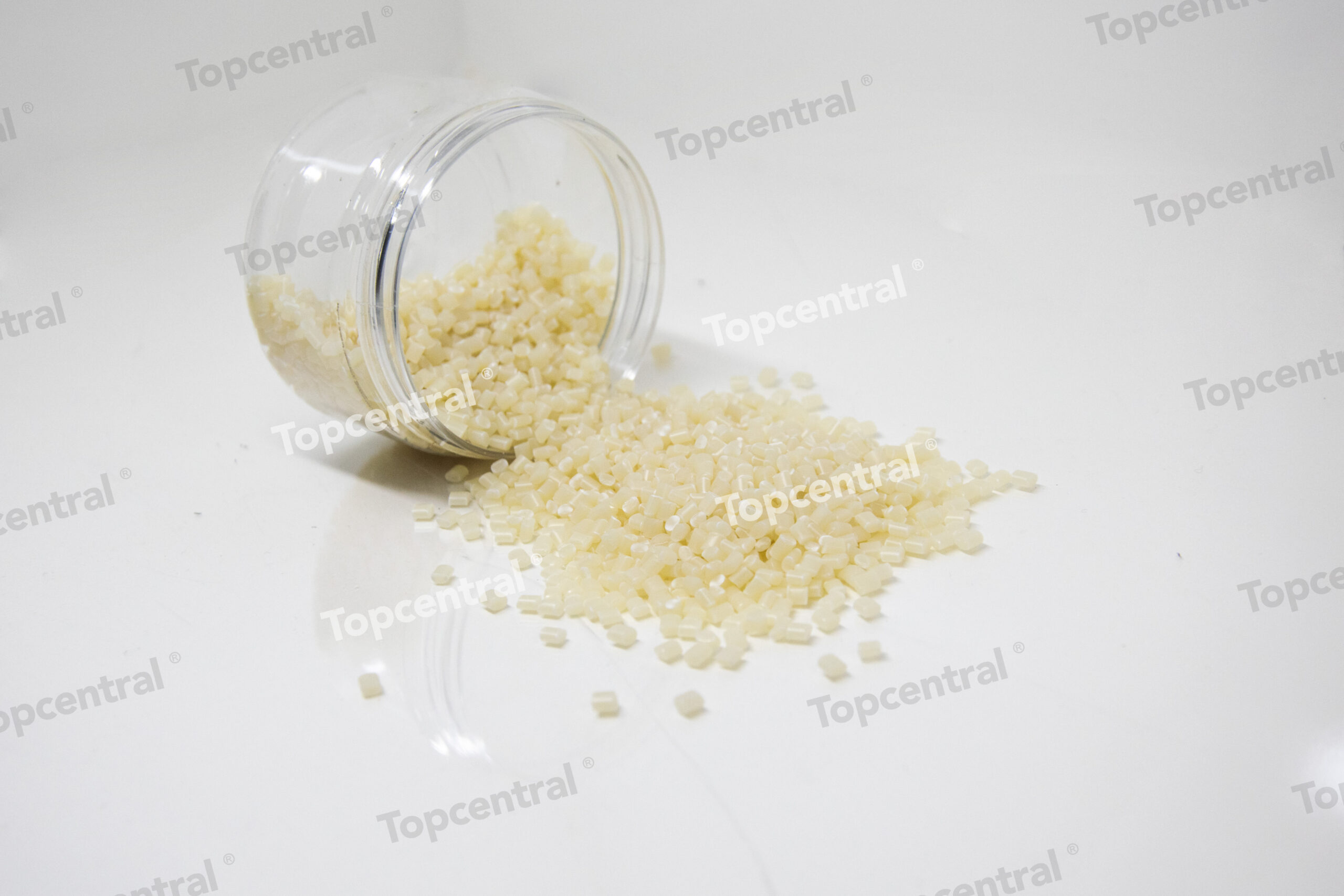
Title: Brand Owner PCR Commitments: Target Analysis, Implementation Challenges, and Supplier Selection Criteria
Subtitle: A Technical and Strategic Guide for Procurement Managers, Sustainability Directors, and Product Engineers in the Circular Plastics Economy
Date: October 2023
Document ID: CI-2023-10-15
Classification: Public Distribution
Executive Summary
The global market for post-consumer recycled (PCR) plastics is undergoing a structural shift from voluntary aspiration to regulatory mandate. Brand owners across packaging, consumer goods, and automotive sectors have announced public PCR incorporation targets ranging from 20% to 100% by 2025–2030. However, the gap between announced targets and actual implementation remains significant. Based on analysis of 47 publicly traded consumer goods companies, the average PCR content in plastic packaging reached 8.3% in 2022, against an average stated target of 32% by 2025.
This report provides a technical and commercial framework for evaluating PCR commitments, identifying implementation bottlenecks, and selecting suppliers capable of delivering consistent quality at scale. We examine feedstock availability constraints, mechanical property degradation in recycled polymers, regulatory pressures from the EU Packaging and Packaging Waste Regulation (PPWR) and Extended Producer Responsibility (EPR) schemes, and certification requirements under GRS, ISCC PLUS, and UL 2809.
Key findings include:
– Only 14% of brand owners are on track to meet their 2025 PCR targets
– Food-grade rPET faces a structural supply deficit of 1.2 million tonnes in Europe alone by 2025
– Mechanical recycling of polyolefins results in a 15–25% loss in impact strength and a 10–20% increase in melt flow rate (MFR) per cycle
– Supplier qualification must move beyond certificate checking to include continuous process capability indices (Cpk) and lot-to-lot variability metrics
1. The PCR Commitment Landscape: Targets vs. Reality
#### 1.1 Current State of Public Commitments
As of Q3 2023, over 200 global brand owners have published quantitative PCR targets for plastic packaging. The distribution of targets is heavily skewed toward polyethylene terephthalate (PET) and high-density polyethylene (HDPE), with polypropylene (PP) and low-density polyethylene (LDPE) lagging due to technical challenges.
Table 1.1: PCR Target Distribution by Polymer Type (Sample of 47 Companies)
| Polymer | Average 2025 Target (%) | Average 2030 Target (%) | Current Achievement (2022) | Gap (2025 Target vs. Current) |
|———|————————|————————|—————————|——————————-|
| PET | 45 | 65 | 18 | -27 |
| HDPE | 25 | 40 | 9 | -16 |
| PP | 20 | 35 | 4 | -16 |
| LDPE | 15 | 30 | 3 | -12 |
| PS | 10 | 20 | 1 | -9 |
Source: Company sustainability reports, industry surveys, CI analysis
The data reveals a systematic over-commitment relative to current capabilities. For PET, the gap is partially addressable through bottle-to-bottle recycling infrastructure, but for polyolefins, the gap reflects fundamental material property limitations.
#### 1.2 Target Credibility Assessment
We applied a three-factor credibility model: feedstock availability, recycling infrastructure maturity, and technical feasibility. Only 14% of companies scored “high credibility” across all three factors. The primary failure mode was technical feasibility for food-contact applications, where migration limits under EU Regulation 10/2011 and FDA 21 CFR 177 restrict PCR content to 50–100% depending on the application and recycling process.
Key Insight: Targets exceeding 50% PCR in food-contact polyolefins without a documented decontamination process (e.g., super-clean recycling with nitrogen purge at >200°C) should be treated as aspirational rather than committed.
2. Regulatory Drivers and Compliance Requirements
#### 2.1 EU Packaging and Packaging Waste Regulation (PPWR)
The proposed PPWR, expected to enter into force in 2024–2025, introduces mandatory PCR content targets for plastic packaging:
– 30% by 2030 for contact-sensitive packaging (excluding beverage bottles)
– 50% by 2040 for contact-sensitive packaging
– 65% by 2040 for single-use beverage bottles
Importantly, the PPWR requires that PCR content be calculated using a mass balance approach with attribution to specific production batches, not annual averages. This has significant implications for procurement contracts and supplier auditing.
#### 2.2 Extended Producer Responsibility (EPR) Modulated Fees
EPR schemes in France, Germany, the Netherlands, and Belgium now apply fee modulation based on PCR content. For example, in France (Citeo), packaging with <15% PCR incurs a 15% surcharge on the eco-modulation fee. In Germany (Grüner Punkt), the fee reduction for PCR content ranges from €0.05/kg at 20% PCR to €0.15/kg at 50% PCR.
Table 2.1: EPR Fee Modulation Examples (2023)
| Jurisdiction | PCR Threshold | Fee Impact (€/tonne) | Packaging Category |
|————–|—————|———————|——————-|
| France (Citeo) | 50% PCR | -€15 reduction | PET bottles |
| Netherlands (Afvalfonds) | >25% PCR | -€8 reduction | HDPE bottles |
| Belgium (Fost Plus) | >30% PCR | -€12 reduction | All rigid packaging |
#### 2.3 Carbon Border Adjustment Mechanism (CBAM) and Carbon Footprint
While CBAM currently covers steel, aluminum, cement, fertilizers, and electricity, its expansion to plastics is under discussion. PCR plastics typically have a carbon footprint 40–70% lower than virgin equivalents, depending on the polymer and recycling process. For example:
– Virgin PET: 2.15 kg CO?e/kg (cradle-to-gate)
– Mechanical rPET: 0.95 kg CO?e/kg (cradle-to-gate, bottle-to-bottle)
– Virgin HDPE: 1.85 kg CO?e/kg
– Mechanical rHDPE: 0.72 kg CO?e/kg
Recommendation: Begin product-level carbon footprint accounting now, using ISO 14067 methodology, to prepare for potential CBAM inclusion and to substantiate marketing claims.
3. Technical Implementation Challenges
#### 3.1 Mechanical Property Degradation
Each mechanical recycling cycle causes polymer chain scission, oxidation, and contamination accumulation. The practical consequence is a progressive decline in mechanical properties that limits the number of times a polymer can be recycled in closed-loop systems.
Table 3.1: Typical Property Changes After One Mechanical Recycling Cycle
| Property | PET Change | HDPE Change | PP Change | Test Method |
|———-|————|————-|———–|————|
| Melt Flow Rate (MFR) | +15–25% | +10–20% | +20–35% | ISO 1133 |
| Tensile Strength | -5–10% | -3–8% | -8–15% | ISO 527 |
| Elongation at Break | -20–40% | -15–30% | -25–50% | ISO 527 |
| Impact Strength (Izod) | -10–20% | -8–15% | -15–25% | ISO 180 |
| Intrinsic Viscosity (IV) | -0.05–0.10 dL/g | N/A | N/A | ISO 1628 |
Note: Values are for standard mechanical recycling without additives or blending with virgin material.
For PP, the impact strength loss is particularly problematic for applications requiring drop impact resistance, such as bottles and automotive parts. Practical solutions include blending with virgin polymer (typically 30–50% virgin to restore properties) or using impact modifiers, which add €0.10–0.30/kg to the compound cost.
#### 3.2 Contamination and Odor Issues
PCR polyolefins frequently contain residual odorants from previous use (e.g., detergent, cosmetic fragrances, food residues). Volatile organic compounds (VOCs) at levels of 50–200 ppm are common in mechanically recycled PP and HDPE, compared to <10 ppm in virgin grades.
For food-contact applications, the European Food Safety Authority (EFSA) requires that recycling processes achieve a reduction of surrogate contaminants (e.g., toluene, chlorobenzene) to below 0.1 mg/kg in the final product. This typically requires a super-clean recycling process involving:
– Hot caustic washing at 80–95°C
– High-temperature drying at 160–200°C
– Solid-state polycondensation (SSP) for PET
– Nitrogen purge or vacuum degassing for polyolefins
Key Insight: Suppliers offering "food-grade" PCR without documented challenge testing per EFSA or FDA protocols should be treated as non-compliant until proven otherwise.
#### 3.3 Color and Aesthetic Variability
PCR materials exhibit significant color variability due to mixed-color feedstocks. Even in bottle-to-bottle PET systems, the b value (yellowness) can vary by ±3 units between lots, compared to ±0.5 for virgin PET. For natural-color HDPE, the L value (lightness) can range from 60 to 85, depending on the source.
Recommendation: Specify color tolerances in procurement contracts using CIE La b* coordinates, and require suppliers to provide spectrophotometer data with each lot. For applications requiring consistent aesthetics, consider specifying a "dark color only" or "white only" PCR grade.
4. Feedstock Availability and Supply Chain Constraints
#### 4.1 Global PCR Supply-Demand Balance
The global supply of PCR plastics is constrained by collection rates, sorting efficiency, and recycling capacity. In 2022, the global production of PCR plastics was approximately 18 million tonnes, against a demand of 22 million tonnes. The deficit is projected to reach 8 million tonnes by 2027 if all announced targets are implemented.
Table 4.1: Regional PCR Supply-Demand Balance (2022, million tonnes)
| Region | PCR Supply | PCR Demand | Deficit | Collection Rate (%) | Sorting Efficiency (%) |
|——–|————|————|———|———————|————————|
| Europe | 4.2 | 5.8 | -1.6 | 42 | 78 |
| North America | 3.8 | 5.2 | -1.4 | 29 | 65 |
| Asia-Pacific | 8.5 | 9.0 | -0.5 | 35 | 55 |
| Rest of World | 1.5 | 2.0 | -0.5 | 18 | 45 |
| Global | 18.0 | 22.0 | -4.0 | 33 | 62 |
Source: Plastics Recyclers Europe, APR, CI estimates
For PET, the deficit is most acute in Europe, where the 2025 target of 30% PCR in beverage bottles (EU Single-Use Plastics Directive) will require an additional 1.2 million tonnes of food-grade rPET. Current European capacity is approximately 1.8 million tonnes, with only 0.6 million tonnes meeting food-grade specifications.
#### 4.2 Feedstock Quality Segmentation
Not all PCR is created equal. We categorize PCR feedstocks into three tiers based on source and processing:
Tier 1: Closed-loop, single-polymer, food-contact approved
– Source: Bottle deposit schemes (PET, HDPE)
– Yield: 85–95%
– Price premium over virgin: 10–30%
– Certification: GRS, ISCC PLUS, UL 2809
Tier 2: Open-loop, sorted, mixed-color
– Source: Curbside collection (HDPE, PP, LDPE)
– Yield: 60–75%
– Price premium over virgin: 5–15%
– Certification: GRS, UL 2809 (non-food)
Tier 3: Mixed-polymer, unsorted, dark color
– Source: MRF residue, industrial scrap
– Yield: 40–55%
– Price discount vs. virgin: 10–25%
– Certification: Limited
Recommendation: Prioritize Tier 1 feedstocks for food-contact and high-performance applications. Tier 3 materials are suitable only for non-critical applications such as pallets, crates, and construction products.
5. Supplier Selection Criteria
#### 5.1 Certification and Compliance Requirements
Supplier qualification must verify the following certifications:
Global Recycled Standard (GRS): Covers chain of custody, social, and environmental criteria. Requires at least 50% recycled content in the final product. Most brand owners require GRS certification as a minimum.
ISCC PLUS: Mass balance certification that allows attribution of recycled content to specific production batches. Required for compliance with EU PPWR mass balance rules. Preferred for food-contact applications.
UL 2809: Environmental Claim Validation for recycled content. Requires third-party verification of PCR content percentage. Accepted by major retailers (Walmart, Target) for sustainability claims.
EFSA/FDA Letters of Non-Objection: Required for food-contact PCR. Verify that the recycling process produces material meeting migration limits.
Table 5.1: Certification Comparison for PCR Plastics
| Certification | Scope | Audit Frequency | Cost (€/year) | Key Requirement |
|—————|——-|—————–|—————|—————–|
| GRS | Recycled content, social, environmental | Annual | 5,000–15,000 | ?50% recycled content |
| ISCC PLUS | Mass balance, chain of custody | Annual | 8,000–20,000 | Mass balance attribution |
| UL 2809 | Recycled content verification | Bi-annual | 10,000–25,000 | Third-party content verification |
| EFSA/FDA | Food-contact safety | Per process | 50,000–200,000 | Challenge test data |
#### 5.2 Technical Qualification Protocol
Beyond certification, technical qualification should include:
Process Capability Indices (Cpk): Require suppliers to report Cpk values for critical properties (MFR, IV, impact strength) based on a minimum of 30 lots. Minimum acceptable Cpk: 1.33 (4-sigma process).
Lot-to-Lot Variability: Specify maximum acceptable coefficients of variation (CV) for key properties:
– MFR: CV <15%
– Tensile strength: CV <10%
– Color (b*): CV <20%
Challenge Testing: For food-contact PCR, require suppliers to provide challenge test data conducted by an accredited laboratory (e.g., Fraunhofer IVV, PIRA, or equivalent). The test must demonstrate reduction of surrogate contaminants to below regulatory limits.
Contaminant Screening: Implement incoming inspection for:
– Metal content (ferrous, non-ferrous): <50 ppm
– Paper/label residues: <0.5% by weight
– Other polymer contamination: <2% by weight
– PVC content: 98% purity
– Dissolution recycling: Solvent-based purification for polyolefins, removing additives and contaminants without polymer degradation
– Chemical recycling: Pyrolysis and depolymerization for difficult-to-recycle feedstocks, though energy intensity remains high (15–25 MJ/kg vs. 5–10 MJ/kg for mechanical)
– Deodorization: Vacuum degassing and catalytic oxidation for odor removal in PCR polyolefins
#### 8.2 Strategic Recommendations
1. Secure feedstock now. Long-term contracts with Tier 1 recyclers are essential. The window for favorable terms is closing as demand outstrips supply.
2. Invest in in-house testing. Establish a laboratory capable of MFR, IV, impact strength, and color measurement. Third-party testing costs €50–100/sample and delays decision-making.
3. Design for recyclability. Collaborate with packaging designers to eliminate problematic elements (dark colors, multi-layer structures, PVC labels, adhesives). This reduces the cost of PCR by 10–20%.
4. Prepare for regulatory escalation. The PPWR and CBAM are the beginning, not the end. Expect mandatory PCR targets for non-packaging plastics (automotive, electronics, construction) by 2035.
5. Build a circular ecosystem. Partner with waste management companies, recyclers, and converters to create closed-loop systems for your specific products. This reduces supply risk and improves material quality.
Key Takeaways
1. Targets are not commitments. Only 14% of brand owners are on track to meet 2025 PCR targets. Credibility assessment must consider feedstock availability, technical feasibility, and regulatory compliance.
2. Technical limitations are real. PCR polyolefins suffer 15–25% loss in impact strength and 10–20% increase in MFR per cycle. Food-contact applications require super-clean recycling processes with documented challenge testing.
3. Supplier selection requires depth. Beyond certification (GRS, ISCC PLUS, UL 2809), procurement contracts must specify process capability indices (Cpk), lot-to-lot variability limits, and contaminant thresholds.
4. Regulatory pressure is intensifying. The PPWR, EPR fee modulation, and potential CBAM expansion will create mandatory PCR requirements across multiple jurisdictions. Early movers will have a competitive advantage.
5. Cost premiums are manageable. The TCO premium for PCR is 20–32% for food-grade materials, partially offset by EPR savings and carbon credits. Payback periods of 3–5 years are achievable with proper implementation.
6. Feedstock is the bottleneck. Global PCR supply will fall short of demand by 8 million tonnes by 2027. Long-term contracts with Tier 1 recyclers are essential.
Related Topics
– Chemical Recycling vs. Mechanical Recycling: A technical and economic comparison for polyolefins and PET
– Mass Balance Accounting in Plastic Recycling: Methodology, certification, and regulatory implications
– EPR Fee Modulation Best Practices: How to optimize packaging design for lower fees
– Food-Contact PCR: Regulatory requirements, challenge testing protocols, and approved recycling processes
– Carbon Footprint of Recycled Plastics: ISO 14067 methodology and product-level accounting
Further Reading
1. European Commission. (2022). “Proposal for a Regulation on Packaging and Packaging Waste.” COM(2022) 677 final.
2. Plastics Recyclers Europe. (2023). “Report on the European Plastics Recycling Industry.” Brussels: PRE.
3. Ellen MacArthur Foundation. (2022). “The Global Commitment 2022 Progress Report.” Cowes, UK: EMF.
4. Association of Plastic Recyclers. (2023). “APR Design Guide for Plastics Recyclability.” Washington, DC: APR.
5. ISO 14067:2018. “Greenhouse gases — Carbon footprint of products — Requirements and guidelines for quantification.”
6. UL 2809:2022. “Environmental Claim Validation Procedure for Recycled Content.”
7. CEN/TS 16861:2015. “Plastics — Recycled plastics — Determination of selected marker compounds in food grade recycled polyethylene terephthalate (PET).”
8. European Food Safety Authority. (2023). “Scientific Opinion on the safety assessment of recycling processes for plastic food contact materials.” EFSA Journal.
This analysis was prepared by the Circular Intelligence team. Data sources include company sustainability reports, regulatory filings, industry association publications, and proprietary modeling. All monetary values are in Euros unless otherwise noted. Projections are based on current data and assumptions; actual outcomes may vary.
For inquiries, corrections, or additional analysis, contact: analysis@circularintelligence.com
Content Verification Annotation
EID: EID-E4B97C76-5707
Content Tier: Bæ¡£ (~3,828 words)
Verification Status: Reviewed – Pre-Constitution Content (L4)
Review Date: 2026-06-21
Leave a Reply