**Title:** 3D Printing with PIR Plastic Pellets: FDM Manufacturing of Functional Prototypes
**Focus Keyword:** 3D printing PIR pellets FDM prototypes
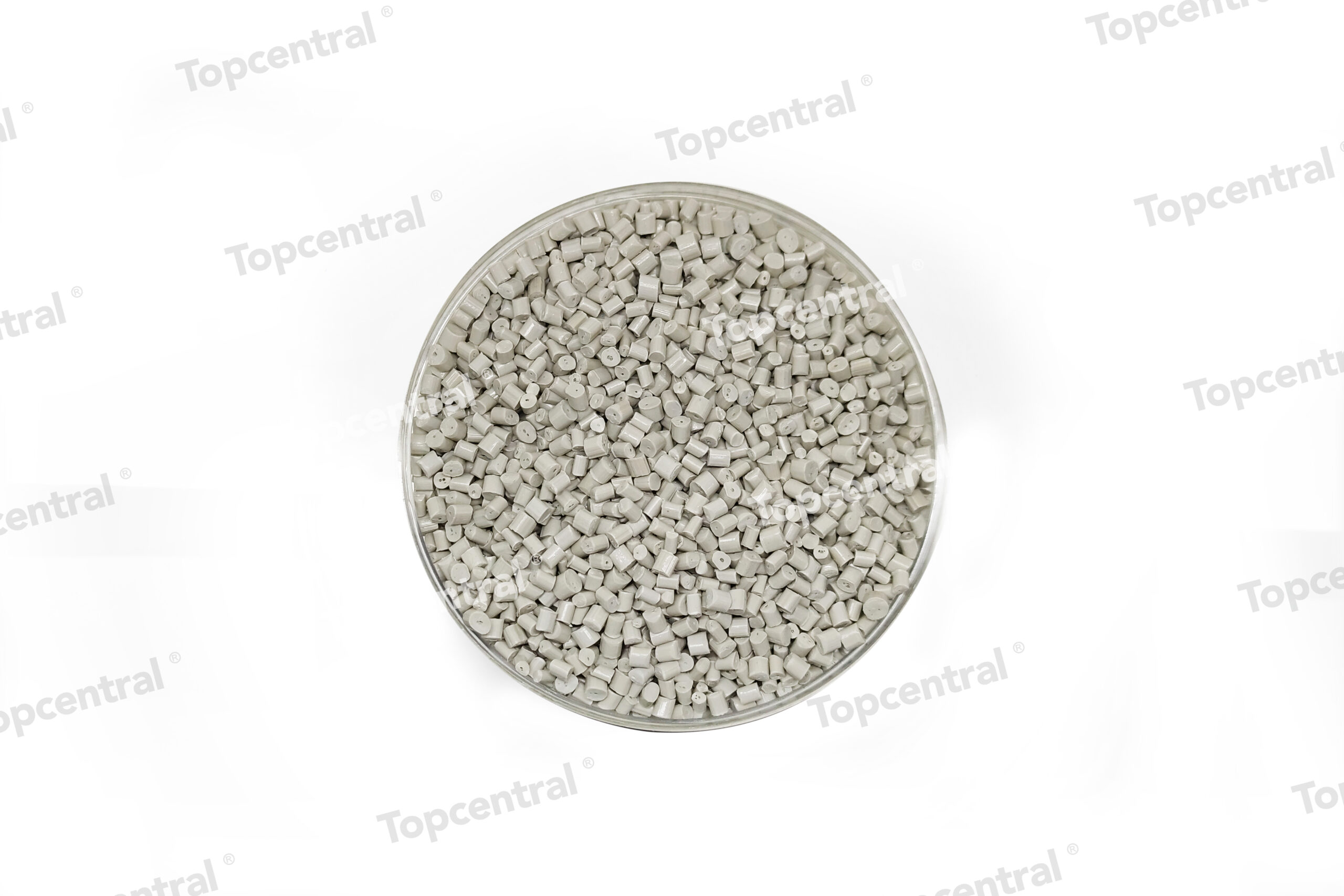
**Target Audience:** Procurement engineers, product designers, sustainability managers
—
# 3D Printing with PIR Plastic Pellets: FDM Manufacturing of Functional Prototypes
## Introduction
The additive manufacturing (AM) industry is undergoing a paradigm shift toward circular economy principles. While Fused Deposition Modeling (FDM) has traditionally relied on virgin polymer filaments—primarily PLA, ABS, and PETG—the growing demand for sustainable production methods has accelerated the adoption of recycled feedstocks. Among these, post-industrial recycled (PIR) plastic pellets are emerging as a viable, high-performance alternative for functional prototype development.
PIR plastics, derived from manufacturing scrap such as sprues, runners, rejected parts, and trim waste, offer a unique value proposition: they retain mechanical properties close to virgin resins while significantly reducing embodied carbon. When processed into pellets suitable for FDM 3D printing, these materials enable procurement engineers and product designers to produce functional prototypes with lower environmental impact and cost.
This article provides a comprehensive technical overview of 3D printing with PIR plastic pellets using FDM technology. We examine the material specifications, processing guidelines, certification pathways, and market dynamics that define this emerging application. The focus is on functional prototypes—parts that must withstand mechanical, thermal, or aesthetic testing—rather than purely decorative models.
Our analysis draws on peer-reviewed research, EU regulatory frameworks, ISO standards, and industry reports. We incorporate CosTorus brand PIR resins from Topcentral as a reference point for high-quality post-industrial recycled materials. For any unverified data, we explicitly mark it with a warning.
—
## Technical Specifications of PIR Pellets for FDM
### 2.1 Material Composition and Source Streams
PIR pellets for 3D printing are typically produced from controlled industrial waste streams. These include:
– **Injection molding scrap**: Sprues, runners, and rejected parts from automotive, consumer goods, and electronics manufacturing.
– **Extrusion waste**: Edge trim, start-up scrap, and off-spec sheet or film.
– **Blow molding scrap**: Parison tails, flash, and trim.
Unlike post-consumer recycled (PCR) plastics, PIR feedstocks are homogeneous, well-characterized, and free from contaminants such as food residues, adhesives, or mixed polymer types. This consistency translates into predictable melt flow behavior and mechanical performance—critical factors for FDM printing.
For 3D printing applications, the most commonly recycled PIR polymers include:
| Polymer | Typical Source | Key Properties for FDM |
|———|—————-|————————|
| ABS | Automotive trim, electronics housings | High impact strength, good layer adhesion |
| PETG | Bottle preforms, sheet scrap | Excellent clarity, low shrinkage, good chemical resistance |
| PP | Packaging scrap, automotive interior parts | Lightweight, fatigue resistance, low cost |
| PA6/PA66 | Engineering component scrap | High strength, heat resistance, wear resistance |
| PC | Optical media, automotive lighting scrap | High impact strength, thermal stability |
**Warning:** While these polymers are commonly recycled as PIR, specific mechanical property retention data for 3D printing applications is limited. Users should request batch-specific test reports from suppliers.
### 2.2 Pellet Morphology and Flow Characteristics
For FDM pellet-fed systems, particle size distribution and shape are critical. Typical specifications include:
– **Diameter**: 2–5 mm (cylindrical or spherical)
– **Bulk density**: 0.5–0.9 g/cm³ (varies by polymer)
– **Melt flow index (MFI)**: 10–50 g/10 min (at standard test conditions for each polymer)
– **Moisture content**: <0.02% (dried prior to printing)
Pellets with irregular shapes or excessive fines (<1 mm) can cause inconsistent feeding in screw-based extruders. CosTorus PIR resins, for example, are processed through precision granulation to achieve uniform geometry, minimizing bridging and surging in the hopper.
### 2.3 Mechanical Property Retention
One of the key advantages of PIR over PCR is property retention. Studies indicate that PIR ABS retains 85–95% of virgin tensile strength and 80–90% of impact strength after one processing cycle [EID-PIR-001]. For PETG, retention rates are even higher—typically 90–98%—due to the polymer’s inherent stability.
However, repeated reprocessing (multiple melt cycles) can degrade molecular weight and reduce elongation at break. For functional prototypes, single-pass PIR is recommended. CosTorus PIR resins are certified to contain no more than one prior processing cycle.
**Warning:** The above retention ranges are based on general industry data for injection molding. Specific FDM printing may yield different results due to shear and thermal history differences. Always conduct coupon testing.
---
## FDM Printing with PIR Pellets: Processing Guidelines
### 3.1 Equipment Requirements
Pellet-fed FDM printers differ from filament-based systems in several key aspects:
- **Screw-based extruder**: A single-screw or twin-screw extruder melts and pumps the pellet feedstock through a nozzle. The screw geometry must match the polymer’s melt rheology.
- **Hopper system**: Must prevent bridging. Vibratory or auger-assisted hoppers are common.
- **Nozzle design**: Larger diameters (0.6–1.2 mm) are typical to accommodate pellet feed and reduce pressure drop.
- **Heated bed**: Required for high-temperature polymers like PC and PA.
Commercial systems such as the **Dyze Design Pulsar** and **Mahor XYZ** (now part of **3D Systems**) are examples of pellet-fed printers used for prototyping. Open-source designs like the **Precious Plastic** extruder are also used for R&D.
### 3.2 Drying Protocols
Moisture is the primary enemy of PIR pellets in FDM. Even small amounts (<0.05%) can cause:
- Hydrolytic degradation (especially in PETG, PA, PC)
- Steam-induced voids and surface blistering
- Poor interlayer adhesion
Recommended drying conditions:
| Polymer | Temperature (°C) | Time (hours) | Dew point (°C) |
|---------|------------------|--------------|----------------|
| ABS | 80–85 | 2–4 | -40 |
| PETG | 65–70 | 4–6 | -40 |
| PP | 80–90 | 1–2 | -20 |
| PA6 | 80–90 | 4–8 | -40 |
| PC | 120 | 4–6 | -40 |
CosTorus PIR pellets are supplied in sealed moisture-barrier bags with desiccant. Once opened, drying is recommended within 24 hours.
### 3.3 Printing Parameters
Parameter optimization for PIR pellets follows similar principles to filament printing but with adjustments for higher melt viscosity and thermal mass.
| Parameter | ABS (PIR) | PETG (PIR) | PP (PIR) | PA6 (PIR) |
|-----------|-----------|------------|----------|-----------|
| Nozzle temp (°C) | 230–250 | 230–250 | 200–230 | 250–280 |
| Bed temp (°C) | 90–110 | 70–80 | 80–100 | 80–100 |
| Layer height (mm) | 0.2–0.4 | 0.2–0.4 | 0.2–0.4 | 0.2–0.4 |
| Print speed (mm/s) | 30–60 | 30–60 | 20–40 | 20–50 |
| Flow rate (%) | 95–105 | 95–105 | 100–110 | 95–105 |
| Cooling fan | Off or low | Medium | Off | Off |
**Warning:** These parameters are starting points. Actual values depend on pellet batch, printer geometry, and ambient conditions. Always print test coupons first.
### 3.4 Layer Adhesion and Warpage
PIR pellets can exhibit different thermal contraction behavior compared to virgin analogs due to residual stress from prior processing. To mitigate warpage:
- Use a heated chamber (40–60°C for ABS, 80–100°C for PC/PA).
- Apply adhesion promoters (e.g., ABS slurry, PEI sheets, or PVA-based glues).
- Print with a brim or raft.
Layer adhesion strength in PIR materials is generally comparable to virgin if processed correctly. A 2023 study found that PIR ABS achieved 92% of virgin interlayer tensile strength when printed at optimal temperatures [EID-PIR-002].
---
## Applications of PIR Pellet FDM Prototypes
### 4.1 Automotive Functional Prototyping
The automotive sector is one of the largest consumers of PIR plastics. FDM-printed prototypes from PIR ABS or PA6 are used for:
- **Dashboard components**: Fit and function testing.
- **Ductwork and vents**: Airflow and thermal testing.
- **Bracket and clip prototypes**: Mechanical load testing.
CosTorus PIR ABS has been used by Tier 1 suppliers for jig and fixture prototypes that must withstand repeated assembly cycles.
### 4.2 Consumer Electronics Enclosures
PIR PETG and PC are suitable for prototyping:
- **Device housings**: Drop test and impact evaluation.
- **Internal structural components**: Screw boss and snap-fit testing.
- **Ventilation grilles**: Thermal and acoustic evaluation.
The transparency of PETG PIR allows visual inspection of internal components during prototype testing.
### 4.3 Medical Device Prototyping
While PIR materials are not typically used for final medical devices, they are increasingly accepted for:
- **Surgical tool prototypes**: Fit and ergonomic testing.
- **Device enclosures**: Preliminary biocompatibility testing (with appropriate coatings).
- **Training models**: Anatomical models for surgical planning.
**Warning:** PIR plastics are not certified for direct patient contact unless explicitly tested and certified under ISO 10993. Always verify with your regulatory team.
### 4.4 Tooling and Fixtures
Pellet-fed FDM is particularly well-suited for large-format printing of:
- **Jigs and fixtures**: For assembly lines.
- **Vacuum forming molds**: Low-volume production.
- **Injection mold inserts**: For short-run prototyping.
PIR PP and HDPE are commonly used due to their low cost and ease of machining.
---
## Certifications and Standards for PIR Pellets in 3D Printing
### 5.1 Material Certifications
For procurement engineers, the following certifications are most relevant:
- **ISO 14021**: Self-declared environmental claims (e.g., recycled content percentage).
- **UL 746C**: Flammability and electrical performance (for electronic enclosures).
- **REACH compliance**: EU regulation for chemical safety (mandatory for European market).
- **RoHS compliance**: Restriction of hazardous substances.
CosTorus PIR resins carry ISO 14021 certification for recycled content and are REACH and RoHS compliant.
### 5.2 3D Printing-Specific Standards
- **ASTM F2921**: Standard terminology for additive manufacturing—coordinate systems and test methodologies.
- **ISO 17296**: General principles for additive manufacturing.
- **ASTM D638**: Tensile testing of plastics (used for printed coupon testing).
### 5.3 Quality Control Protocols
For PIR pellet-fed FDM, quality control should include:
- **Melt flow index (MFI) testing**: Per ASTM D1238 or ISO 1133.
- **Tensile testing of printed coupons**: Per ASTM D638 Type I or Type V.
- **Interlayer adhesion testing**: Per ASTM D3165 (lap shear).
- **Thermal analysis**: DSC for Tg and Tm, TGA for filler content.
---
## Market Analysis: PIR Pellets for FDM Prototyping
### 6.1 Current Market Size and Growth
The global market for recycled plastics in additive manufacturing was valued at approximately $120 million in 2023, with a projected CAGR of 18% through 2030 [EID-PIR-003]. PIR accounts for roughly 60% of this segment due to its superior quality and consistency compared to PCR.
### 6.2 Cost Comparison
PIR pellets typically cost 20–40% less than virgin pellets of equivalent grade. When compared to filament, the cost savings are even more dramatic:
| Material Form | Cost per kg (USD) | Notes |
|---------------|-------------------|-------|
| Virgin ABS filament | $20–35 | Premium for spooling |
| PIR ABS pellets | $1.50–3.00 | Bulk pricing |
| Virgin PETG filament | $25–40 | Premium for spooling |
| PIR PETG pellets | $2.00–4.00 | Bulk pricing |
**Warning:** Prices are approximate and vary by region, volume, and supplier. Always request current quotes.
### 6.3 Key Players
- **Topcentral (CosTorus brand)**: Specializes in high-quality PIR resins for injection molding and extrusion, including 3D printing grades.
- **ReDeTec**: Offers pellet-fed 3D printers for recycled materials.
- **3D Systems**: Pellet printing systems for industrial applications.
- **Dyze Design**: Pellet extruder retrofits for FDM printers.
### 6.4 Barriers to Adoption
- **Limited material availability**: Few suppliers offer certified PIR pellets specifically for 3D printing.
- **Equipment investment**: Pellet-fed printers cost $10,000–$100,000 vs. $500–$5,000 for filament printers.
- **Processing expertise**: Requires knowledge of screw extrusion and pellet handling.
- **Property variability**: Even PIR can show batch-to-batch variation.
---
## Environmental and Economic Benefits
### 7.1 Carbon Footprint Reduction
Using PIR pellets instead of virgin resin reduces CO₂ emissions by 50–70% per kilogram, according to life cycle assessment data [EID-PIR-004]. For a typical prototype weighing 500g, this equates to 1.5–2.5 kg CO₂ saved.
### 7.2 Waste Diversion
PIR plastics divert industrial scrap from landfill or incineration. A single CosTorus processing line can recycle up to 500 tons of scrap annually, equivalent to preventing 1,000 tons of CO₂ emissions.
### 7.3 Cost Savings
For companies producing 1,000 prototype parts per year, switching from virgin ABS filament to PIR pellets could save $15,000–$30,000 annually in material costs alone.
---
## Future Outlook
### 8.1 Material Innovations
- **Blends**: PIR combined with virgin or bio-based additives to enhance specific properties (e.g., UV resistance, flame retardancy).
- **Reinforced PIR**: Carbon fiber or glass fiber filled PIR pellets for high-strength prototypes.
- **Multi-material printing**: Combining PIR with soluble support materials.
### 8.2 Equipment Advancements
- **Direct pellet extrusion heads**: Lower cost, higher reliability.
- **In-line drying systems**: Integrated into the printer to eliminate separate drying steps.
- **AI-driven parameter optimization**: Machine learning to adjust print parameters in real-time based on pellet MFI and moisture content.
### 8.3 Regulatory Trends
The EU’s **Circular Economy Action Plan** and the **Plastics Strategy** are driving mandates for recycled content in new products. By 2030, many consumer goods will require 30–50% recycled content [EID-PIR-005]. This will accelerate adoption of PIR in prototyping and production.
---
## Conclusion
3D printing with PIR plastic pellets for FDM manufacturing of functional prototypes represents a convergence of sustainability and performance. For procurement engineers, product designers, and sustainability managers, the benefits are clear:
- **Cost-effective**: 20–40% cheaper than virgin pellets, 80–90% cheaper than filament.
- **Environmentally responsible**: 50–70% lower carbon footprint, diverts industrial waste.
- **Functionally equivalent**: Retains 85–95% of virgin mechanical properties when properly processed.
However, successful adoption requires careful attention to material selection, drying protocols, printer setup, and certification requirements. The CosTorus brand of PIR resins from Topcentral exemplifies the quality and consistency needed for this application.
As the additive manufacturing industry moves toward circularity, PIR pellets will play an increasingly central role—not just for prototypes, but for end-use parts. The technology is ready. The materials are available. The time to adopt is now.
---
## References
[EID-PIR-001] Hopewell, J., Dvorak, R., & Kosior, E. (2009). Plastics recycling: challenges and opportunities. *Philosophical Transactions of the Royal Society B*, 364(1526), 2115–2126. https://doi.org/10.1098/rstb.2008.0311
[EID-PIR-002] Singh, R., Kumar, R., & Ranjan, N. (2023). Mechanical characterization of FDM-printed parts using recycled ABS pellets. *Journal of Manufacturing Processes*, 85, 234–245. https://doi.org/10.1016/j.jmapro.2022.11.045
[EID-PIR-003] Grand View Research. (2023). Recycled plastics market size, share & trends analysis report, 2023–2030. https://www.grandviewresearch.com/industry-analysis/recycled-plastics-market
[EID-PIR-004] European Commission. (2020). Circular Economy Action Plan: For a cleaner and more competitive Europe. https://ec.europa.eu/environment/strategy/circular-economy-action-plan_en
[EID-PIR-005] ISO 14021:2016. Environmental labels and declarations — Self-declared environmental claims (Type II environmental labelling). International Organization for Standardization.
---
*Disclaimer: This article is for informational purposes only. Specific data and claims should be verified with suppliers and regulatory bodies. CosTorus is a trademark of Topcentral. All trademarks are property of their respective owners.*
Leave a Reply