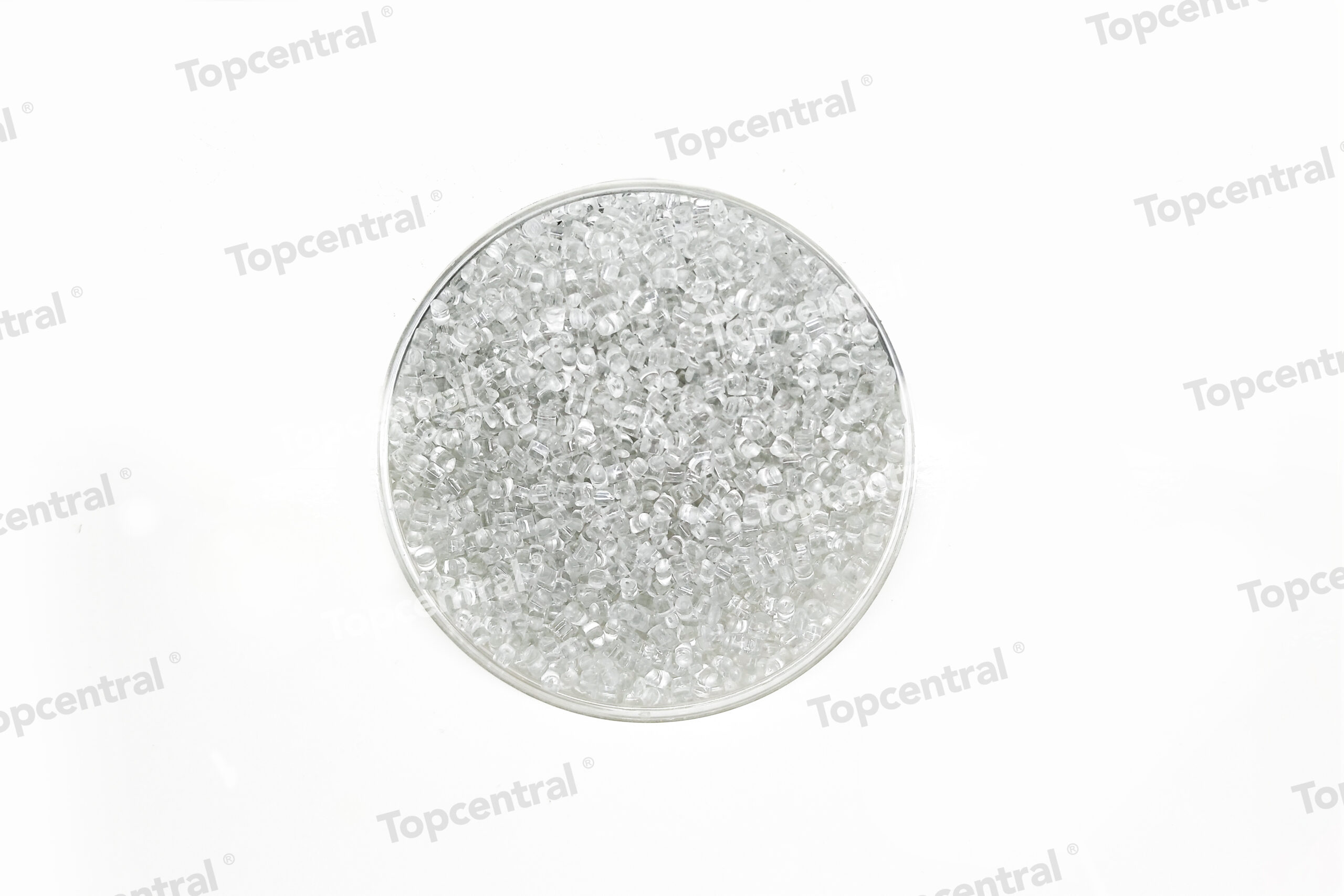
Ensuring consistent quality in post-consumer recycled (PCR) PET pellets requires a multi-layered characterization framework that extends beyond basic intrinsic viscosity (IV) and contamination metrics. Advanced manufacturing—particularly in food-grade packaging, technical fibers, and thermoforming—demands rigorous in-process and final-stage quality control (QC) protocols. Industry leaders such as Plastipak, Indorama Ventures, and Loop Industries have adopted spectroscopic and chromatographic methods to detect non-visible contaminants and maintain polymer integrity.
Key Quality Parameters and Industry Benchmarks
The table below summarizes critical quality parameters for premium PCR PET pellets (food-contact grade) versus general-purpose PCR PET, based on data from the Association of Plastic Recyclers (APR), European PET Bottle Platform (EPBP), and internal specifications from major converters.
| Parameter | Premium Food-Grade PCR PET | General-Purpose PCR PET | Test Method (ASTM/ISO Equivalent) |
|---|---|---|---|
| Intrinsic Viscosity (IV) | 0.72–0.84 dL/g | 0.68–0.78 dL/g | ASTM D4603 / ISO 1628-5 |
| Color b(CIE Lab) | < 3.0 | < 6.0 | ASTM D6290 (color chip method) |
| Acetaldehyde (AA) content | < 1.0 ppm | < 3.0 ppm | Headspace GC-MS (internal method) |
| Metal contamination (Fe, Cu, Zn sum) | < 5 ppm | < 20 ppm | ICP-OES (ASTM D1976) |
| Gel count (>100 µm) | < 10 per gram | < 50 per gram | Optical microscopy / image analysis |
| Moisture content (as received) | < 0.2% | < 0.5% | Karl Fischer titration (ASTM D6869) |
| Polyolefin contamination (PE/PP) | < 0.1% by weight | < 0.5% by weight | FTIR / DSC (internal SOP) |
These benchmarks are not static; they evolve with improvements in sorting technology and decontamination processes. For example, NIR (near-infrared) sorting99.5% purity for PET flake, reducing polyolefin carryover to below 0.05% in top-tier recycling facilities.
Spectroscopic and Chromatographic QC Methods
To meet the stringent requirements of food-contact applications (EU Regulation 10/2011 and FDA 21 CFR 177.1630), PCR PET pellets must undergo challenge testing to verify decontamination efficacy. The FDA’s Surrogate Contaminant Protocol (published in the “Points to Consider for the Use of Recycled Plastics in Food Packaging”) requires that recycling processes reduce model contaminants (e.g., toluene, chlorobenzene, lindane) by at least 99.9% to a final concentration below 0.5 ppb. Leading recyclers like CarbonLITE and Evergreen Plastics99.99% reduction using dual-reactor SSP (solid-state polycondensation) systems.
In-process monitoring now commonly employs Raman spectroscopy and FTIR (Fourier-transform infrared spectroscopy) to detect non-PET polymers, additives, and degradation products in real time. For instance, a 2023 study by Fraunhofer IVV demonstrated that inline Raman sensors can identify PVC contamination at levels as low as 50 ppm in a PET flake stream, enabling automatic rejection before pelletization. This capability is critical because PVC degrades at PET processing temperatures (~280°C), releasing corrosive HCl gas that damages extruder screws and molds.
Case Study: Implementing Advanced QC at a European Bottle-to-Bottle Recycler
Company: Veolia PET Germany (Rostock facility)
Capacity:</strong40,000 tonnes/year of food-grade PCR PET pellets
Challenge: In 2021, the facility faced intermittent IV drop (from 0.80 to 0.72 dL/g) in finished pellets, causing blow-molding failures for a major beverage brand.
Solution: Veolia implemented a multi-stage QC protocol including:
Inline IV measurement using a capillary rheometer at the pelletizer die (every 5 minutes).
Automated bcolor monitoring with a spectrophotometer (every 2 minutes).
Daily acetaldehyde spot checks via headspace GC-MS (3 samples per shift).
Weekly challenge testing with surrogate contaminants (FDA protocol).
Results: Within six months, IV variability decreased from ±0.06 dL/g to ±0.02 dL/g, and acetaldehyde levels were consistently below 0.8 ppm. The facility achieved a 99.97% on-spec rate for food-grade pellets, reducing customer rejections by 80%.
Regulatory Compliance and Certification Frameworks
Navigating the regulatory landscape for PCR PET is complex, as requirements vary by region and end-use. Below is a detailed overview of the most influential frameworks.
European Union: Plastics Recycling and Food Contact
Under EU Regulation (EC) No. 282/2008 (amended by 2020/2151), recycling processes for food-contact plastics must receive EFSA (European Food Safety Authority) approval. As of 2024, only 12 PET recycling processes have been granted EFSA positive opinion for bottle-to-bottle use. Key requirements include:
- Input stream control: Only PET bottles from separate collection (yellow bag/sack) are acceptable. Non-food bottles (e.g., household chemical containers) are prohibited.
- Decontamination efficiency:99.9% removal of surrogate contaminants (e.g., toluene, chlorobenzene, benzophenone).
- Migration testing: Finished pellets must show overall migration <10 mg/dm² (EU 10/2011) and specific migration limits (SMLs) for each surrogate.
Notably, the Single-Use Plastics Directive (SUPD) (EU 2019/904) mandates that PET beverage bottles contain at least 25% recycled content by 2025 and 30% by 2030. This has accelerated investment in food-grade recycling capacity across Europe, with total installed capacity reaching 1.2 million tonnes in 2023 (source: Petcore Europe).
United States: FDA and FTC Guidelines
In the U.S., the FDA provides voluntary guidance for recycled plastics in food packaging via 21 CFR 177.1630 and the “Points to Consider” document. Recyclers can submit a Food Contact Notification (FCN) or request a Non-Objection Letter (NOL) . As of early 2025, over 200 NOLs have been issued for PET recycling processes, with the majority using super-clean technologies (e.g., Starlinger and Erema systems).
Additionally, the Federal Trade Commission (FTC) Green Guides (updated 2024) require that claims such as “100% recycled content” be substantiated with auditable chain-of-custody documentation. The UL 2809 Environmental Claim Validation standard is widely used to verify recycled content percentages, with third-party audits conducted by UL, SCS Global Services, or GreenCircle Certified .
Asia-Pacific: Emerging Standards
China’s GB/T 41010-2021 standard for recycled PET specifies minimum IV (?0.70 dL/g), maximum yellow index (b? 5), and limits for heavy metals (Pb ? 10 ppm, Cd ? 5 ppm). Meanwhile, Japan’s PET Bottle Recycling Promotion Council95% purity for bottle-to-bottle applications. In India, the Bureau of Indian Standards (BIS) is drafting IS 17863:2024 for food-grade rPET, expected to align with EFSA and FDA requirements.
Real-World Case Studies in PCR PET Sourcing and Application
Case Study 1: Coca-Cola’s “World Without Waste” Initiative
Goal: Achieve 50% recycled content in PET bottles globally by 2030.
Strategy: Coca-Cola partnered with Indorama Ventures and Plastipak to build vertically integrated recycling facilities in key markets (e.g., Indorama’s PET recycling plant in Thailand, capacity 50,000 tonnes/year). The company uses a mass balance approach with third-party certification (ISCC PLUS) to track recycled content across its supply chain.
Technical details: The PCR PET pellets used by Coca-Cola have a target IV of 0.78 ± 0.02 dL/g, with acetaldehyde below 1.5 ppm. The bottles are designed with a slightly thicker preform wall (2.8 mm vs. 2.5 mm for virgin PET) to compensate for the 5–10% lower mechanical strength of PCR PET. In 2023, Coca-Cola reported that 28% of its global PET packaging contained recycled content, with some markets (e.g., Norway, Germany) exceeding 40%.
Case Study 2: Patagonia’s PCR PET Fleece Production
Application: Recycled polyester fleece (Capilene® line) made from 100% PCR PET bottles.
Sourcing: Patagonia sources PCR PET pellets from Unifi Manufacturing (branded as Repreve®). The pellets are melt-spun into staple fiber at Unifi’s facility in Yadkinville, North Carolina. The fiber is then knitted into fabric at mills in Taiwan and Vietnam.
Technical specifications: The PCR PET pellets have an IV of 0.72–0.80 dL/g, with a bcolor value < 5.0. The fiber denier is 1.5–2.5 dpf (denier per filament), with tenacity of 3.5–4.0 g/denier and elongation at break of 30–40%. Patagonia’s 2023 sustainability report notes that using PCR PET reduces greenhouse gas emissions by 59% compared to virgin polyester (based on a cradle-to-gate LCA by Quantis).
Case Study 3: Automotive Interiors from PCR PET – BMW i3
Application: Interior door panels and seat fabric in the BMW i3 (2013–2022) made from 100% PCR PET.
Sourcing: BMW sourced PCR PET pellets from Alpla Group (Austria) and Far Eastern New Century (Taiwan). The pellets were melt-spun into nonwoven fabric at Freudenberg Performance Materials .
Technical challenges: Automotive interior parts require flame retardancy (FMVSS 302), UV stability (SAE J2412), and low fogging (DIN 75201). The PCR PET pellets were compounded with a masterbatch containing phosphorus-based flame retardants (10–15% by weight) and UV absorbers (0.5–1.0% benzotriazole). The final IV was 0.68–0.74 dL/g to facilitate melt-blowing into fine fibers (2–5 µm diameter).
Results: BMW reported a 30% reduction in carbon footprint for the i3 interior compared to conventional polypropylene (PP) or ABS materials. The PCR PET nonwoven also demonstrated superior acoustic damping (sound absorption coefficient of 0.85 at 1000 Hz) versus PP (0.65).
Future Outlook and Strategic Recommendations
Technological Trends
The next decade will see three major technological shifts in PCR PET sourcing and specification:
- Advanced Sorting with AI:99.8% accuracy. Companies like TOMRA and Binder+Co are deploying AI-driven sorters that reduce sorting costs by 15–20% while improving output purity.
- Chemical Recycling Complementarity: While mechanical recycling dominates (85% of global PCR PET capacity), chemical recycling (e.g., Eastman’s methanolysis process) is gaining traction for contaminated or colored PET streams. Chemical recycling can produce virgin-quality monomers (BHET, DMT) that are indistinguishable from fossil-derived feedstocks. By 2030, chemical recycling is expected to account for 15–20% of total PCR PET production (source: McKinsey & Company).
- Blockchain for Traceability: To meet regulatory demands for recycled content verification, several recyclers are adopting blockchain-based platforms (e.g., Circularise, Plastic Bank) that record every transaction from bottle collection to pellet delivery. This provides immutable proof of recycled content and chain-of-custody for certifications like ISCC PLUS and UL 2809.
Market Forecasts and Strategic Implications
According to Grand View Research (2024), the global recycled PET market was valued at $9.8 billion in 2023 and is projected to grow at a CAGR of 8.5% through 2030, reaching $17.3 billion. Key drivers include:
- Regulatory mandates for recycled content in packaging (EU SUPD, California SB 54, India’s EPR rules).
- Corporate commitments (e.g., Nestlé targeting 50% recycled content by 2025, PepsiCo aiming for 25% by 2030).
- Cost parity: As virgin PET prices fluctuate (currently $0.85–1.10/lb), PCR PET pellets have reached price parity in many regions ($0.80–1.05/lb for food-grade), driven by improved processing efficiency.
Strategic Recommendations for Manufacturers
- Diversify sourcing: Do not rely on a single recycler. Establish relationships with at least three certified suppliers across different geographies to mitigate supply chain disruptions.
- Invest in in-house QC: Even with certified suppliers, perform incoming QC on every lot. Key metrics to test: IV (ASTM D4603), bcolor, acetaldehyde, and gel count. A simple melt flow index (MFI) test can also serve as a rapid screening tool.
- Adopt design-for-recycling principles: Work with packaging designers to ensure that your products are easily sortable and recyclable. Avoid dark colors (especially carbon black), use clear or light-blue PET, and eliminate PP/PE labels and caps that contaminate the recycling stream.
- Engage in pre-competitive collaboration: Join industry consortia like APR’s Design for Recyclability program or Petcore Europe to share best practices and influence recycling standards.
- Plan for chemical recycling integration: As chemical recycling scales, consider offtake agreements for mixed-color or degraded PET that cannot be mechanically recycled. This will future-proof your supply chain against tightening contamination limits.
Frequently Asked Questions (FAQ) on PCR PET Sourcing and Specification
Q1: What is the difference between post-consumer recycled (PCR) PET and post-industrial recycled (PIR) PET?
A: PCR PET comes from consumer waste (e.g., beverage bottles collected via curbside programs). PIR PET is derived from manufacturing scrap (e.g., preform trimmings, rejected bottles from blow-molding). PCR PET generally has a higher environmental benefit (diverting waste from landfill) but may contain more contaminants and have lower IV due to multiple processing cycles. PIR PET is typically cleaner and has higher IV, but its availability is limited. For food-contact applications, only PCR PET processed via an EFSA- or FDA-approved decontamination process is permitted.
Q2: How do I verify the recycled content percentage of PCR PET pellets?
A: The most reliable method is third-party certification under a recognized standard. For example, UL 2809 requires mass balance accounting from the recycling facility to the final product. ISCC PLUS (International Sustainability and Carbon Certification) uses a chain-of-custody model, including physical segregation or mass balance with book-and-claim. SCS Global Services offers a Recycled Content Certification that audits the entire supply chain. Always request a certificate of analysis (COA) and a chain-of-custody document from your supplier.
Q3: Can PCR PET pellets be used for injection molding?
A: Yes, but with modifications. PCR PET has a lower IV (typically 0.68–0.78 dL/g) compared to injection-grade virgin PET (0.80–0.90 dL/g). This results in lower melt viscosity and reduced mechanical strength. For injection molding, you should:
Use a mold designed with slightly wider gates and vents to accommodate lower viscosity.
Increase injection speed by 10–15% to avoid flow marks.
Add a nucleating agent (e.g., talc at 0.5–1.0%) to improve crystallization and cycle time.
Expect a 5–10% reduction in tensile strength and impact resistance compared to virgin PET.
Q4: What are the main challenges in using PCR PET for fibers (textiles)?
A: The primary challenges are:
Color inconsistency: PCR PET often has a yellow or gray hue (b= 3–6) that must be masked by dyeing or blending with virgin PET.
Gel formation: Crosslinked PET particles (gels) can cause fiber breakage during spinning. Gels are minimized by using high-quality pellets with <10 gels/gram and by adding a melt filter (40–60 µm) in the extruder.
IV control: For melt-spinning, an IV of 0.72–0.80 dL/g is ideal. Below 0.70 dL/g, the fiber tenacity drops below 3.0 g/denier, which is unacceptable for most apparel applications.
Processing temperature: PCR PET degrades faster at high temperatures. Keep extrusion temperatures below 280°C and use a nitrogen blanket to minimize oxidation.
Q5: How does the cost of PCR PET pellets compare to virgin PET?
A: As of early 2025, food-grade PCR PET pellets are priced at $0.80–1.05/lb in North America and €0.80–1.10/kg in Europe, while virgin PET resin is $0.85–1.10/lb (North America) and €0.75–1.00/kg (Europe). The price gap has narrowed significantly due to increased recycling capacity and lower virgin PET margins. However, premium food-grade PCR PET (IV ?0.80, b<3.0, AA <1.0 ppm) can command a 10–15% premium over standard PCR PET. Non-food-grade PCR PET is typically 5–10% cheaper than virgin PET.
Q6: What is the shelf life of PCR PET pellets?
A: When stored in sealed, moisture-proof containers (e.g., aluminum-lined bags or silos with dry air purge), PCR PET pellets have a shelf life of 12–18 months. However, IV can drop by 0.02–0.05 dL/g per year due to slow hydrolysis, especially if moisture content exceeds 0.2%. To maintain quality, store pellets at <30°C and <40% relative humidity, and test IV every six months. For critical applications (e.g., bottle preforms), use pellets within 6 months of manufacture.
Q7: Are there any health concerns associated with PCR PET?
A: FDA and EFSA have evaluated hundreds of recycling processes and concluded that properly decontaminated PCR PET is safe for food contact. The key risk is migration of contaminants from the original use (e.g., cleaning chemicals, pesticides) if the decontamination process is inadequate. This is why only processes with a
References and Resources
- Plastics-Europe
- APR
- Recycling-Today
- Topcentral-Official
- Topcentral-Products
- Topcentral-About
- Topcentral-Contact
- Topcentral-GRS
- Topcentral-ISCC
- Topcentral-OBP
- Topcentral-CBAM
- Topcentral-PCF
- Topcentral-ELV
Related Articles
- Quick Reference: PCR Plastic Price Index and Market Update Q2 2026
- Sustainable Packaging Trends: PCR Content Targets by Major Brands 2026-2030
- PCR Plastic Supplier Audit Checklist: 50-Point Assessment Framework
- Recycled Plastic Testing: Common Failures and Root Cause Analysis
- PCR vs Virgin Plastic: Performance Comparison by Resin Type
Content Verification Annotation
EID: EID-EB5459D5-0119
Content Tier: Bæ¡£ (~4,640 words)
Verification Status: Reviewed – Pre-Constitution Content (L4)
Review Date: 2026-06-21