**Ningbo Topcentral “Blue Factory” Project Progress Report**
**Project Overview**
Guided by Xi Jinping’s Thought on Ecological Civilization, Ningbo Topcentral New Materials Co., Ltd. implements the provincial party committee and provincial government’s决策部署 regarding the construction of a Beautiful Zhejiang and a Strong Marine Province. Addressing challenges such as the difficulty of marine debris collection and low recycling rates, the company establishes an integrated mechanism combining waste reduction, intelligent supervision, and value-added utilization. This creates a high-value and commercial circular system for waste, realizing a sustainable and long-term ecological value chain encompassing the collection, transportation, sorting, regeneration, deep processing, and high-value application of marine pollutants, thereby contributing to the improvement of the marine ecological environment quality.
**(I) Establishment of a Marine Circular Product Series**
The company has successfully developed a series of marine circular products, including recycled nylon PA from fishing nets, ABS from buoys, PP from fish crates, PET from water bottles, and HDPE from fishing nets. These products have obtained marine recycled product certifications from SCS Global and UL OBP, achieving perfect substitution for virgin materials and realizing high-value applications. The marine recycled Nairong® recycled PA6 and IBISS® recycled ABS, after carbon quota verification and certification by TUV third-party agency, have achieved cradle-to-gate carbon neutrality and are classified as carbon-neutral label products.
Topcentral® won the 2025 Ringier Technology Innovation Award for its groundbreaking marine “zero-carbon” circular material, rABS-Ocean78A. This product utilizes physical recycling technology to transform marine plastic waste into high-performance ABS material, reducing the full lifecycle carbon footprint by 78% compared to traditional processes, achieving a green transformation from “marine debris” to “industrial raw material.” Each ton of rABS-Ocean78A can recycle 1.2 tons of marine plastic, directly reducing approximately 3.5 tons of carbon emissions, helping address the global challenge that “by 2050, there could be more plastic than fish in the ocean.” This material is widely applicable in industries such as automotive, electronics, and home appliances, generating significant carbon reduction benefits for society while driving more social responsibility and public welfare practices.
**(II) Establishment of an Intelligent Marine Waste Collection System**
The company has completed the development of intelligent solid waste recycling equipment and its software. The first intelligent marine waste collection device was established at Qifeng Pier in Fenghua District, with an annual processing capacity exceeding 1,000 tons, effectively enhancing marine pollution prevention and control. Through “designated point collection + on-site disposal,” using the “Ocean Partner” as the intelligent processing hub, a “1+N” marine debris collection matrix has been constructed. Four intelligent collection and disposal stations have been set up in Qifeng Village and Tongzhao Village, and specialized bins capable of collecting marine debris have been deployed in surrounding fishing villages, forming a collection matrix covering all fishing towns (subdistricts). Beyond Fenghua, this project has expanded to cover 6 coastal points in Ningbo and Zhoushan areas, achieving extension from points to areas.
The “Ocean Partner” eco-cabin is equipped with a marine debris processing hub, integrating “sorting + transfer” functions, and possesses both waste sorting and waste oil treatment capabilities. Since its trial operation in 2023, it has collected over 1,400 tons of marine waste plastics in total. Leveraging the “IoT + Blockchain” technology of the Back2Circle traceability chain, it provides dual traceability of physical flow and data flow for the reuse of collected marine plastic waste. A “carbon label” is embedded throughout the entire lifecycle of marine plastic recycling – “raw material acquisition, product manufacturing, product transportation, product use, recycling and treatment.” End products are coded, enabling full lifecycle visual traceability and creating a circular and sustainable industrial ecosystem. Currently, over 200 enterprises participate in the visual traceability of marine plastics “from sea to shelf.”
**(III) Establishment of a Thousand-Ton-Level Demonstration Production Line for High-Value Utilization of Marine Waste**
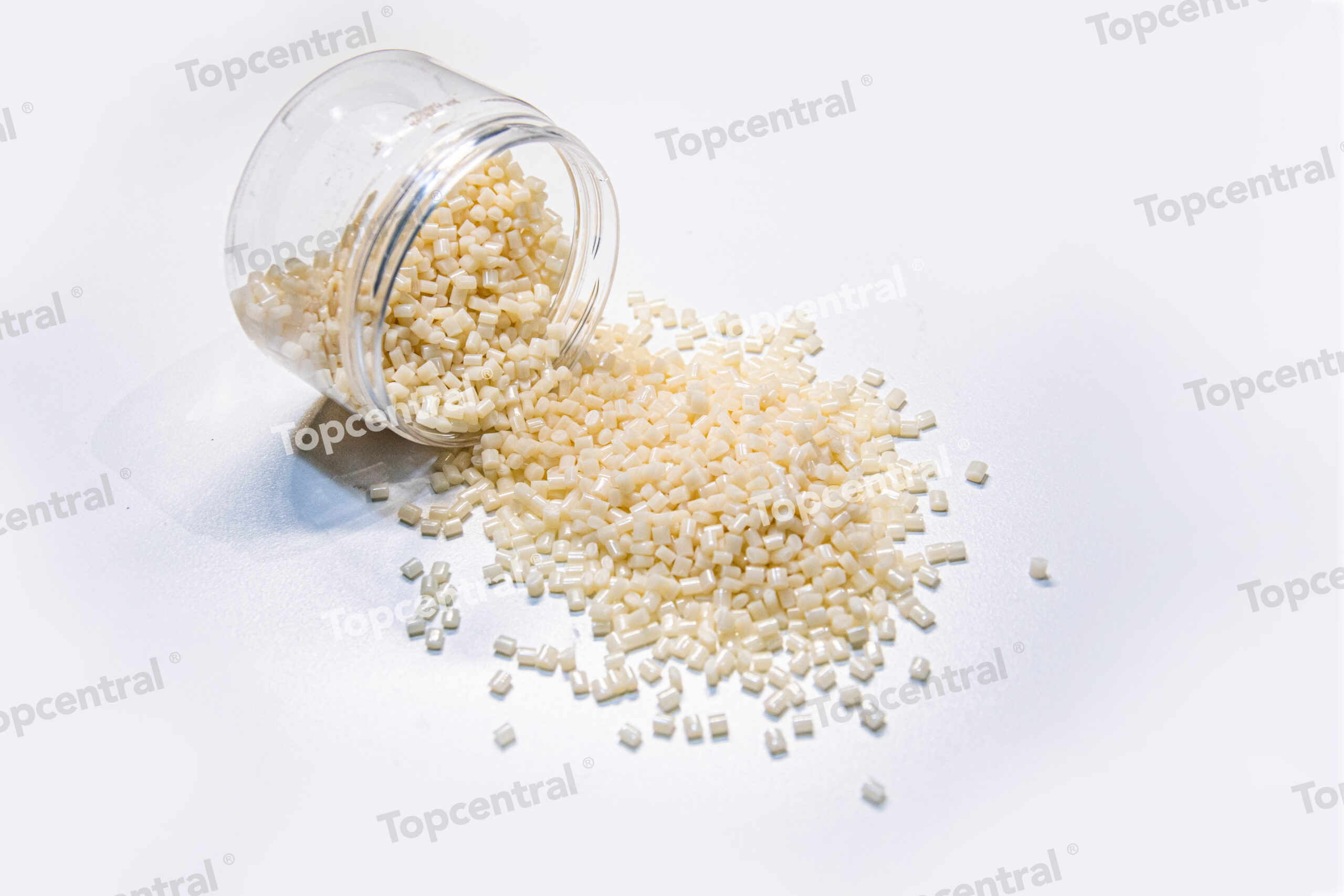
Exploring the model of “full-cycle recycling platform + intelligent internet + traceability chain + digital transaction settlement + circular economy,” the company constructs an innovative solution for an infinite circular ecosystem across the entire industrial chain. Through plastic recycling and regeneration technologies, marine debris undergoes several processes to become recycled plastic pellets, which are then used to produce packaging materials, industrial manufacturing products, apparel, home textiles, etc., conforming to international ecological and environmental protection concepts. Related products command a premium of over 50% compared to ordinary plastics, realizing the high-value utilization of waste plastics.
Currently, research and development have been completed for marine waste plastic separation technology, precise identification technology, standardized intelligent high-precision batching systems, and traceable manufacturing processes. A thousand-ton-level demonstration production line for high-value utilization of marine waste has been established, achieving a 100% input ratio of Post-Consumer Recycled (PCR) materials.
**(IV) Strong Team Building**
The implementation of this project has cultivated a high-level talent team in the field of high-value plastic circular regeneration technologies, including postdoctoral researchers, master’s and doctoral students, and 5 engineers. It is an experienced, technically proficient R&D team with certain domestic and international influence in marine plastic recycling and high-value reuse.
**(V) Intellectual Property Protection**
During the execution of this project, 2 invention patents and 3 software copyrights have been granted, achieving notable innovation results.
Currently, marine recycled nylon, ABS, PET, PP, and HDPE products have successfully achieved supplier qualification with companies such as SABIC, Lotte, LG Chem, and BASF, establishing stable bulk supply. In terms of market development, the company focuses on the collection, pretreatment, and regeneration of marine circular plastics, combining marine environmental protection concepts with domestic and international marine environmental policies to vigorously promote the high-value application of marine circular plastics. Simultaneously, the “Ocean Partner” initiative has been launched, and the “Ocean Partner” volunteer service team has been established, calling upon individuals, enterprises, governments, and NGOs from all walks of life to participate in marine waste pollution control, endowing marine circular products with greater environmental significance. Furthermore, through global authoritative third-party marine plastic product traceability certifications from SCS Global and UL OBP, the credibility of the products is enhanced, facilitating global market expansion.
**Current Difficulties and Blockages in Enterprise Operations & Desired Policies from Environmental Protection Departments**
* Environmental protection departments are requested to support the improvement of the front-end collection system and allocate corresponding funds.
* It is requested that local policy documents be appropriately issued to encourage enterprise participation in the construction of marine plastic recycling and utilization systems.
**Future Plans**
* Continuously expand and replicate Topcentral®’s technological and industrial advantages in waste plastics, particularly marine waste plastics. Strive to become a national benchmark enterprise for high-value modification, recycling, and utilization of marine waste plastics and an infinite circular integrated manufacturing park. By 2028, the company’s annual recycling and utilization capacity for waste plastics will reach 100,000 tons, with marine waste plastics accounting for 20% of the company’s production capacity. Explore and build Topcentral®’s industrial chain innovation model and promote it to other coastal provinces, regions, and countries.
* Further explore and promote the “Ocean Partner” IP as a flagship brand for comprehensive and innovative global marine pollution control solutions. Actively construct a multi-layered, three-dimensional innovative ecological system for marine waste plastics, integrating innovative cultural tourism commerce, public education, social services, monitoring and governance supervision, waste plastic collection, and carbon credit and carbon trading markets, along with a replicable business model and a long-term public welfare environmental protection mechanism. Based on the existing “Ocean Partner” project scope, gradually increase collection points and expand coverage to include fishing vessels, fishermen, and village residents. Utilize the existing “Ocean Partner” eco-cabin as an innovative platform carrier to build a demonstration base for fishery science and technology achievement transformation and industrialization, as well as an eco-tourism demonstration zone. Establish an offline trading platform for seafood products, generating tangible benefits and income for fishermen through sales. Prepare for the “Ocean Partner” global charitable foundation project.
* Develop and continuously enhance the development of certification platforms for the physical chain, data chain, and traceability chain of marine waste plastics and waste resources (e.g., waste plastics). Build certification brands and systems originating from Ningbo, such as “Oceancycle,” “Back2Circle,” and “PCFNOW: Carbon Data Real-time Collection, Accounting, Verification, and Inventory System.” Establish an internationally recognized, domestically leading comprehensive traceability certification brand system, supporting the construction of a Ningbo-characteristic big data center for marine pollutants.
* Develop and explore the establishment of local, national, and even global resource circularity credit (including plastic credits) development schemes, technical standards, methodologies, and development service platforms and trading service platforms.
Leave a Reply