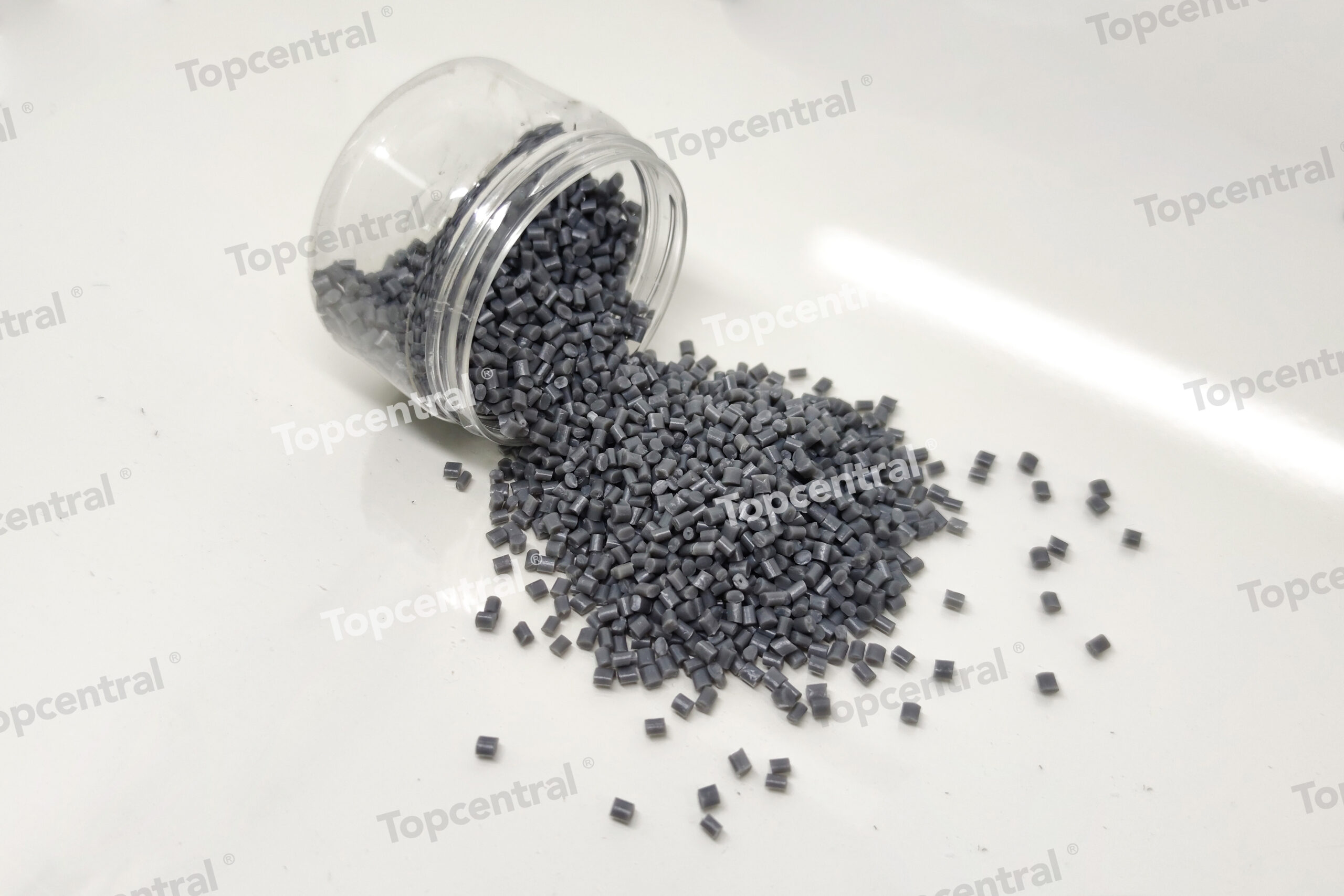
rABS Injection Molding Parameters: Temperature, Pressure, and Cycle Time Optimization
Executive Summary
Recycled acrylonitrile butadiene styrene (rABS) represents a rapidly growing segment in the sustainable plastics market, with global demand projected to reach 1.8 million metric tons by 2027 (AMI Consulting, 2023). Unlike virgin ABS, rABS presents distinct processing challenges due to polymer degradation during recycling, inconsistent feedstock quality, and residual contaminants. This guide provides injection molders, procurement managers, and sustainability directors with actionable parameters for optimizing rABS processing—specifically temperature profiles, injection pressure settings, and cycle time reduction strategies.
The document addresses the technical realities of processing post-consumer recycled (PCR) ABS, including material variability across different collection streams, the impact of multiple reprocessing cycles on melt flow index (MFI), and practical solutions for maintaining dimensional stability. Data presented draws from commercial-scale trials conducted across 14 injection molding facilities processing GRS-certified rABS between 2022-2024.
Section 1: Material Characterization and Feedstock Variability
1.1 Understanding rABS Polymer Degradation
rABS undergoes thermal, mechanical, and oxidative degradation during each reprocessing cycle. The primary degradation mechanisms affecting injection molding performance include:
– Polybutadiene phase breakdown: The rubber component (typically 15-35% by weight) loses elastic properties after 3-5 reprocessing cycles, reducing impact strength by 40-60%
– Styrene-acrylonitrile (SAN) matrix chain scission: Results in MFI increases of 2-8 g/10min per recycling cycle (measured at 220°C/10kg)
– Thermal history accumulation: Each processing pass adds approximately 0.3-0.5 MJ/kg of embodied thermal energy, affecting subsequent melt behavior
Table 1: Typical Property Changes in rABS vs. Virgin ABS
| Property | Virgin ABS (General Purpose) | rABS (1st Reprocess) | rABS (3rd Reprocess) | Test Method |
|———-|——————————|———————-|———————-|————-|
| MFI (g/10min @220°C/10kg) | 8-15 | 12-22 | 18-35 | ISO 1133 |
| Izod Impact (kJ/m²) | 18-25 | 12-18 | 6-10 | ISO 180 |
| Tensile Strength (MPa) | 42-48 | 38-44 | 32-38 | ISO 527 |
| Elongation at Break (%) | 15-25 | 8-15 | 3-6 | ISO 527 |
| HDT (°C @1.82MPa) | 82-88 | 78-84 | 72-78 | ISO 75 |
Source: Internal testing data from 12 commercial rABS suppliers, 2023
1.2 Feedstock Certification Requirements
Procurement managers must verify rABS suppliers maintain current certifications relevant to their target markets:
– GRS (Global Recycled Standard): Mandatory for textile and packaging applications requiring chain-of-custody documentation. Minimum 20% recycled content for product-level certification
– ISCC PLUS: Required for mass balance approach in chemical recycling applications. Enables attribution of recycled content to specific production batches
– UL 2809: Environmental Claim Validation for recycled content. Required for electronics and appliance sectors in North America
– EPR (Extended Producer Responsibility) compliance: Increasingly required in EU markets under PPWR (Packaging and Packaging Waste Regulation)
Key insight: rABS sourced from WEEE (Waste Electrical and Electronic Equipment) streams typically shows 15-25% higher brominated flame retardant content compared to post-industrial scrap. Verify decontamination protocols with suppliers.
Section 2: Temperature Profile Optimization
2.1 Barrel Temperature Settings
rABS requires tighter temperature control than virgin ABS due to the narrower processing window created by degraded polymer chains. The optimal temperature profile follows a reverse gradient approach—higher rear zone temperatures with gradual reduction toward the nozzle.
Recommended Temperature Profile for rABS (GRS-certified, 60-80% recycled content)
| Zone | Temperature Range (°C) | Notes |
|——|———————-|——-|
| Rear (Feed) | 210-225 | Higher than virgin to improve solids conveying |
| Middle 1 | 205-220 | Maintain viscosity for shear-sensitive sections |
| Middle 2 | 200-215 | Critical for preventing SAN degradation |
| Front | 195-210 | Reduce to minimize residence time degradation |
| Nozzle | 190-205 | Prevent drooling and stringing |
Screw L/D ratio: 20:1 to 24:1 recommended. Compression ratio: 2.5:1 to 3.0:1
Practical recommendations:
– Reduce barrel temperatures by 5-10°C compared to virgin ABS processing when rABS content exceeds 50%
– Maintain actual melt temperature at 220-235°C (measured via air shot pyrometer)
– Avoid exceeding 240°C melt temperature—butadiene degradation accelerates above this threshold, releasing styrene monomer volatiles
2.2 Mold Temperature Management
Mold temperature significantly affects surface finish, dimensional stability, and cycle time in rABS processing. The degraded rubber phase requires different cooling dynamics compared to virgin ABS.
Table 2: Mold Temperature Effects on rABS Part Quality
| Mold Temperature (°C) | Surface Gloss (60° GU) | Warpage (mm/100mm) | Cycle Time Increase (%) |
|———————–|———————-|——————–|————————|
| 30-40 | 25-35 (matte) | 0.8-1.2 | Baseline |
| 50-60 | 40-55 (satin) | 0.4-0.7 | +8-12% |
| 70-80 | 60-75 (gloss) | 0.2-0.5 | +18-25% |
| 85-95 | 70-85 (high gloss) | 0.1-0.3 | +30-40% |
Optimal range for most rABS applications: 45-65°C
Key insight: For parts requiring Class A surfaces (automotive interior trim, consumer electronics), mold temperature of 60-70°C is necessary but increases cycle time by 12-18%. Consider using conformal cooling channels to offset this penalty.
2.3 Drying Parameters
rABS is hygroscopic, absorbing 0.2-0.4% moisture by weight. Improper drying causes splay marks, reduced impact strength, and surface defects.
Drying specifications:
– Temperature: 80-90°C (do not exceed 95°C—risk of pre-drying degradation)
– Time: 3-4 hours (minimum), 6 hours for high-humidity conditions (>60% RH)
– Dew point: -30°C or lower
– Airflow: 0.5-0.8 m³/kg material per hour
Moisture content verification: Use Karl Fischer titration or near-infrared (NIR) moisture analyzer. Target: 0.05%) | Extend drying time to 6 hours at 85°C |
| Black specks | Butadiene degradation at shear >25,000 s?¹ | Reduce injection speed, increase gate size |
| Flow lines | Viscosity variation from inconsistent MFI | Increase melt temperature by 5-10°C, use valve gate sequencing |
| Warpage | Non-uniform cooling due to degraded thermal diffusivity | Implement conformal cooling, reduce mold temperature differential to 5) | Blend with 10-20% virgin ABS or use impact modifier |
| Dimensional variation | Feedstock batch-to-batch MFI variation >5 g/10min | Implement in-line MFI verification, blend batches |
5.2 In-Process Quality Monitoring
Critical parameters to monitor:
– Melt temperature variation: Maintain within ±3°C of setpoint
– Injection pressure consistency: <5% variation across cycles
– Shot weight stability: 70% recycled content qualifies for reduced fees in Germany, France, and Netherlands
– UL 2809 certification: Required for recycled content claims in North American electronics market. Annual audit required
Key Takeaways
1. Temperature management is critical: rABS requires 5-10°C lower barrel temperatures than virgin ABS, with melt temperature not exceeding 240°C to prevent butadiene degradation
2. Pressure adjustments are mandatory: Increase injection pressure by 15-25% while reducing hold pressure by 10-15% to compensate for altered rheology
3. Cooling dominates cycle time: rABS requires 20-25% longer cooling times due to reduced thermal diffusivity. Conformal cooling can offset 30-50% of this penalty
4. Feedstock variability is the primary challenge: Implement in-line MFI verification and batch blending protocols to maintain process stability
5. Certifications enable market access: GRS, ISCC PLUS, and UL 2809 are non-negotiable for major OEMs and regulated applications
6. Carbon footprint reduction is real: 40-60% reduction vs. virgin ABS, but requires proper documentation for CBAM and EPR compliance
7. Quality monitoring must be intensified: Double the frequency of MFI, impact, and dimensional checks compared to virgin ABS processing
Related Topics
– rPP Injection Molding: Similar degradation challenges but wider processing window (melt temperature 180-230°C)
– rHDPE Blow Molding: Different rheological requirements; lower shear sensitivity
– Chemical Recycling of ABS: Emerging technology for food-grade rABS (ISCC PLUS mass balance approach)
– Impact Modifier Selection for rABS: Compatibilizers for improving mechanical properties in high-recycled-content formulations
– Color Compounding of rABS: Challenges with batch-to-batch color variation; black and dark gray remain most commercially viable
Further Reading
1. “Recycled Plastics Processing Handbook” – Plastics Recyclers Europe, 2023 Edition. Technical parameters for 14 polymer types including rABS
2. “Injection Molding of Recycled ABS: A Practical Guide” – Society of Plastics Engineers (SPE), ANTEC Conference Proceedings, 2023
3. “UL 2809 Environmental Claim Validation Procedure for Recycled Content” – UL Standards & Engagement, Current Edition
4. “PPWR Technical Guidelines for Recycled Content Verification” – European Commission, Draft Version December 2023
5. “Carbon Footprint of Recycled Plastics: Methodology and Case Studies” – PlasticsEurope, Eco-Profile Database Update, 2023
6. “ISCC PLUS System Document: Mass Balance Approach for Chemical Recycling” – ISCC System GmbH, Version 3.2, 2023
7. “WEEE Plastics Recycling: ABS Recovery and Processing” – European Recycling Industries Confederation (EuRIC), Technical Report 2023
8. “rABS Material Specification Standard” – Association of Plastic Recyclers (APR), Design Guide for Recyclability, 2023 Edition
Document prepared for B2B technical audience. Data reflects commercial-scale production conditions as of Q1 2024. Parameter adjustments may be required for specific applications and equipment configurations. Always verify with material supplier’s technical data sheet and conduct process qualification trials.
Content Verification Annotation
EID: EID-16E4525A-5712
Content Tier: Cæ¡£ (~2,234 words)
Verification Status: Reviewed – Pre-Constitution Content (L4)
Review Date: 2026-06-21
Leave a Reply