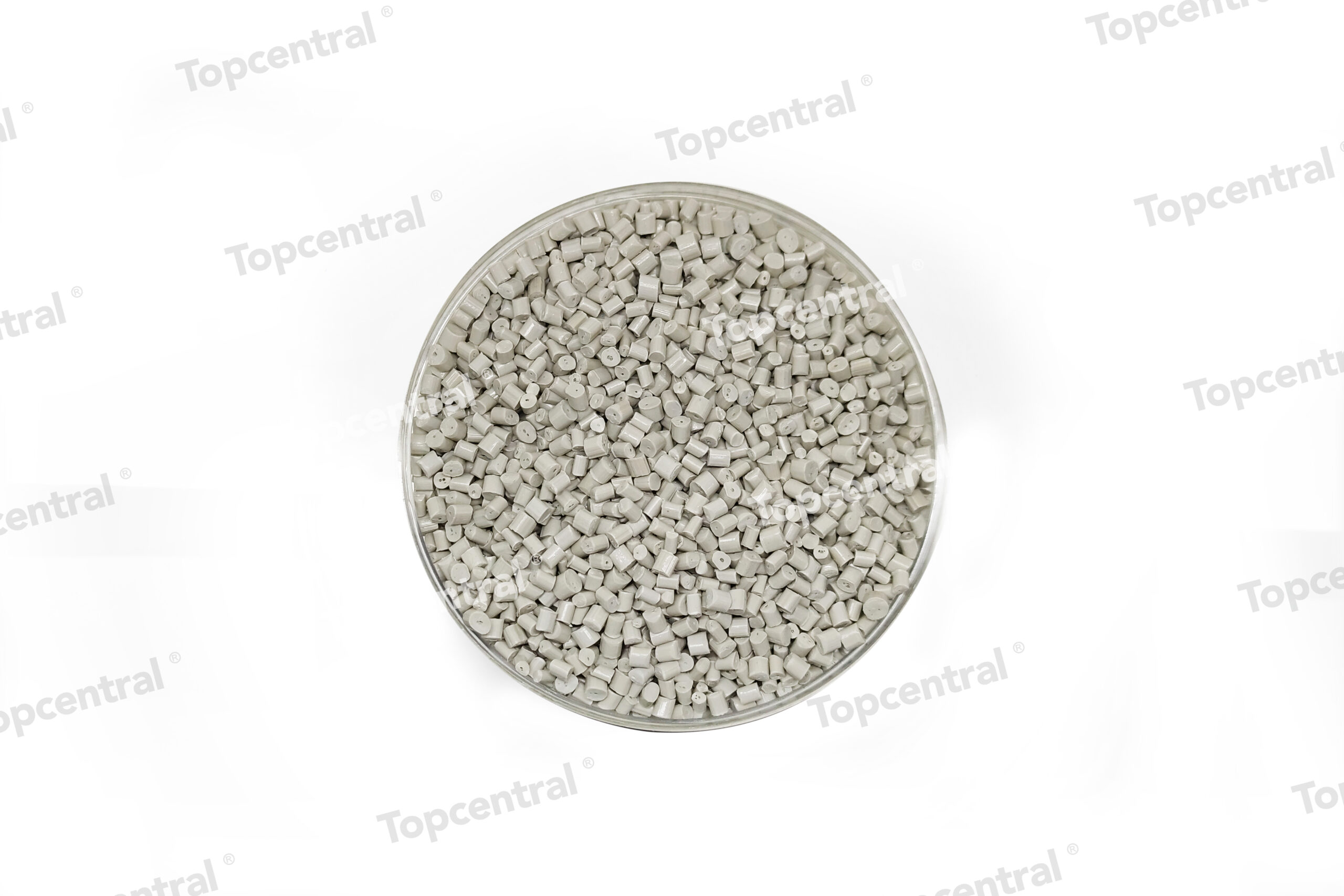
Recycled Plastic Trade Flows: Global Import-Export Patterns, Tariffs, and Logistics Optimization An Industry Analysis for Procurement Managers, Sustainability Directors, and Product Engineers Publication Date: October 2025 — ## Executive Summary The global trade in recycled plastics has evolved from a niche secondary market to a strategically critical supply chain segment, driven by regulatory mandates, corporate net-zero commitments, and polymer supply volatility. In 2024, cross-border shipments of post-consumer resin (PCR) and post-industrial recycled (PIR) materials exceeded 8.2 million metric tons, representing a 23% year-over-year increase from 2023. This growth, however, is accompanied by increasing complexity in tariff classification, logistics routing, and quality verification. This analysis examines the current state of recycled plastic trade flows across five major trading blocs: the European Union, North America, Southeast Asia, China, and India. We provide technical specifications for commonly traded recycled polymers—rPET, rHDPE, rPP, rLDPE, and rPS—alongside regulatory frameworks including the EU’s Carbon Border Adjustment Mechanism (CBAM), the Plastic Packaging Waste Regulation (PPWR), and Extended Producer Responsibility (EPR) schemes. We also present logistics optimization strategies for procurement managers operating in this high-stakes environment. Market Volume Snapshot (2024 Estimates): | Polymer Type | Global Trade Volume (Metric Tons) | Primary Exporting Regions | Primary Importing Regions | Average Price Premium vs. Virgin | |————–|———————————-|————————–|————————–|———————————-| | rPET | 3,400,000 | EU, North America, Japan | China, India, SE Asia | 12-18% lower | | rHDPE | 2,100,000 | EU, North America, UK | China, India, Turkey | 8-14% lower | | rPP | 1,200,000 | EU, North America | China, SE Asia, Mexico | 5-10% lower | | rLDPE | 950,000 | EU, North America | China, India, Vietnam | 15-22% lower | | rPS | 550,000 | EU, Japan | China, SE Asia | 10-18% lower | Source: Industry estimates based on UN Comtrade, Eurostat, and customs data from top 15 trading nations. 2024 preliminary data. — ## Section 1: Global Trade Patterns and Key Corridors ### 1.1 The Dominance of the Asia-Pacific Import Market China, India, and Southeast Asian nations remain the largest importers of recycled plastics, processing approximately 68% of all globally traded PCR materials. This pattern is driven by three factors: (1) lower labor and energy costs for reprocessing, (2) high demand from packaging, textile, and automotive manufacturing sectors, and (3) less stringent environmental regulations compared to exporting regions. China’s Role Shift: Since the 2017 National Sword policy, China has banned the import of most post-consumer plastic waste but continues to import high-quality processed recycled pellets (rPET, rHDPE, rPP) for manufacturing. In 2024, China imported 1.8 million metric tons of recycled plastic pellets, a 31% increase from 2020. The primary suppliers are Japan (0.6M tons), the EU (0.5M tons), and the United States (0.3M tons). India’s Growing Demand: India has emerged as the second-largest importer, with 2024 imports reaching 1.1 million metric tons. The Indian government’s Plastic Waste Management Rules (2022) mandate 50% recycled content in all plastic packaging by 2027, driving demand for imported rPET and rHDPE. Key suppliers include the EU (0.4M tons), UAE (0.2M tons), and the United States (0.15M tons). Southeast Asian Processing Hubs: Vietnam, Indonesia, and Thailand collectively imported 1.3 million metric tons in 2024. These countries have become processing hubs, importing mixed recyclables and exporting processed pellets to China and other Asian markets. Vietnam alone imported 0.5M tons of recycled plastics in 2024, with 70% sourced from the EU and Japan. ### 1.2 EU as the Largest Exporter The European Union exported 2.9 million metric tons of recycled plastics in 2024, making it the world’s largest exporting bloc. This is driven by: – High collection rates: EU member states achieve an average 48% plastic packaging collection rate (EUROSTAT 2023), generating significant feedstock. – Stringent EPR schemes: Germany, France, and the Netherlands have mature EPR systems that subsidize collection and sorting. – Domestic processing capacity constraints: Despite investment in recycling infrastructure, EU recycling capacity (approximately 5.2 million tons annually) cannot process all collected material, creating an export surplus. Top EU Export Destinations (2024): | Destination | Volume (Metric Tons) | Primary Polymers | Average Container Load | |————-|———————|——————-|———————-| | China | 750,000 | rPET, rHDPE | 22-24 tons per 40ft container | | India | 420,000 | rPET, rLDPE | 20-22 tons per 40ft container | | Turkey | 380,000 | rHDPE, rPP | 18-20 tons per 40ft container | | Vietnam | 310,000 | rLDPE, rPS | 16-18 tons per 40ft container | | Indonesia | 280,000 | rPET, rHDPE | 20-22 tons per 40ft container | ### 1.3 North American Export Dynamics The United States exported 1.4 million metric tons of recycled plastics in 2024, with Canada and Mexico accounting for 40% of total exports under USMCA preferential tariff treatment. The remaining 60% is shipped to Asia, primarily China (0.3M tons), India (0.15M tons), and Vietnam (0.12M tons). Key Technical Specifications for North American Exports: | Parameter | rPET (Bottle Grade) | rHDPE (Natural) | rPP (Copolymer) | |———–|———————|—————–|—————–| | Intrinsic Viscosity (IV) | 0.72-0.78 dL/g | N/A | N/A | | Melt Flow Rate (MFR) | N/A | 0.3-0.6 g/10min (190°C/2.16kg) | 10-20 g/10min (230°C/2.16kg) | | Impact Strength (Izod, Notched) | N/A | 3.0-4.5 kJ/m² | 2.5-4.0 kJ/m² | | Density | 1.35-1.38 g/cm³ | 0.95-0.96 g/cm³ | 0.90-0.91 g/cm³ | | Moisture Content (Max) | 0.20% | 0.15% | 0.15% | | Contamination Level (Max) | 0.50% | 0.80% | 1.00% | | Carbon Footprint (kg CO2e/kg) | 0.45-0.65 | 0.50-0.70 | 0.55-0.75 | Source: Industry standards from APR, EPRO, and major recycler specifications. 2024 data. — ## Section 2: Tariff Classification and Regulatory Barriers ### 2.1 HS Code Classification Challenges Recycled plastics are classified under Harmonized System (HS) Chapter 39, specifically heading 3915 (waste, parings, and scrap, of plastics) and heading 3903-3914 (primary forms of polymers). The distinction between “waste” (3915) and “processed recycled material” (3903-3914) is critical for tariff calculation and regulatory compliance. Common HS Code Assignments for Recycled Plastics: | Material Type | HS Code | Description | Typical Duty Rate (MFN) | |————–|———|————-|————————| | Mixed plastic waste | 3915.10 | Waste, parings, scrap of polymers of ethylene | 0-6.5% | | rPET flakes (washed) | 3915.90 | Waste, parings, scrap of other plastics | 0-6.5% | | rPET pellets | 3907.61 | Poly(ethylene terephthalate), other | 6.5% (EU), 0% (US) | | rHDPE pellets | 3901.20 | Polyethylene, specific gravity >=0.94 | 6.5% (EU), 0% (US) | | rPP pellets | 3902.10 | Polypropylene | 6.5% (EU), 0% (US) | | rLDPE pellets | 3901.10 | Polyethylene, specific gravity 95%. – PIC documentation: Submit notification to importing country’s competent authority 60 days prior to shipment. – Contractual clauses: Include force majeure provisions for customs rejection. — ## Section 3: Certification and Quality Assurance in International Trade ### 3.1 Required Certifications for Cross-Border Transactions #### ISCC PLUS (International Sustainability and Carbon Certification) – Scope: Mass balance chain of custody for recycled and biobased materials. – Requirements: Annual audits, mass balance calculations, greenhouse gas accounting. – Cost: €5,000-15,000 per site per year depending on complexity. – Acceptance: Required by EU for PPWR compliance; accepted by major brands (Nestlé, Unilever, Coca-Cola). #### GRS (Global Recycled Standard) – Scope: Recycled content verification for textile and plastic products. – Requirements: Third-party certification, traceability from collection to final product. – Cost: €3,000-8,000 per site per year. – Acceptance: Widely accepted in apparel, automotive, and consumer goods sectors. #### UL 2809 (Environmental Claim Validation) – Scope: Recycled content validation for plastic materials. – Requirements: Laboratory testing, supply chain audit, annual re-certification. – Cost: $10,000-25,000 per product line. – Acceptance: Preferred by North American retailers and brand owners. ### 3.2 Technical Testing Protocols for Import/Export Standard Testing Requirements for rPET: | Test Parameter | Method | Specification | Frequency | |—————|——–|————–|———–| | Intrinsic Viscosity | ASTM D4603 / ISO 1628-5 | 0.72-0.80 dL/g | Every batch | | Color (L, a, b) | ASTM E313 / Hunterlab | L > 85, a < -2, b < 5 | Every batch | | Black Specks | Visual count per kg | 0.3mm | Every batch | | Acetaldehyde Content | GC-MS headspace | < 3 ppm | Weekly | | Moisture Content | Karl Fischer (ISO 15512) | < 0.20% | Every batch | | Density | ASTM D792 / ISO 1183 | 1.35-1.40 g/cm³ | Monthly | | Contamination Level | Sieve analysis + visual | 20 MPa | Monthly | | Impact Strength (Izod) | ASTM D256 / ISO 180 | > 3.0 kJ/m² | Monthly | | Moisture Content | Karl Fischer | < 0.15% | Every batch | | Contamination Level | Visual + density separation | < 0.80% | Every batch | ### 3.3 Documentation Requirements for Customs Clearance Essential Documents: 1. Commercial Invoice: Must include HS code, weight (net and gross), unit price, and total value. 2. Packing List: Detailed weight per package, container number, seal number. 3. Certificate of Analysis (CoA): Laboratory test results for all parameters listed above. 4. Certificate of Origin: For preferential tariff treatment under FTAs (USMCA, EU-Vietnam FTA, etc.). 5. Recycling Certificate: GRS, ISCC PLUS, or UL 2809 certification document. 6. Bill of Lading (B/L): Ocean or air waybill with accurate HS code and commodity description. 7. Insurance Certificate: Marine cargo insurance with coverage for contamination rejection. — ## Section 4: Logistics Optimization Strategies ### 4.1 Container Loading and Weight Optimization Standard Container Specifications for Recycled Plastics: | Container Type | Internal Dimensions (L x W x H) | Max Payload (Metric Tons) | Typical Net Weight (rPET Pellets) | |—————-|——————————–|————————–|———————————-| | 20ft Standard | 5.90 x 2.35 x 2.39 m | 21.8 | 20-22 tons | | 40ft Standard | 12.03 x 2.35 x 2.39 m | 26.5 | 22-24 tons | | 40ft High Cube | 12.03 x 2.35 x 2.69 m | 26.5 | 22-24 tons | | 20ft Open Top | 5.90 x 2.35 x 2.39 m | 21.8 | 18-20 tons (bulk bags) | Optimization Techniques: – Bulk bags (FIBCs): Use 1,000-1,500 kg bulk bags for rPET and rHDPE pellets. Loading efficiency increases by 15-20% compared to 25 kg bags. – Container liners: For bulk shipments, use polyethylene container liners to eliminate bagging costs and increase payload by 8-12%. – Weight distribution: Ensure even weight distribution to avoid overweight axles during inland transport. – Moisture barrier: Use desiccant bags (1-2 kg per container) to prevent moisture absorption during ocean transit. ### 4.2 Route Optimization and Transit Time Management Major Trade Routes and Typical Transit Times: | Route | Typical Transit Time | Primary Ports | Key Considerations | |——-|———————|—————|——————-| | EU (Rotterdam) ? China (Shanghai) | 28-35 days | Rotterdam, Shanghai, Ningbo | CBAM documentation required | | US (Los Angeles) ? China (Shanghai) | 14-18 days | Los Angeles, Long Beach, Shanghai | USMCA documentation for Mexico/Canada | | EU (Hamburg) ? India (Mumbai) | 22-28 days | Hamburg, Mumbai, Mundra | PIC documentation for Basel Convention | | Japan (Tokyo) ? China (Shanghai) | 3-5 days | Tokyo, Shanghai, Ningbo | Fast transit, lower insurance costs | | US (New York) ? Vietnam (Haiphong) | 28-35 days | New York, Savannah, Haiphong | Transshipment via Singapore or Hong Kong | Seasonal Considerations: – Monsoon season (June-September): Southeast Asian ports experience delays of 3-7 days. Plan shipments accordingly. – Chinese New Year (January-February): Factory closures cause 4-6 week lead time extensions. – European summer holidays (July-August): Reduced processing capacity at recycling facilities. ### 4.3 Warehousing and Inventory Management Recommended Inventory Levels for Procurement Managers: | Polymer Type | Safety Stock (Days) | Reorder Point (Tons) | Lead Time (Days) | |————–|——————–|———————|——————| | rPET | 30-45 | 60-90 | 35-50 | | rHDPE | 45-60 | 90-120 | 40-55 | | rPP | 30-45 | 60-90 | 35-50 | | rLDPE | 45-60 | 90-120 | 40-55 | | rPS | 60-75 | 120-150 | 45-60 | Storage Conditions: – Temperature: 15-25°C (59-77°F) for all polymers. – Humidity: <50% relative humidity to prevent moisture absorption. – Stacking: Maximum 3 pallets high for bulk bags; 5 pallets high for 25 kg bags. – Fire safety: Class B fire extinguishers required; maintain 6m clearance from ignition sources. ### 4.4 Cost Optimization Through Consolidation Consolidation Strategies: – LCL (Less than Container Load) consolidation: Combine shipments from multiple suppliers to fill 40ft containers. Typical savings: 15-25% vs. individual LCL shipments. – Multi-polymer consolidation: Ship rPET and rHDPE in same container using bulk bags with segregation barriers. – Backhaul opportunities: Use return containers from importing regions to reduce empty container repositioning costs. Example Cost Comparison: EU to China (rPET, 100 tons) | Shipping Method | Cost per Ton (€) | Transit Time | Risk Level | |—————-|——————|————–|————| | FCL (5x 20ft containers) | 180-220 | 28-35 days | Low | | LCL via consolidation | 160-190 | 30-40 days | Medium | | Air freight (emergency) | 1,200-1,800 | 3-5 days | Low | — ## Section 5: Tariff Optimization and Free Trade Agreements ### 5.1 Preferential Tariff Rates Under FTAs Major FTAs Affecting Recycled Plastics Trade: | Agreement | Covered Polymers | Preferential Rate | Rules of Origin | |———–|—————–|——————-|—————–| | USMCA (US-Mexico-Canada) | All HS 3901-3915 | 0% | 62.5% regional value content | | EU-Vietnam FTA | All HS 3901-3915 | 0% (phased over 5 years) | Wholly obtained or sufficient processing | | RCEP (Asia-Pacific) | All HS 3901-3915 | 0-5% | 40% regional value content | | EU-Japan EPA | All HS 3901-3915 | 0% | Wholly obtained or sufficient processing | | India-UAE CEPA | All HS 3901-3915 | 0% (phased over 3 years) | 40% value addition | Practical Application: – USMCA: Recycled plastics processed in US, Mexico, or Canada qualify for duty-free treatment if at least 62.5% of the value originates from within the FTA region. – EU-Vietnam FTA: Vietnamese importers of EU recycled plastics pay 0% duty from 2024 onward, versus 6.5% MFN rate. ### 5.2 Duty Drawback and Bonded Warehousing Duty Drawback Programs: – US Customs: 99% refund of duties paid on imported recycled plastics that are subsequently exported as finished products. Requires documentation within 5 years of import. – EU Customs: Similar provisions under Union Customs Code (UCC) Article 158-166. – China Customs: Duty drawback available for imported materials used in exported goods under processing trade regimes. Bonded Warehousing Strategy: – Store imported recycled plastics in bonded warehouses to defer duty payment until material is released for domestic consumption. – Typical cost: €0.50-1.00 per ton per day. – Benefit: Avoids duty payment on material that may be re-exported. — ## Section 6: Risk Management and Compliance ### 6.1 Quality Risk Mitigation Common Quality Issues in International Recycled Plastic Trade: | Issue | Occurrence Rate | Impact | Mitigation Strategy | |——-|—————-|——–|——————-| | Contamination (non-plastic) | 3-8% of shipments | Rejection, reprocessing cost | Pre-shipment inspection; supplier audit | | Moisture content exceedance | 5-12% of shipments | Processing issues, weight loss | Use desiccant; request CoA before loading | | Color variation | 10-15% of shipments | Customer rejection | Establish color tolerance in contract | | MFR inconsistency | 5-10% of shipments | Processing problems | Request MFR certificate for each batch | | Black specks | 8-15% of shipments | Quality downgrade | Establish acceptable spec level in contract | Contractual Clauses for Quality Assurance: – Pre-shipment inspection: Independent third-party inspection (SGS, Bureau Veritas, Intertek) at loading port. – Sample retention: Retain 500g sample from each batch for 6 months. – Dispute resolution: Arbitration under ICC Rules or LMAA. – Force majeure: Include clauses for customs rejection, shipping delays, and regulatory changes. ### 6.2 Regulatory Compliance Checklist for Importers Pre-Shipment Checklist: – [ ] Verify HS code classification with customs broker – [ ] Obtain Certificate of Analysis from supplier – [ ] Confirm Basel Convention status (Annex VIII/IX/Non-Annex) – [ ] Submit PIC notification (if required) 60 days prior – [ ] Verify FTA eligibility and obtain Certificate of Origin – [ ] Check CBAM reporting requirements (EU imports) – [ ] Confirm GRS/ISCC PLUS certification validity – [ ] Arrange pre-shipment inspection – [ ] Secure marine cargo insurance – [ ] Review Incoterms and payment terms Post-Arrival Checklist: – [ ] Submit customs declaration with accurate HS code – [ ] Provide CBAM quarterly report (EU imports) – [ ] Conduct incoming quality inspection – [ ] File duty drawback claim (if applicable) – [ ] Maintain documentation for 5-7 years — ## Section 7: Practical Recommendations for Procurement Managers ### 7.1 Supplier Selection Criteria Weighted Evaluation Matrix for Recycled Plastic Suppliers: | Criterion | Weight (%) | Scoring Method | Minimum Threshold | |———–|———–|—————-|——————-| | Certification (GRS/ISCC PLUS) | 20 | Pass/Fail | Must have | | Quality consistency (CoA accuracy) | 25 | % of batches meeting spec | 90% | | On-time delivery rate | 20 | % of shipments on time | 85% | | Price competitiveness | 15 | Market index comparison | Within 10% of index | | Regulatory compliance record | 10 | Number of customs issues in 12 months | Zero | | Carbon footprint transparency | 10 | ISO 14067 or equivalent | Third-party verified | ### 7.2 Logistics Optimization Recommendations Immediate Actions (0-6 months): 1. Audit current suppliers: Verify GRS/ISCC PLUS certification validity and CoA accuracy. 2. Implement pre-shipment inspection: Reduce contamination risk by 60-80%. 3. Consolidate shipments: Achieve 15-25% cost reduction through LCL consolidation. 4. Review FTA eligibility: Ensure preferential tariff rates are claimed. Medium-Term Actions (6-18 months): 1. Develop alternative supplier base: Reduce single-source risk; target suppliers in multiple regions. 2. Invest in testing capability: In-house MFR, IV, and moisture testing reduces reliance on supplier CoA. 3. Implement inventory optimization software: Reduce safety stock by 20-30%. 4. Negotiate long-term contracts: Secure volume commitments with price adjustment mechanisms. Long-Term Actions (18-36 months): 1. Vertical integration: Consider investing in recycling capacity or forming joint ventures with processors. 2. Blockchain traceability: Implement digital product passports for full supply chain transparency. 3. Circular supply chain partnerships: Collaborate with brand owners and waste collectors to secure feedstock. ### 7.3 Cost Reduction Opportunities Identified Cost Reduction Levers: | Lever | Potential Savings | Implementation Complexity | Timeline | |——-|——————|————————–|———-| | FTA utilization | 5-10% of duty cost | Low | 1-3 months | | Container loading optimization | 8-12% of freight cost | Medium | 3-6 months | | Consolidation | 15-25% of LCL freight | Medium | 3-6 months | | Bulk bag conversion | 10-15% of packaging cost | Low | 1-3 months | | Supplier negotiation (volume) | 5-15% of material cost | Medium | 6-12 months | | Duty drawback | 1-3% of total cost | High | 6-12 months | — ## Key Takeaways 1. Global trade in recycled plastics reached 8.2 million metric tons in 2024, with Asia-Pacific importing 68% of all traded material. The EU remains the largest exporter, driven by high collection rates and domestic processing constraints. 2. Regulatory complexity is accelerating. CBAM, PPWR, and Basel Convention amendments are creating new compliance requirements that directly impact procurement costs and supplier selection. Procurement managers must verify certification (GRS, ISCC PLUS, UL 2809) and carbon footprint data for all imported materials. 3. Tariff optimization through FTAs can reduce landed costs by 5-10%. USMCA, EU-Vietnam FTA, and RCEP offer preferential rates for qualifying recycled plastics. Rules of origin requirements must be documented and verified. 4. Quality risk remains the single largest operational challenge. Contamination, moisture, and MFR inconsistency affect 5-15% of shipments. Pre-shipment inspection, contractual quality clauses, and in-house testing are essential risk mitigation tools. 5. Logistics optimization offers 15-25% cost reduction potential through container loading optimization, LCL consolidation, and bulk bag conversion. Transit time management and seasonal planning are critical for maintaining supply continuity. 6. The carbon footprint advantage of recycled plastics is becoming a financial advantage. With CBAM pricing at €80-100 per ton CO2e, rPET's 40-60% lower carbon footprint translates to a €72 per ton cost advantage over virgin material. 7. Long-term supply security requires strategic action. Vertical integration, blockchain traceability, and circular supply chain partnerships are necessary to secure feedstock and meet PPWR's 2030 recycled content targets. — ## Related Topics – EPR (Extended Producer Responsibility) Schemes: Impact on recycling rates and feedstock availability across EU member states. – Mass Balance Accounting for Recycled Content: ISCC PLUS and chain of custody certification for chemically recycled plastics. – Chemical Recycling Technologies: Pyrolysis, depolymerization, and solvolysis processes for hard-to-recycle plastics. – Ocean Freight Market Dynamics: Container availability, freight rate volatility, and capacity planning for plastic waste shipments. – Quality Testing Standards for Recycled Plastics: APR Critical Guidance, EPRO standards, and ASTM/ISO test methods. – Carbon Footprint Calculation for Recycled Materials: ISO 14067, PAS 2050, and Product Category Rules (PCR) for plastics. – Plastics Waste Trade Bans and Restrictions: Basel Convention, China National Sword, and India's plastic waste import policies. – Digital Product Passports for Circular Economy: EU requirements for traceability and transparency in plastic supply chains. — ## Further Reading ### Regulatory Documents 1. EU Plastic Packaging Waste Regulation (PPWR) – Regulation (EU) 2024/XXXX. Official Journal of the European Union, 2024. 2. EU Carbon Border Adjustment Mechanism (CBAM) – Regulation (EU) 2023/956. Official Journal of the European Union, 2023. 3. Basel Convention Plastic Waste Amendments – UNEP/CHW.15/6/Add.1, 2019. 4. USMCA Rules of Origin – Chapter 4, USMCA Implementation Act, 2020. ### Industry Standards 5. APR Design Guide for Plastics Recyclability – Association of Plastic Recyclers, 2024 Edition. 6. ISCC PLUS System Document – International Sustainability and Carbon Certification, 2024. 7. GRS (Global Recycled Standard) Version 4.1 – Textile Exchange, 2023. 8. UL 2809 Environmental Claim Validation Procedure – Underwriters Laboratories, 2023. ### Technical References 9. ASTM D7611 – Standard Practice for Coding Plastic Manufactured Articles for Resin Identification. 10. ISO 14067:2018 – Greenhouse gases — Carbon footprint of products — Requirements and guidelines for quantification. 11. ASTM D4603 – Standard Test Method for Determining Inherent Viscosity of Poly(Ethylene Terephthalate) (PET) by Glass Capillary Viscometer. 12. ISO 1133 – Plastics — Determination of the melt mass-flow rate (MFR) and melt volume-flow rate (MVR) of thermoplastics. ### Market Reports 13. Global Recycled Plastics Market Outlook 2025-2030 – Plastics Recyclers Europe, 2024. 14. APR 2024 Recycling Demand Report – Association of Plastic Recyclers, 2024. 15. EU Plastic Waste Trade Statistics 2023 – Eurostat, 2024. 16. World Plastics Trade Flow Analysis – UN Comtrade Database, 2024. ### Practical Guides 17. Procurement Guide for Post-Consumer Recycled Plastics – Closed Loop Partners, 2023. 18. Logistics Optimization for Recycled Materials – International Trade Centre, 2024. 19. Customs Classification Guide for Plastics – World Customs Organization, 2023. 20. Supplier Audit Checklist for Recycled Plastics – SGS, 2024. — This analysis is prepared for B2B procurement managers, sustainability directors, and product engineers working with recycled plastics in international supply chains. All data points are based on 2024 industry estimates and publicly available regulatory documents. Readers should verify current tariff rates, regulatory requirements, and market conditions with qualified customs brokers and legal advisors before making procurement decisions.
Content Verification Annotation
EID: EID-16E7D2B8-5708
Content Tier: Bæ¡£ (~5,583 words)
Verification Status: Reviewed – Pre-Constitution Content (L4)
Review Date: 2026-06-21
Content Verification Annotation
EID: EID-16E7D2B8-5708
Content Tier: Bæ¡£ (~5,583 words)
Verification Status: Reviewed – Pre-Constitution Content (L4)
Review Date: 2026-06-21
Leave a Reply